

Bedside dog beds for assisted living: Fit first 2026
Bedside dog beds for assisted living give your dog a separate sleeping spot close to you, with the aim of keeping companionship part of your nightly routine. This 2026 guide helps you choose a cozy setup that also leaves room for getting out of bed, moving around, and receiving care.
- Choose bedside dog beds for assisted living around resident access, pet comfort, and the home's current rules.
- Furmatesusa bedside pet beds suit pet parents seeking a separate sleeping space close by; check room fit before choosing.
- Compare bedside sleepers with floor beds; height alone does not make a setup suitable.
- Plan cleaning, nighttime pet care, and a backup sleeping spot before introducing the bed.
Why bedside dog beds matter for assisted living residents
A familiar furry friend belongs in the room's everyday routine, not in the way of it. A separate pet bed gives you a designated place for your dog without asking your dog to share your mattress.
Assisted living adds another person to the decision: whoever helps you use the room. Before choosing a bed in 2026, discuss its placement with the home's staff and anyone involved in your care. Include a family member or pet caregiver if they handle bedtime or cleaning.
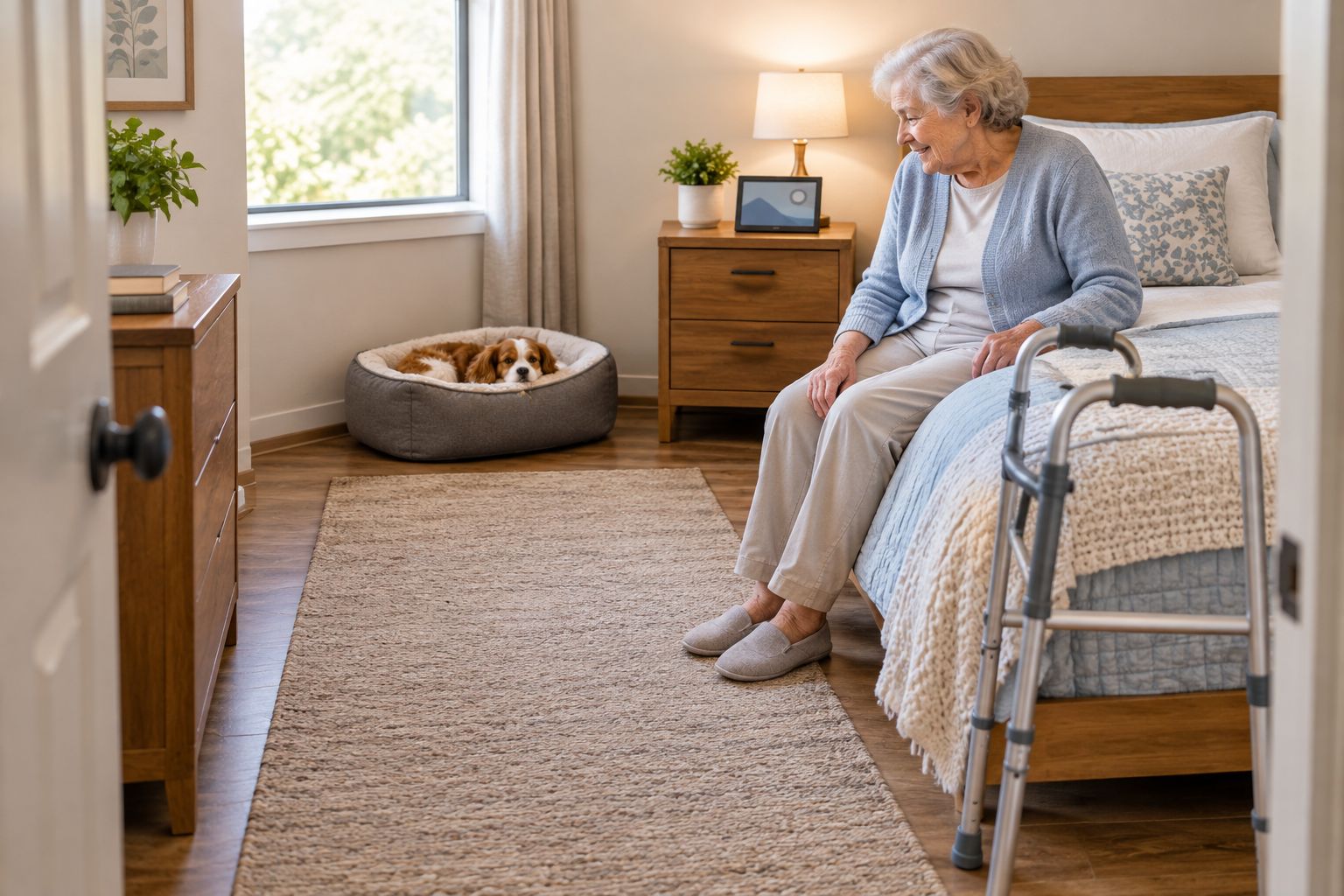
Choose the sleeping arrangement around your access needs first, then your dog's preferred spot. An attractive bedside setup is the wrong choice if you must step around it to reach your walker, bathroom, or call device.
If your dog currently sleeps on your mattress, the guide to transitioning your dog from your bed to a co-sleeper covers the separate task of introducing a new sleeping place. Room approval and bedtime training need their own attention.
Set up a comfortable bedside sleeping space
Confirm the home's rules before choosing a bed
Start with a conversation, not a purchase. Ask the home's designated contact whether your dog can stay in the room and whether the proposed sleeping arrangement needs review.
Bring a simple sketch showing where you want the pet bed. Mark your own bed, the door, and any mobility equipment you use. A sketch gives staff something concrete to discuss without requiring you to move furniture first.
For your 2026 setup, ask for the current rules rather than relying on another resident's arrangement. Keep any written guidance with your pet-care notes so family members understand the same expectations.
- Confirm permission for your dog to stay in your room.
- Ask who reviews pet-bed placement and furniture changes.
- Check whether a shared room requires your roommate's agreement.
- Clarify who handles feeding, toileting, and pet-bed cleaning.
- Ask how the pet should be managed during care visits or an emergency.
Map the routes you need to keep clear
Use paper and a tape measure to map the room before comparing beds. Walk through your usual movements with the person who helps you, using your normal mobility equipment rather than judging space by eye.
Check 2 routes separately: your bed-to-bathroom route and your bed-to-door route. This is a planning check, not a clearance standard; ask staff what space your actual care arrangement requires.
Also look at the side where you stand, sit, or receive assistance. A pet bed must not take the place you need for those movements. Consider the dog too: a bed outside the walkway does not help if its entrance sends your dog directly across your feet.
- Mark the side of the bed you use to get up.
- Trace the bed-to-bathroom route with your usual equipment.
- Trace the bed-to-door route without moving the pet bed.
- Keep your call device and everyday essentials within reach.
- Identify the space staff need beside your bed.
Measure your dog and the complete setup
Measure first with equipment you already have. Record 3 measurements in inches for the proposed pet-bed space: length, width, and height. Compare those notes with the current product information, including the assembled footprint rather than only the cushion size.
Measure your dog while comfortably resting, and note how your dog changes position. A dog that curls up at bedtime still needs room to stretch and turn. Do not choose solely from a photograph of another pet using a bed.
Furmatesusa bedside pet beds are best for pet parents seeking a separate sleeping space close by. Treat that purpose as the starting point, not proof that a particular model fits an assisted living room. Confirm dimensions, supported pet weight, assembly requirements, and care instructions before choosing.
- Record the available length, width, and height in inches.
- Compare usable sleeping space with your dog's resting position.
- Include the full frame and any access accessory in your layout.
- Check the manufacturer's stated pet-weight limit.
- Confirm how the bed stands or attaches before planning placement.
Match the entrance to your dog's abilities
Watch how your dog gets into the current bed before changing the setup. Look for hesitation, awkward turning, or a need for help, and discuss discomfort or mobility concerns with your veterinarian.
A floor bed avoids the climb into a raised sleeping space. Its limitation is placement: it still needs a spot outside your walking route. A raised bedside bed brings the sleeping area closer to your bedside, but you must plan how your dog enters and leaves it.
Do not make lifting your dog the default if lifting is difficult for you. Pet stairs also need their own room review; adding an access aid changes the footprint. Your 2026 plan should work for both you and your dog without improvised furniture or unsupported climbing arrangements.
- Observe your dog's normal entry and exit before choosing.
- Ask your veterinarian about access if your dog has pain or mobility restrictions.
- Choose a floor-level spot if raised access cannot be managed.
- Review stairs or ramps as part of the complete room layout.
- Name the person who will help if your dog cannot enter independently.
Plan cleaning before the first night
Read the care instructions for the bed you are considering, then decide who will carry them out. A soft sleeping space only works as an everyday arrangement if someone can manage hair, dirt, wet bedding, and the area underneath it.
Ask how each part should be cleaned; do not assume the cover, cushion, and frame share the same instructions. Check whether removable pieces are washable and whether the person responsible can remove and replace them comfortably.
Build a simple 2026 care note with the cleaning method, caregiver, and backup sleeping location. Keep it practical. If your dog has accidents, choose around the cleanup routine you can actually maintain rather than treating a bedside bed as a solution to incontinence.
- Read the care instructions for every component.
- Confirm whether bedding can be removed without moving the whole setup.
- Assign responsibility for washing and drying bedding.
- Keep cleaning supplies where the home permits them.
- Choose a backup pet sleeping spot for cleaning days.
Introduce the new spot without rushing bedtime
Begin with a familiar blanket on an existing, approved sleeping spot. Let your dog explore while you are awake and able to watch, and reward calm interest without forcing your dog into the bed.
Once the room plan and product fit are settled, Furmatesusa offers bedside pet-bed options intended to keep pets close in their own sleeping space. The convenience is that separate spot beside you; the limitation is that you still need to confirm access, cleaning, and suitability for your room.
Keep early introductions separate from moments when you need assistance getting up. If your dog repeatedly leaves the bed, climbs toward your mattress, or waits underfoot, pause and review the arrangement. Familiarity should come before an unattended bedtime routine.
- Introduce the sleeping spot while you are awake.
- Use familiar bedding if the product's care guidance allows it.
- Reward calm settling with your dog's usual approved reward.
- Watch where your dog goes when you stand up.
- Keep the previous approved sleeping option ready during the transition.
Compare sleeping options for your room
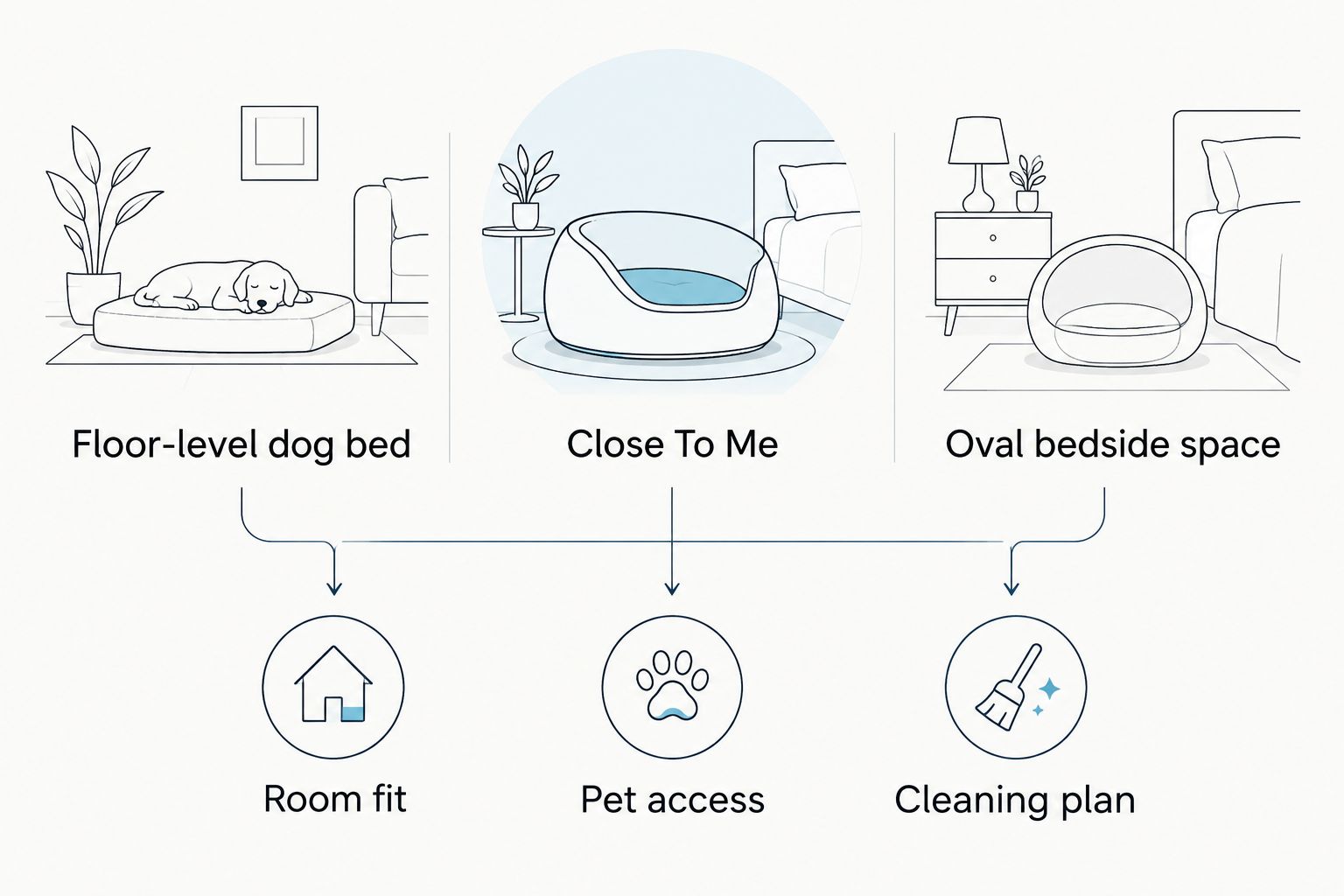
The best option is the one that fits the approved layout and your dog's access needs. Use this comparison after measuring, not as a substitute for checking the room with staff.
The named bedside products below have a stated purpose of keeping your pet close in a separate sleeping space. Neither that purpose nor a product photograph establishes suitability for a particular resident, care routine, or facility.
| Option | Best for | Practical advantage | Key limitation |
|---|---|---|---|
| Floor-level dog bed | Dogs that need a sleeping spot without a climb | Avoids raised-bed access | Needs a dedicated place outside the resident's route |
| Close To Me Nest | Bedside Pet Bed | Pet parents seeking a separate bedside sleeping spot | Designed to keep a pet close while you sleep | Room fit, access, and care requirements need checking |
| Close To Me Oval Nest | Bedside Pet Bed | Pet parents considering an oval bedside sleeping space | Gives the pet its own cozy space close by | Shape alone does not establish usable space or room suitability |
Start by ruling out arrangements that do not fit. Then compare the remaining options against your dog's resting position and the cleaning plan. Do not assume the two named beds have identical dimensions, attachment methods, or access requirements.
The Furmatesusa options below belong on your shortlist only after those checks. Review the current product details before making a decision; a bedside pet bed is household pet gear, not a replacement for a resident's mobility or care equipment.


Common mistakes in assisted living rooms
Choosing closeness over room access
Putting the pet bed on your usual exit side feels convenient until you need that space yourself. Review the placement from your seated position, standing position, and staff's working position before settling on it.
Assuming pet permission covers every setup
Permission to keep a dog does not answer questions about furniture placement or access accessories. Ask about the complete arrangement, including any stairs, rather than presenting each piece separately after it arrives.
Planning for the cushion but not the frame
A sleeping surface is only part of the footprint. Include the assembled bed, its entrance, and any accessory in your sketch, then check that doors and drawers still work as intended.
Leaving nighttime pet care unassigned
A close sleeping spot does not handle bathroom trips or a restless dog. Agree on who responds when you cannot comfortably manage the task, and keep that person's contact details with the pet-care plan.
Treating a cozy bed as medical support
Do not choose a bedside bed on the assumption that it treats joint pain, prevents falls, or guarantees better sleep. Ask your veterinarian about your dog's health needs and your care team about your own access needs.
FAQ
What's the best bedside dog bed for an assisted living room?
The best bedside dog bed fits the home's approved layout, your access needs, and your dog's ability to enter and leave. Measure the complete setup and review placement with staff before choosing a model.
Are Furmatesusa bedside pet beds suitable for assisted living?
Suitability depends on the individual room, resident, dog, and home's rules. Furmatesusa bedside pet beds are designed for pets to sleep close by, but that purpose does not establish facility approval or medical suitability.
Is a floor dog bed better than a raised bedside sleeper?
A floor dog bed is better when your dog needs to avoid climbing and an approved floor spot is available. A raised sleeper offers a different bedside arrangement, but its entry method and full footprint need review.
Can I put my dog's bed beside my walker?
Keep your dog's bed out of the space you need to reach and use your walker. Ask staff to review the placement with your actual equipment rather than judging the gap by eye.
Do I need pet stairs for a bedside dog bed?
You need an access plan, not automatically pet stairs. Check the bed's entrance and your dog's abilities; ask your veterinarian about climbing if your dog has pain or mobility restrictions.
What should I measure before choosing a bedside pet bed?
Measure the available length, width, and height, then compare the complete assembled footprint with the current product details. Also check your dog's resting space and any room needed for an access accessory.
Who should clean the dog's bed in assisted living?
Assign cleaning to a specific person who can follow the product's care instructions. Agree with the home on responsibilities rather than assuming staff handle pet bedding.
How do I help my dog settle into a new bedside bed?
Introduce the bed while you are awake, use familiar bedding when permitted, and reward calm settling. Keep an approved backup sleeping spot until the new arrangement works for both you and your dog.
One last thing
Practice getting out of your own bed before asking your dog to settle into theirs. Use your normal footwear and mobility equipment, with assistance if you need it, and check the proposed layout while the pet bed is empty.
Keep the shared moment; change the layout if it gets in your way. For your 2026 bedroom, the goal is a furry friend close enough to enjoy, with your everyday movements still comfortably planned.