

Cat Strollers Ranked by Weight Capacity 2026
Choosing a cat stroller comes down to one number most pet parents skip past: the weight rating stamped on the frame. This guide ranks cat strollers by weight capacity tier for 2026, so the frame you buy fits your cat today and still holds her steady a year from now.
- Furmates Stroller Hauler wins for everyday one-cat outings in 2026 — buy it for daily walks and errands.
- Cat strollers ranked by weight capacity split into six tiers, from compact single-cat to heavy-duty large-breed frames.
- A domestic cat averages 8-10 lbs; Maine Coons run 12-18 lbs — match the stroller's rated capacity, not just its size.
- Dual-cat strollers need a wider wheelbase and higher weight rating than single-cat models — check both before buying.
- Skip any stroller that doesn't list a weight rating on its product page; that's a safety gap, not a small detail.
Why this matters
A stroller sized for a 9-lb tabby buckles under a 16-lb Maine Coon, and a heavy-duty frame built for two cats feels bulky for one cat in a studio apartment. The Furmates Stroller Hauler is built for the middle of that range — the everyday one-cat routine most households actually have.
Weight capacity decides comfort, wheel stability, and how long a stroller lasts before the seams or axle give out. Cat strollers ranked by weight capacity fall into six practical tiers in 2026: compact single-cat, dual-cat/multi-pet, heavy-duty large-breed, lightweight travel, all-terrain jogging, and the everyday all-rounder. Matching your cat's actual weight — not a guess — to the right tier is the single biggest factor in whether a stroller gets used past week one or ends up folded in a closet.
What makes the best cat stroller for weight capacity
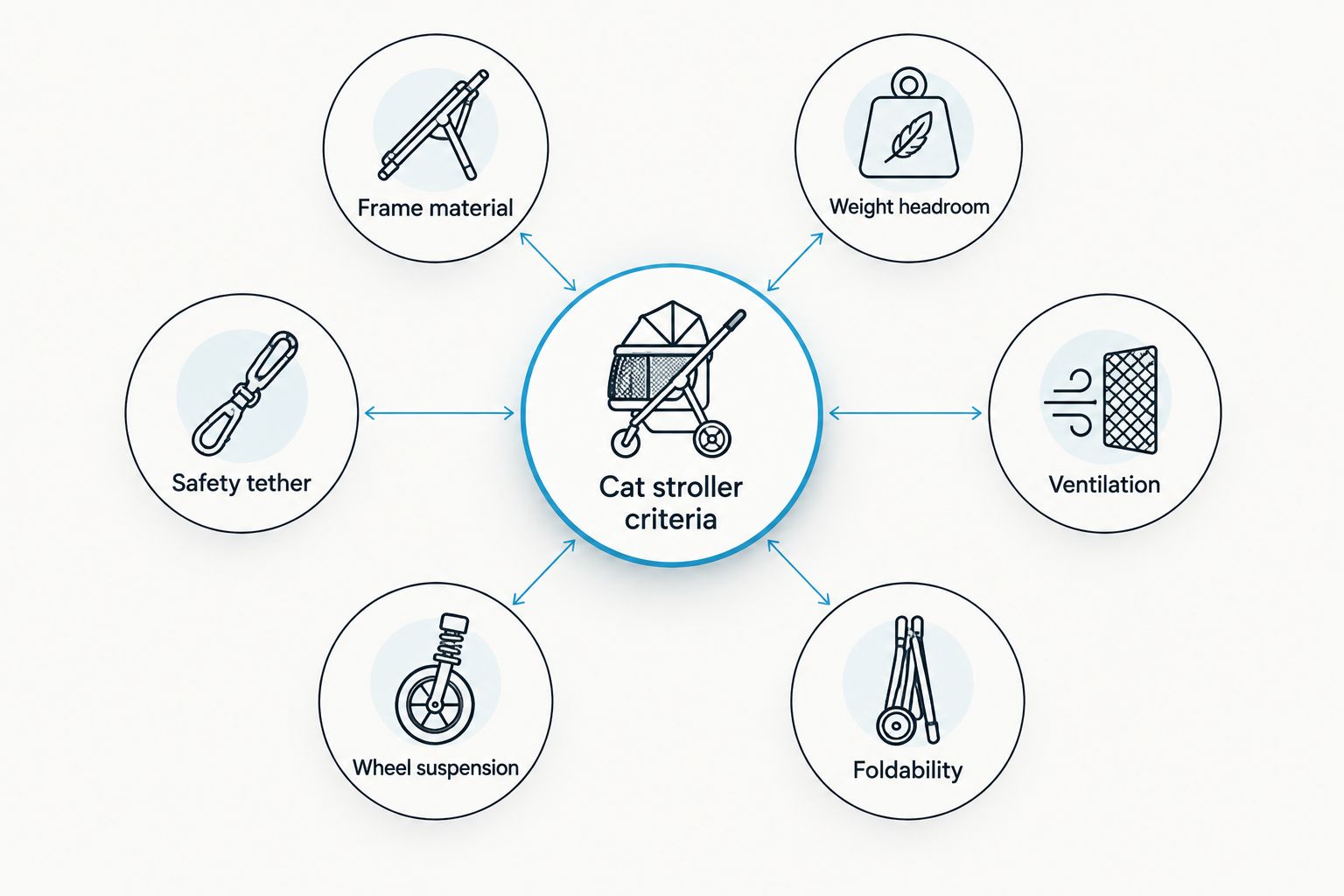
- Frame material and wheelbase — steel or reinforced aluminum frames hold weight better than molded plastic, and a wider wheelbase keeps the stroller from tipping with a heavier cat inside.
- Weight rating headroom — buy above your cat's current weight, not at the exact number, especially for growing kittens or cats regaining weight after illness.
- Ventilation and mesh coverage — more mesh panels mean better airflow for a cat riding in a warm cabin for 20 minutes or more.
- Foldability and storage — a stroller rated for higher weight is usually heavier itself, so check how it folds if you're carrying it up apartment stairs.
- Wheel suspension and terrain type — sidewalk strollers use smaller wheels; trail and jogging strollers need shocks and larger wheels to carry the same weight over bumps.
- Safety tether and door latches — a heavier, more active cat needs a secure interior leash clip and a latch that won't pop open mid-walk.
How to weigh your cat before you buy
Skip breed averages and get an actual number. Step on a bathroom scale alone, note the reading, then pick your cat up and step on again — the difference is her weight. Repeat this every few months if she's a kitten, recovering from illness, or on a vet-recommended weight plan, since a stroller bought for last year's weight won't necessarily fit this year's cat.
Cat strollers ranked by weight capacity: at a glance
| Stroller type | Best for | Standout feature | Key limitation |
|---|---|---|---|
| Furmates Stroller Hauler | Everyday one-cat outings | Everyday, adventure-ready build for daily use | Not built as a dual-pet frame |
| Compact single-cat stroller | Solo cats in small apartments | Narrow frame fits elevators and tight hallways | Lower weight ceiling than dual frames |
| Dual-cat/multi-pet stroller | Two-cat households | Wider wheelbase, shared or split cabin | Bulkier to fold and store |
| Heavy-duty large-breed stroller | Maine Coons and cats over 15 lbs | Reinforced frame and axle | Heavier to push and carry |
| Lightweight travel stroller | Air travel and hotel stays | Collapses small, lower total weight | Lower weight rating overall |
| All-terrain jogging stroller | Hiking and off-road trails | Shock-absorbing wheels, higher clearance | Larger footprint, harder to store indoors |
1. Furmates Stroller Hauler: best cat stroller for everyday adventures with one cat
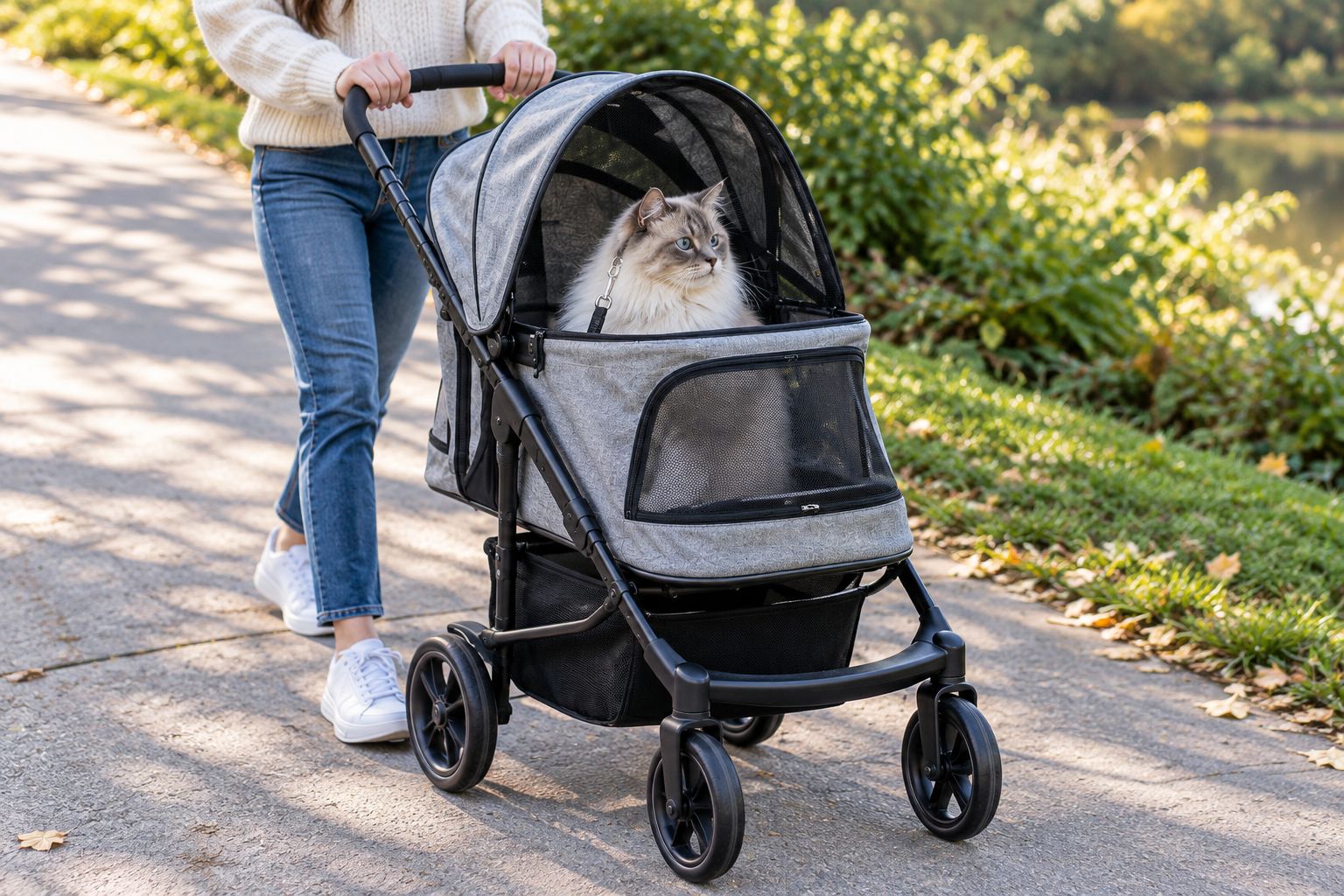
The Stroller Hauler is built for the daily version of stroller life: a walk around the block, a trip to the vet, an afternoon at a pet-friendly patio. It's designed so a cat rides at eye level with the people around her instead of stuck inside a carrier bag, and the mesh paneling keeps air moving on warmer 2026 afternoons.
Furmates Stroller Hauler pros:
- Everyday frame that handles sidewalks, parks, and errands without feeling like overkill
- Mesh paneling built for airflow on warmer days
- Fits the routine most single-cat households actually have
Furmates Stroller Hauler cons:
- Not marketed as a dual-pet or heavy-duty frame
- Best suited to routine outings, not multi-day trail use
Best for: one cat, daily walks and errands. Verdict: Buy if your cat sits in the average-to-mid weight range and you want one stroller for regular use.
2. Compact single-cat stroller: best for solo cats in small apartments
A compact single-cat stroller trades weight capacity for a narrow frame that fits through apartment doorways, elevators, and tight hallway turns. It's the right pick when storage space matters more than hauling a bigger cat, and it's usually the lightest option to carry when folded.
Compact single-cat stroller pros:
- Narrow profile fits small spaces and public transit
- Lighter overall weight makes it easier to lift up stairs
- Simplest frame to fold and unfold one-handed
Compact single-cat stroller cons:
- Lower weight ceiling than dual-cat or heavy-duty frames
- Less room for a second pet or extra gear
Best for: apartment living with one average-weight cat. Verdict: Buy for city living; Skip if your cat is on the larger end of the breed range.
3. Dual-cat/multi-pet stroller: best for two-cat households
A dual-cat stroller widens the wheelbase and raises the total weight rating so two cats can ride without the frame leaning to one side. Some models split the cabin into two compartments; others use one open cabin with a center divider, which matters if your cats don't share space quietly.
Dual-cat/multi-pet stroller pros:
- Higher combined weight rating than single-cat models
- Wider base resists tipping with uneven cat weight distribution
- One stroller instead of two separate trips outside
Dual-cat/multi-pet stroller cons:
- Bulkier to fold and store in small entryways
- Heavier to push once fully loaded
Best for: two cats riding together. More detail is in cat strollers for multi-cat households. Verdict: Buy if you're walking two cats regularly; Hold if you only occasionally take both out.
4. Heavy-duty large-breed stroller: best for Maine Coons and cats over 15 lbs
Large-breed cats need a reinforced frame and axle, not just a bigger cabin. Maine Coons commonly weigh 12-18 lbs as adults, and a stroller rated below that range will sag or wobble on uneven pavement.
Heavy-duty large-breed stroller pros:
- Reinforced frame and axle built for higher weight
- Larger wheels handle curbs and uneven ground better
- More interior headroom for a bigger cat to turn around
Heavy-duty large-breed stroller cons:
- Heavier to lift and carry when folded
- Larger footprint takes up more storage space
Best for: Maine Coons, Ragdolls, and other large-breed cats. Verdict: Buy if your cat weighs 15 lbs or more; Skip for an average 9-lb cat — you're paying for capacity you don't need.
5. Lightweight travel stroller: best for air travel and hotel stays
A travel stroller sacrifices weight capacity for a smaller folded size and lower total weight, which matters when you're also carrying luggage through an airport. It's built to clear airline and hotel space constraints, not to carry a heavier cat comfortably over long distances.
Lightweight travel stroller pros:
- Folds down small enough for overhead storage or car trunks
- Easier to carry one-handed through an airport or lobby
- Lower total product weight than everyday or heavy-duty tiers
Lightweight travel stroller cons:
- Lower weight rating than everyday or heavy-duty models
- Thinner frame material may flex more under an active cat
Best for: occasional trips, not daily use. Verdict: Buy for a specific trip; Hold if you need one stroller for both travel and daily walks.
6. All-terrain jogging stroller: best for hiking and off-road trails
An all-terrain stroller uses shock-absorbing wheels and higher ground clearance to carry weight over gravel, dirt, and roots without jarring the cat inside. It's the least practical option for apartment storage but the most capable option outdoors.
All-terrain jogging stroller pros:
- Shock absorption smooths out uneven trail surfaces
- Higher ground clearance handles roots and gravel
- Larger wheels distribute weight better on soft ground
All-terrain jogging stroller cons:
- Largest footprint of any tier, hard to store indoors
- Overkill for a cat that only walks sidewalks
Best for: hikers and cats already used to outdoor time. Verdict: Buy if trails are your regular routine; Skip for city-sidewalk-only cats.
How we ranked
Every tier above gets measured against the same six criteria: frame material, weight rating headroom, ventilation, foldability, wheel type, and safety latching. No tier wins on all six — a heavy-duty frame trades storage ease for capacity, and a travel stroller trades capacity for portability. The right pick in 2026 matches your cat's actual weight and your daily routine, not the highest number on a spec sheet. A household walking one average cat around the neighborhood doesn't need the same frame as a household hiking with a 17-lb Maine Coon, even though both are shopping the same category.
Ready for your cat's first ride?
Check current sizing and specs before you order.
Getting your cat comfortable in a new stroller
Weight capacity only matters once your cat will actually sit in the thing. Most cats need a slow introduction — treats near the stroller, short sits with the door open, then a five-minute ride before a full walk. The full walkthrough is in how to train your cat to ride in a stroller.
Which cat stroller should you choose?
For most one-cat households in 2026, the Furmates Stroller Hauler is the default pick — it's built for the daily walk-to-errand routine that covers most cat owners. Step up to a dual-cat frame only if you're walking two cats together, and reserve the heavy-duty tier for cats genuinely over 15 lbs rather than buying capacity you'll never use. A travel stroller earns a spot in the closet next to your everyday one if flights or hotel stays are a regular part of your year, not a replacement for it.
FAQ
What's the best cat stroller for a heavier cat?
A heavy-duty large-breed stroller with a reinforced frame and axle is the best cat stroller for a heavier cat, since it's built to carry more weight without sagging. Maine Coons and Ragdolls, which commonly weigh 12-18 lbs as adults, fit this tier better than a compact single-cat frame.
Is a dual-cat stroller better than two single-cat strollers?
A dual-cat stroller is better than two single-cat strollers if you regularly walk two cats together, since it combines a higher weight rating with one wider wheelbase instead of two narrow frames. Two single-cat strollers only make sense if your cats are never walked at the same time.
How much weight can a cat stroller hold?
Weight capacity varies by tier — compact single-cat strollers hold less than dual-cat or heavy-duty frames, and the exact rating is listed on each product page. Check the stroller's own spec sheet rather than assuming based on its size alone.
What size stroller does a Maine Coon need?
A Maine Coon needs a heavy-duty large-breed stroller, since adults commonly weigh 12-18 lbs and need a reinforced frame and axle to ride comfortably. A compact single-cat stroller built for a 9-lb average cat will feel tight and may exceed its rated capacity.
Can I use a dog stroller for my cat instead?
You can use a dog stroller for a cat as long as the weight rating and interior size fit her, since the frame mechanics are similar. Cat-specific strollers tend to have finer mesh and smaller door gaps that keep a cat from squeezing out mid-walk.
How do I know if my cat is too heavy for her stroller?
Your cat is too heavy for her stroller if the frame sags, the wheels wobble under her weight, or she's at or above the stroller's rated capacity. Weigh her on a bathroom scale and compare that number to the spec sheet if she's actively gaining or losing weight.
Do kittens need a different stroller than adult cats?
Kittens don't need a separate stroller tier, but they do need one with a weight rating well above their current weight since they'll keep growing. A compact single-cat stroller with headroom above her adult breed weight avoids an upgrade a few months in.
What's the best cat stroller for travel in 2026?
A lightweight travel stroller is the best cat stroller for travel in 2026, since it folds smaller and weighs less for airport and hotel trips. It trades some weight capacity for portability, so it works better as a second stroller than an everyday one.
One last thing
Weight capacity numbers get skipped past because they look like a spec-sheet detail, but they're the difference between a stroller that lasts through 2026 and one that creaks by month six. Before you order any stroller this year, weigh your cat on a bathroom scale rather than guessing from breed averages — a 9-lb "average" cat can run heavier once she's fully grown, and that extra margin is what keeps a frame steady on an uneven sidewalk.