

Can dogs get motion sick in a pet stroller?
Yes, dogs can get motion sick in a pet stroller, so a quiet outing together can still leave your furry friend feeling nauseated. Drooling, repeated lip licking, restlessness, and vomiting can signal trouble, but fear, heat, and illness can cause similar signs. For stroller outings in 2026, stop when your dog looks uncomfortable rather than trying to finish the route.
- Can dogs get motion sick in a pet stroller? Yes; stop rolling if nausea or distress appears.
- Dog motion sickness and stroller anxiety can look alike; symptoms alone do not establish the cause.
- Furmatesusa pet strollers support everyday outings, but a stroller does not treat nausea.
- Introduce a stationary stroller first, then add gentle movement only while your dog remains comfortable.
Why this matters
A stroller lets your dog join you without walking the whole route. That benefit disappears when the ride becomes something your dog dreads. The goal is comfortable time together, not distance covered or a perfectly completed training session.
Start with how to introduce your dog to a stroller before planning a longer outing. Familiarity helps address fear, while watching your dog's response to movement helps you spot a different problem. Neither replaces veterinary advice when symptoms recur.
Can dogs get motion sick in a pet stroller?
Yes. Motion can trigger nausea in dogs, and a pet stroller does not remove that possibility. Motion sickness involves the body's balance system and the signals associated with movement. A slower ride is not a guarantee that your dog will feel well.
Watch for a change from your dog's normal behavior. A dog that becomes unusually quiet deserves attention just as much as a dog that whines or struggles to get out. Vomiting is not the only sign of nausea.
| What you notice | What it can indicate | What to do |
|---|---|---|
| Drooling, repeated swallowing, or lip licking | Nausea, stress, or another source of discomfort | Stop movement and assess your dog |
| Whining, trembling, or trying to escape | Fear, discomfort, or distress | End the trial and return to a calm setting |
| Vomiting during the ride | Motion sickness or another medical problem | Stop the outing and seek veterinary advice if it repeats |
| Heavy panting or breathing difficulty | Heat, stress, or a medical problem | Move to a cooler setting; breathing difficulty needs urgent care |
| Head tilt, stumbling, or poor balance | A possible balance-system or neurological problem | Contact your veterinarian rather than continuing stroller practice |
These signs overlap. A dog that drools before the stroller moves might be frightened, nauseated from an earlier car journey, or unwell for another reason. Use the timing as information for your veterinarian, not as a home diagnosis.
What should you do if your dog feels sick during a ride?
Stop first. Do not keep rolling to see whether your dog settles, and do not offer repeated treats to distract a dog that already looks nauseated.
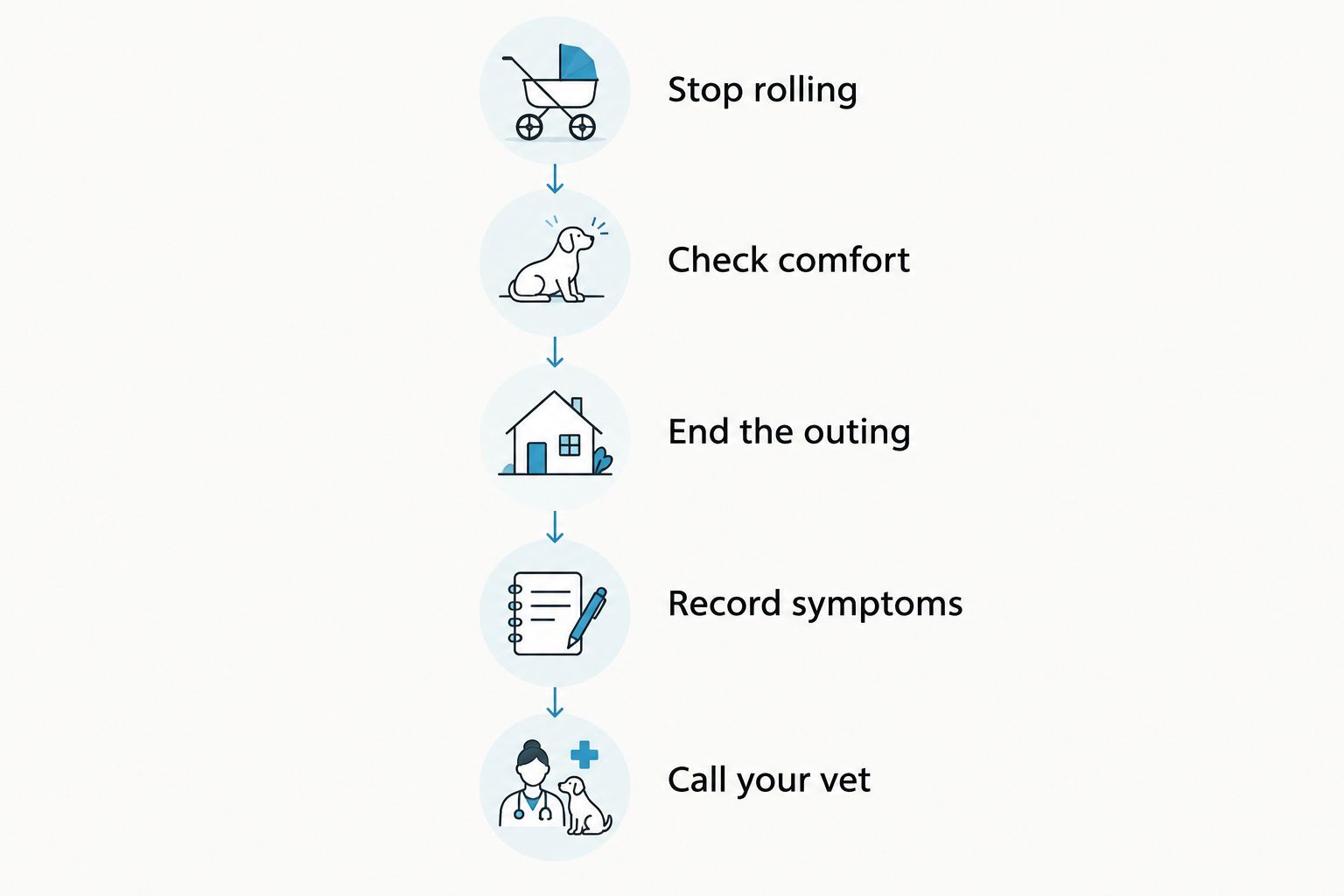
- Stop rolling. Park on a level surface away from traffic and secure the stroller according to its instructions. Keep your dog safely contained while you assess the situation.
- Check comfort. Look at breathing, alertness, posture, and the surroundings. Move away from direct sun or an overwhelming environment without prolonging the ride.
- End the outing. Choose the least stressful safe way home. Keep your dog secured, and follow any handling restrictions for an injured or recovering pet.
- Record symptoms. Note whether discomfort started before movement, during turns, after bumps, or following another part of the journey. Include any vomiting and changes in balance.
- Call your vet. Ask for advice when symptoms recur, your dog remains unwell after stopping, or you are unsure what caused the episode. Seek urgent help for severe signs.
After an uncomfortable ride, let your dog recover rather than immediately testing the stroller again. Clean any soiled surfaces following the stroller's care instructions. A fresh setup is useful, but it does not explain or fix the cause of vomiting.
How do you introduce stroller movement without pushing your dog?
Separate feeling safe in the stroller from tolerating movement. Your dog should not have to learn both during a busy walk. For your 2026 outing plan, use your dog's relaxed behavior as the condition for progressing—not a deadline.
Start with a stationary stroller
Place the stroller in a quiet, familiar area and secure it against rolling. Let your dog approach and investigate without being pushed inside. If entry requires lifting, support your dog safely and follow your veterinarian's instructions for any painful condition.
Reward calm interest while your dog feels well. Refusing a normally welcome treat is useful information, but it is not proof of motion sickness. Fear, distraction, and illness also affect appetite.
Help your dog settle before closing things up
Introduce containment gradually, using the stroller as its instructions require. Watch your dog's response to the enclosure, canopy, and your position beside the stroller. Keep fingers and paws clear of moving parts.
Do not hold a struggling dog in place for the sake of practice. Return to an easier stage once your dog is calm. A secure stroller is necessary for safety, but secure does not automatically mean comfortable.
Add gentle movement on a smooth surface
Begin where you can stop immediately and return easily. Push steadily, avoid abrupt turns, and watch your dog rather than your phone. Do not start with a crowded sidewalk, uneven trail, or a route that commits you to a long return journey.
End while your dog is still relaxed. If lip licking, drooling, trembling, or other discomfort appears, stop rather than adding more movement. There is no universal practice duration that makes a nauseated dog safe to continue.
Change only one part of the experience
Once your dog is comfortable with gentle movement, introduce a different setting without also making the outing more demanding. A new environment brings sounds, smells, and passing animals into the experience.
Keeping changes separate makes your observations more useful. If discomfort appears only after a change, describe that pattern to your veterinarian. Do not deliberately recreate a distressing episode just to confirm it.
Why stroller discomfort varies between dogs
Dogs do not all react to the same ride in the same way. Established veterinary guidance on canine motion sickness identifies movement sensitivity and anxiety as relevant concerns; other health problems can produce similar symptoms.
Consider these factors when discussing your dog's experience with a veterinarian:
- Previous motion sickness. A history of nausea during car travel is relevant, even though a stroller ride is a different experience.
- Fear of the setup. Distress before movement points to the stroller, handling, or surroundings as something to investigate.
- Movement and terrain. Bumps, rocking, and sudden changes in direction add motion to the ride. Choose smooth ground for an initial trial.
- Heat and excitement. Panting and restlessness are not specific to nausea. Check the environment rather than assuming every uncomfortable ride is motion sickness.
- Age and health. Puppies are commonly affected by motion sickness. New symptoms in an older dog, or symptoms accompanied by balance changes, deserve veterinary attention.
These factors guide observation, not diagnosis. Do not assume that a puppy will simply grow out of every problem or that an older dog's symptoms are an unavoidable part of aging.
Is a stationary stroller, a moving stroller, or a walk better?
Choose the activity your dog can comfortably manage today. A stroller is useful equipment, not a requirement for a successful outing. If your dog is recovering from surgery or has restricted activity, your veterinarian's instructions take priority over this comparison.
| Option | Best for | Benefit | Limitation |
|---|---|---|---|
| Stationary stroller practice | Dogs learning to feel safe in the enclosure | Introduces the setup without rolling | Does not establish tolerance for movement |
| Gentle stroller outing | Dogs already comfortable with the setup and motion | Allows shared outdoor time without continuous walking | Movement still triggers discomfort in some dogs |
| Walking on leash | Dogs cleared for walking and comfortable doing it | Avoids stroller movement and confinement | Is unsuitable when activity must be restricted |
You do not need to buy different equipment every time your dog has an uncomfortable experience. First identify whether the problem appears during containment, motion, heat, or handling. A different stroller cannot substitute for that assessment.
Furmatesusa pet strollers are best for pet parents seeking shared everyday outings, not treatment for motion sickness. That distinction keeps the purchase decision separate from your dog's medical needs.
What should you check before another stroller outing?
For a 2026 stroller checklist, prioritize safe fit and a calm route over accessories. Your dog needs an enclosure suitable for their size and a setup used exactly as the manufacturer directs. Do not estimate fit from breed alone.
Before leaving, check:
- The stroller's stated size and weight limits against your dog.
- The enclosure, closures, and restraint arrangements specified in the instructions.
- The wheels, brakes, and folding locks for proper operation.
- The cabin for loose objects, unstable bedding, and obstructed ventilation.
- The route for rough surfaces, direct sun, and an easy way back.
A soft surface should not slide around or crowd the cabin. Extra blankets are not automatically more comfortable, particularly in warm conditions. Keep the setup simple enough that you can see your dog's posture and notice changes.
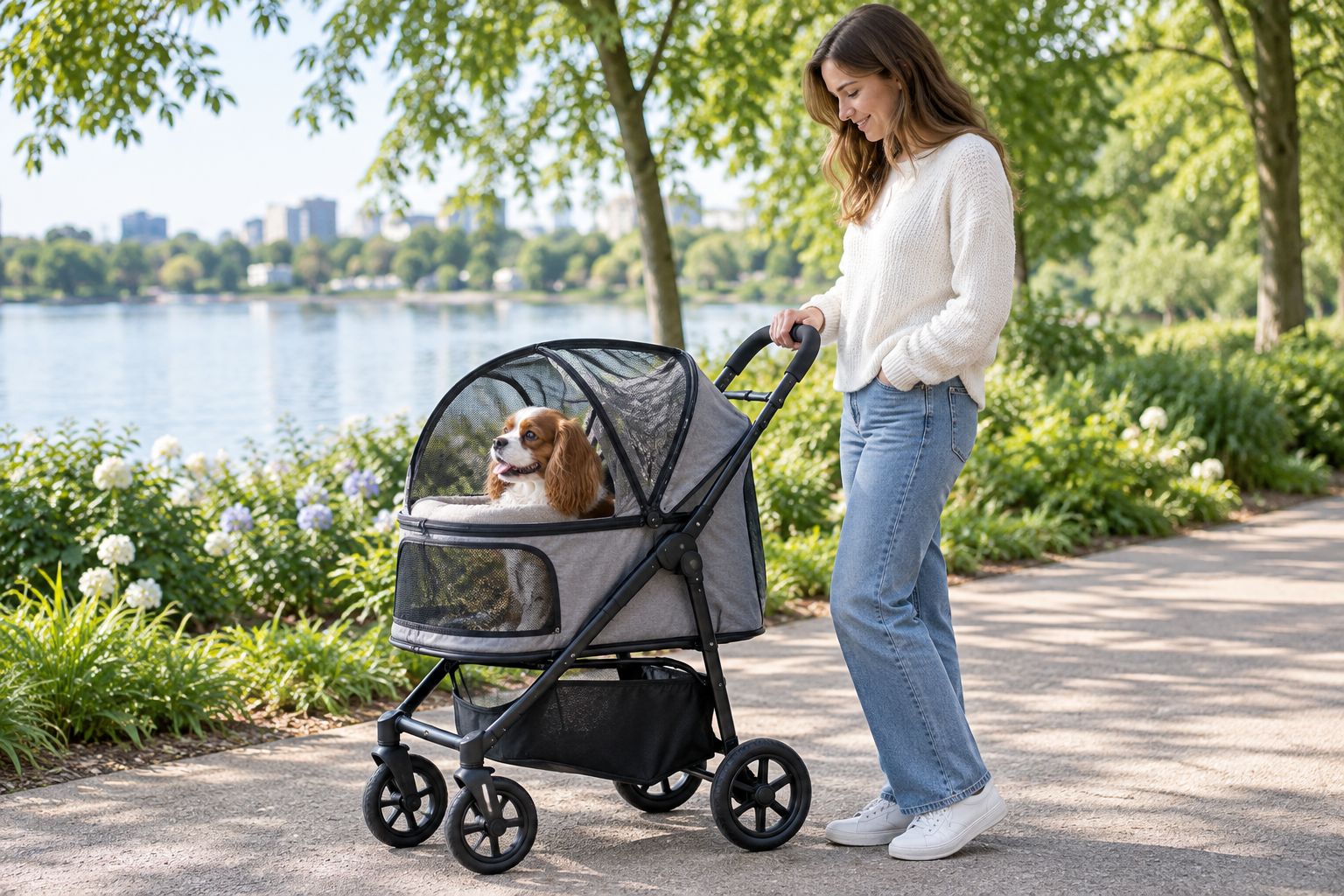
If you are considering Furmatesusa's Stroller Hauler, check its current product information against your dog's needs before choosing it. No stroller should be treated as an anti-nausea solution. The relevant question is whether the setup fits your dog and supports the outing your veterinarian considers appropriate.
How can you tell motion sickness from stroller anxiety?
Motion sickness and anxiety share signs, including drooling, restlessness, and vomiting. Symptoms that start before movement suggest fear or anticipation deserves attention; symptoms during rolling make movement an important part of the history. Neither pattern proves the cause.
Observe without provoking another episode. Tell your veterinarian about car travel, handling, confinement, and whether your dog feels well outside the stroller.
Should you avoid feeding your dog before a stroller ride?
Ask your veterinarian about meal timing if your dog has repeated nausea during travel. Do not apply a blanket fasting rule, especially for puppies or dogs with medical conditions. Avoid using food to persuade a visibly nauseated dog to continue.
Your dog's feeding needs and any prescribed medication matter more than a general internet schedule. Never withhold water as a motion-sickness strategy.
Can you give your dog motion-sickness medicine?
Only give medication under veterinary direction. Prescription options exist for canine motion-associated vomiting, but the right choice depends on your dog's health, symptoms, and other medicines. Do not copy a human dose or use leftover medication from another pet.
Medication and training solve different problems. Preventing vomiting does not necessarily remove fear, and a calmer dog can still experience nausea.
When should you call a veterinarian?
Call your veterinarian for repeated stroller-associated vomiting or discomfort that continues after the ride stops. Also seek advice if a dog that previously tolerated outings develops new symptoms. A pattern deserves assessment before another attempt.
Seek urgent veterinary care for breathing difficulty, collapse, marked weakness, repeated vomiting with an inability to keep water down, or new trouble standing and walking. Head tilt or loss of balance is not a reason to keep practicing until your dog adjusts.
Bring a clear account of the episode. Note meals, medications, any car journey before the walk, weather conditions, and the point when symptoms began. A safely recorded video can help describe behavior without relying on memory.
FAQ
Can dogs get motion sick in a pet stroller?
Yes, dogs can get motion sick in a pet stroller. Stop rolling if your dog shows nausea or distress, and ask your veterinarian about recurring symptoms.
What are the first signs of stroller motion sickness?
Drooling, repeated lip licking, swallowing, restlessness, and unusual quietness can precede vomiting. These signs also occur with anxiety and other problems, so they do not confirm motion sickness.
Should I keep pushing the stroller if my dog drools?
Stop and assess your dog rather than continuing the ride. New or excessive drooling during movement can signal nausea or distress.
Can puppies get motion sick in strollers?
Yes, puppies can experience motion sickness. Do not assume vomiting is harmless or use a fasting plan without veterinary advice.
Does a more expensive stroller prevent motion sickness?
A more expensive stroller does not guarantee protection from motion sickness. Fit, safe operation, gradual introduction, and your dog's individual response matter more than the price category.
What should my dog stroller checklist include in 2026?
Your 2026 checklist should include fit, weight limits, closures, restraints, brakes, ventilation, and a smooth route. Follow the stroller's instructions and any veterinary activity restrictions.
Can I give my dog human travel-sickness tablets?
Do not give human travel-sickness tablets without veterinary direction. Suitability and dosing depend on your dog and the specific medicine.
One last thing
A dog does not have to vomit for an outing to be uncomfortable. Repeated swallowing or suddenly becoming very still can be your cue to stop and check in.
For your next shared outing in 2026, make one simple rule: your dog's comfort decides when the ride ends. Getting home early is a better result than teaching your furry friend that the stroller means feeling unwell.