

Can pet stairs work for both cats and dogs in the same house?
Yes, pet stairs for cats and dogs together can work when the steps fit both pets, stay stable, and lead to a place each pet can reach comfortably. Sharing the same stairs does not mean climbing side by side: for a calm bedtime routine in 2026, introduce each furry friend separately and keep the route clear.
- Pet stairs for cats and dogs together work when both pets can comfortably use the same route.
- Choose step height, tread space, and stability for both pets—not just the more confident climber.
- Furmatesusa pet stairs suit pet parents seeking everyday access and useful storage; check each pet’s fit first.
- Use separate access routes if either pet blocks, crowds, or avoids the shared stairs.
Why this matters
A cat and dog can love the same couch without needing the same help getting there. Your dog might approach straight ahead while your cat pauses, turns, or chooses a different path. The useful question is whether the stairs work for each animal individually.
Start with fit rather than appearance. The guide to pet stairs for cats and small dogs is a useful companion when you are planning shared access to furniture.
A shared staircase should make closeness easier without turning the approach into a crowded doorway. Keep a separate resting option available, too. Neither pet should have to pass the other to reach every comfortable spot in your home.
Can pet stairs work for both cats and dogs in the same house?
Yes, provided both pets can use the staircase comfortably and without interference. Choose for the pet with the more demanding fit requirements, then check that the other pet can also manage the steps. Do not assume that stairs labeled for dogs exclude cats—or that a cat’s willingness to climb proves the stairs fit your dog.
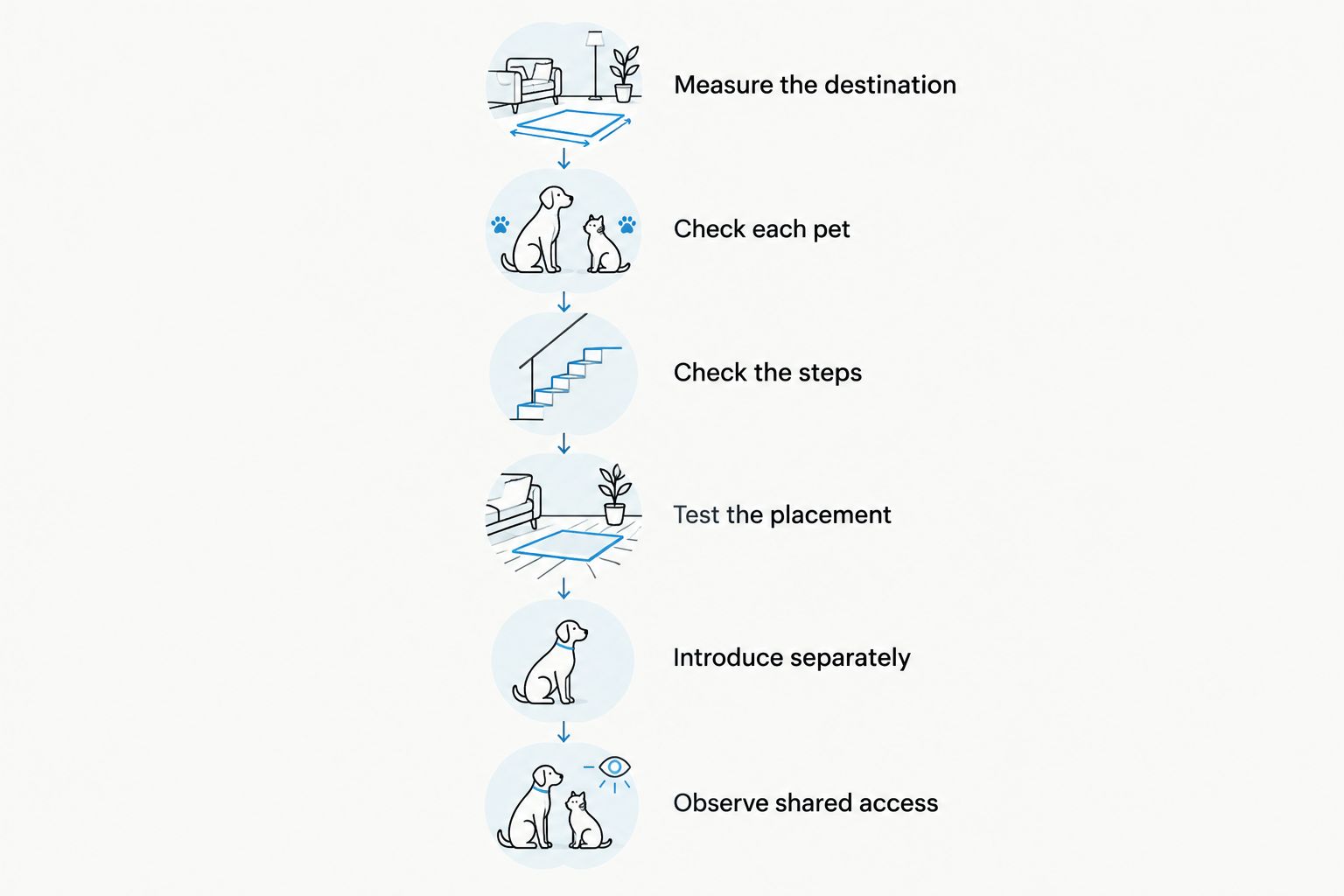
Use this practical check before making the stairs part of your daily routine:
- Measure the destination. Measure from the floor to the actual surface your pet will step onto, not just the furniture frame. Include the cushion or mattress in your assessment.
- Check each pet. Compare the manufacturer’s stated capacity with each pet’s weight. Look at whether each animal has room to place its paws and move without hanging over the edges.
- Check the steps. Examine the height between steps, the usable tread space, and the transition onto the furniture. Reject a setup that still requires an awkward final leap.
- Test the placement. Follow the assembly instructions and check for rocking, sliding, or a gap beside the furniture. Keep the approach away from doors and busy walking routes.
- Introduce separately. Let each pet investigate and practice without the other animal waiting at the bottom or occupying the landing.
- Observe shared access. Supervise the route once both pets are familiar with it. Watch for blocking, rushing, hesitation, and difficulty coming down.
These checks apply to your 2026 purchase whether you choose storage stairs or a simpler staircase. A tidy footprint is useful only when the climbing route works.
Shared stairs or separate stairs: which setup fits your home?
Choose shared stairs when both pets fit the same staircase and use the destination peacefully. Choose separate routes when their needs or behavior do not match. Sharing equipment is convenient, but it is not a goal you need to achieve at your pets’ expense.
| Setup | Best for | Practical benefit | Limitation |
|---|---|---|---|
| Shared stairs | Cats and dogs that comfortably use the same furniture access point | Keeps the room to a single staircase | Both pets depend on the same clear route |
| Separate stairs | Pets needing different step layouts or different destinations | Lets you fit access to each pet | Takes more floor space |
| Separate resting spots | Pets that crowd or guard an elevated sleeping area | Removes the need to share that destination | Does not provide access to the original furniture |
A shared staircase is not automatically the best arrangement for a small room. If its placement blocks a walkway or traps a pet between furniture and another animal, a different resting arrangement is the more practical choice.
Why shared pet stairs work differently from home to home
The same staircase can feel easy in one room and awkward in another. These are the factors to check:
- Furniture height: The stairs must serve the surface your pets actually use. A low sofa and a tall mattress require separate fit assessments.
- Each pet’s size: Check capacity and usable tread space for both animals. Matching the smaller pet alone leaves the larger pet’s fit unresolved.
- Comfort with climbing: Observe the cat and dog individually. Do not ask the hesitant pet to copy the confident one.
- Floor and placement: Check the base on the floor where the stairs will stay. A clear approach matters as much as the stairs themselves.
- Access to the destination: Both pets need room to arrive and leave without being cornered or blocked.
- Storage design: For storage stairs, follow the instructions for assembly, closures, and use. Hidden storage does not replace a fit or stability check.
Treat these as checks, not promises. A product description cannot tell you whether your cat will wait calmly while your dog comes down.
How do I introduce shared stairs without creating competition?
Teach each pet separately before practicing shared access. You are introducing a new route, not asking your furry friends to race toward a favorite cushion.
Start with a quiet approach
Put the stairs in their intended position and let your pet investigate without pressure. Keep the other animal elsewhere during this first introduction. Avoid placing food where it draws both pets into the same narrow space.
Reward voluntary interest with something your pet enjoys. Do not push, pull, or place an unwilling animal on the stairs to demonstrate the route. If your pet backs away, give it space and reassess the setup.
Practice going up and coming down
Observe both directions. Reaching the couch is only part of the task; your pet also needs a comfortable way back to the floor.
Look for steady paw placement rather than speed. If your pet skips the stairs and jumps, check the position and transition before repeating the exercise. Keep access supervised while you establish whether the route suits that animal.
Add the other pet without crowding
Once each pet uses the stairs comfortably alone, supervise with both animals nearby. Keep the approach and landing open. Redirect a pet that parks at the bottom or interrupts the other animal’s movement.
If one pet consistently blocks the other, separate the access routes instead of insisting on sharing. The stairs should support your household routine, not become another place where you must manage a dispute.
Are 2-step storage stairs enough for both pets?
A 2-step design is a candidate only when its actual dimensions suit your furniture and both pets. The number of steps does not establish the total height, the height of each rise, or the usable space for paws. Check those details before choosing.
For a low destination, a 1-step design deserves its own fit check. Neither design is automatically right because your cat is agile or your dog is small.
For a 2026 bedroom setup, Furmatesusa’s storage stairs offer a practical way to combine pet access with hidden storage. The deciding question remains whether the particular model fits your destination and both animals.
| Product | Best for | Stated benefit | Fit question to resolve |
|---|---|---|---|
| 2Step | Pet Stairs with Storage | Pet parents considering a 2-step route with storage | Combines climbing access and hidden storage | Do its height, tread dimensions, and capacity suit both pets? |
| 1Step | Pet Stairs with Storage | Pet parents considering a 1-step route with storage | Combines a step and hidden storage | Is the remaining transition onto the furniture comfortable? |
Picture the stairs beside the furniture with room for your pet to approach directly. Avoid squeezing them into a corner simply because the storage would be convenient there.
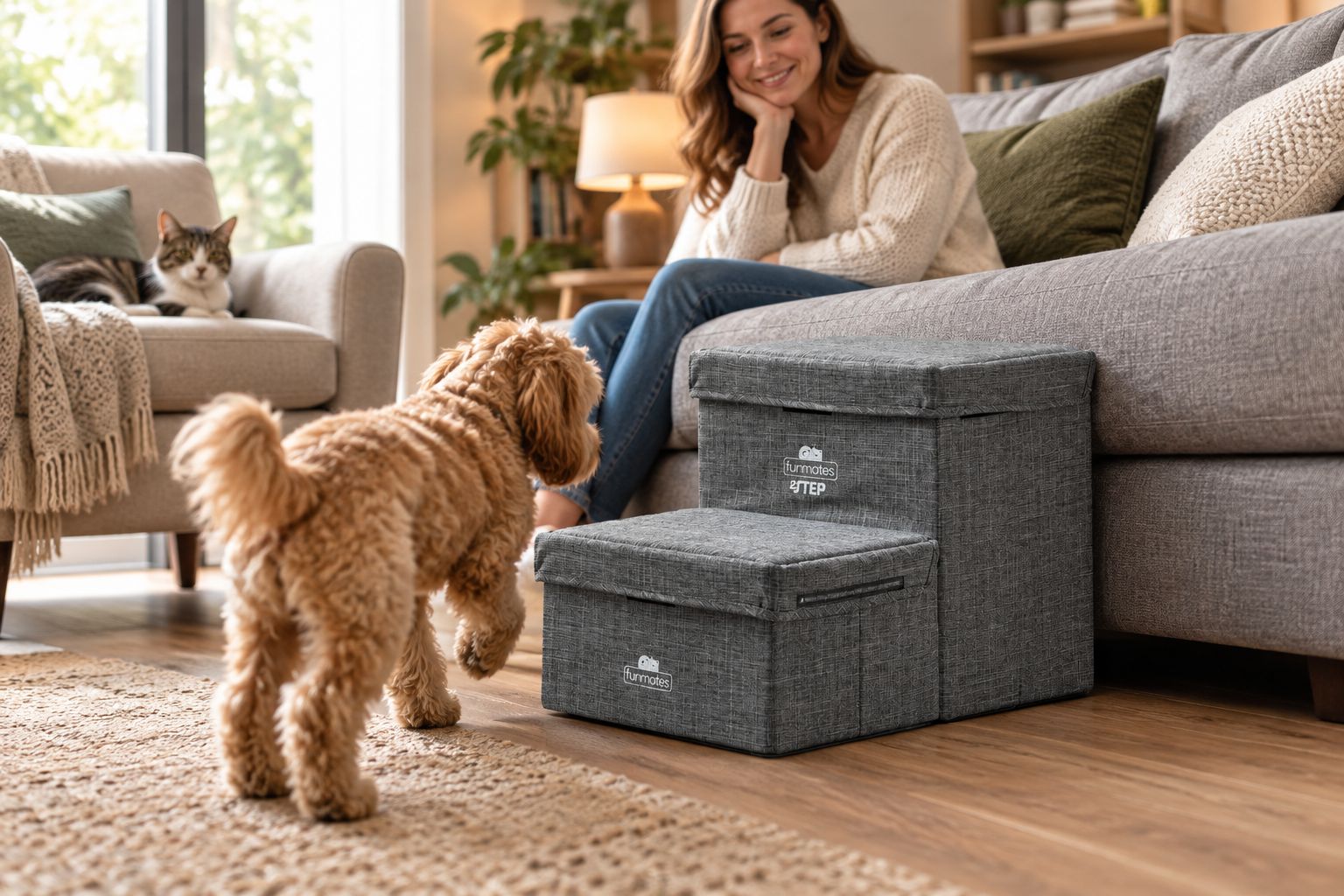
Furmatesusa pet stairs are best for pet parents who want everyday furniture access with hidden storage. Their practical advantage is combining those uses; their limitation is that storage and step count alone cannot establish suitability for your particular pets.


Can my cat and dog climb the stairs at the same time?
Shared pet stairs should be treated as a route each pet uses individually, not as permission for simultaneous climbing. Do not assume that a stated weight capacity also establishes enough space for passing, turning, or climbing together.
Keep the landing clear while a pet is moving. If both animals repeatedly approach together, supervise and redirect rather than relying on them to work out a narrow crossing.
What if one pet refuses the shared stairs?
A refusal is a reason to check fit, placement, and the surrounding activity—not to force the pet onto the stairs. Try the introduction with the other animal absent and the destination unoccupied. Observe whether the pet avoids the staircase itself or the crowded area around it.
If the pet still declines, keep an alternative resting spot available. Sharing one staircase is optional; comfortable access for each furry friend is the priority.
What if one pet has pain or is recovering from surgery?
Ask your veterinarian whether stair use is appropriate before introducing it to a pet with pain, a mobility condition, or a recent procedure. A staircase is not a treatment, and another pet’s easy climb does not establish that it suits the recovering animal.
Follow the pet’s individual care instructions. If climbing is restricted, do not test the shared staircase as a workaround.
A simple shared-stairs check for 2026
Before leaving the setup in regular use, watch a complete journey from the floor to the destination and back for each pet. Repeat the observation with the other animal nearby, while keeping the route clear.
Use this checklist:
- The stairs remain in their intended position.
- Each pet has room for deliberate paw placement.
- The final transition does not require an awkward leap.
- Neither animal blocks the approach or landing.
- Each pet can leave the destination without being cornered.
- Storage closures and the climbing surface remain properly assembled.
Recheck after moving furniture or changing the destination. A staircase that fitted yesterday’s sofa arrangement needs a fresh assessment beside a different bed.
FAQ
Can a cat use the same pet stairs as a dog?
Yes, a cat can use the same pet stairs as a dog when the staircase fits both animals and each can use it comfortably. Introduce them separately and keep the approach and landing clear.
Are pet stairs for cats and dogs together a good choice in 2026?
Pet stairs for cats and dogs together are a good choice in 2026 when both pets fit the same setup and share access calmly. Choose separate routes when their fit requirements or behavior differ.
Are 2-step pet stairs enough for a cat and a small dog?
A 2-step staircase is suitable only when its actual height, tread space, and capacity fit the furniture and both pets. Step count alone does not establish suitability.
Should I choose 1-step or 2-step storage stairs?
Choose between 1-step and 2-step storage stairs by checking the complete route from the floor to your furniture. Compare the actual dimensions and the remaining transition rather than choosing by step count alone.
Can my cat and dog climb shared stairs together?
Treat shared stairs as an individually used route rather than encouraging simultaneous climbing. A weight rating does not establish enough room for pets to pass or turn together.
What should I do if my dog blocks my cat from the stairs?
Keep the pets separate during practice and provide another access route if blocking continues. Your cat should not have to pass a guarding dog to reach every resting spot.
Are Furmatesusa storage stairs suitable for every cat and dog?
Furmatesusa storage stairs require an individual fit check for your cat, dog, furniture, and floor. Confirm the model’s dimensions and capacity, then observe each pet using the route.
Can a pet recovering from surgery use shared stairs?
A pet recovering from surgery should use stairs only when its veterinarian permits that activity. Follow the recovery instructions rather than copying another pet’s routine.
One last thing
The pet that climbs up happily still needs a comfortable way down. When reviewing your shared setup in 2026, pay as much attention to the return journey as the arrival beside you.
Watch each pet complete the whole route before calling the setup a success. That small check keeps the focus where it belongs: an easier everyday moment together, not simply another piece of gear in the room.