

Cat Cave Beds for Cat Cafes: Choose Quiet Retreats 2026
Cat cafe cave beds are enclosed resting spaces that give resident cats somewhere to withdraw from visitors. Choose cat cave beds for cat cafes around voluntary use, easy cleaning, and quiet placement—not how well a sleeping cat photographs.
- Choose cat cave beds for cat cafes that offer privacy without blocking staff access for cleaning.
- Furmatesusa pet beds suit pet parents seeking everyday comfort; evaluate cafe suitability separately.
- Pair enclosed cat beds with open resting spots so cats can choose where to settle.
- Keep occupied cave beds off-limits to visitors, and follow each bed’s care instructions.
Why cave beds matter for cat cafes
A cat cafe brings resting cats and visiting people into the same setting. A cave bed should give a cat permission to leave the interaction, not create another place for guests to approach. That distinction shapes where you place beds, how staff supervise visitors, and what you buy.
For your 2026 setup, separate guest seating from protected resting areas before choosing colors or matching furniture. An attractive bed in a busy aisle does not function as a quiet retreat. A simpler bed in a protected corner offers a clearer boundary.
Start with the practical questions in this guide to choosing the right cat cave bed size. Then evaluate the whole cafe: cats need access to resting places without having to pass through a crowd or compete at a single entrance.
Your selection needs to work for cats and staff. A cozy interior matters, but so do reaching inside, inspecting seams, removing bedding, and returning the bed to service after cleaning.
Set up cat cave beds for your cafe
Map quiet resting areas before shopping
Walk through the cafe during visitor activity and identify places where cats already settle undisturbed. Use a simple floor sketch first. Mark doors, guest seating, play areas, litter areas, food stations, and routes staff need to keep clear.
Place proposed retreats outside the busiest paths. Avoid corners where guests gather for photos or where a chair backs directly into the entrance. Give each cat a clear route away from the bed rather than surrounding it with furniture.
An elevated location needs its own assessment. The bed must sit securely, and the cat must be able to reach it comfortably. Do not assume a shelf is suitable just because a cave fits on it.
- Mark quiet zones on your floor sketch.
- Keep cave entrances clear of guest walkways.
- Separate retreats from noisy equipment.
- Check the route into and out of each resting area.
- Leave enough access for staff to inspect the bed.
Check fit, access, and cleaning instructions
Measure the cat and the usable interior, not just the bed’s outside dimensions. Look for room to enter, turn around, and rest naturally. An opening that looks generous in a picture still needs checking against the actual cat.
Read the care instructions before ordering. A removable cushion does not establish that the shell is washable, and a washable cover does not establish that the whole bed tolerates your sanitation process. Ask for clarification when the instructions do not address the component you need to clean.
Reject any bed whose care requirements do not fit your cafe’s routine. Softness cannot compensate for an interior staff cannot inspect or maintain. For your 2026 shortlist, record fit and care requirements alongside appearance.
- Compare usable interior measurements with each cat’s needs.
- Check entrance height and width separately.
- Identify which components come apart.
- Confirm permitted washing and drying methods.
- Inspect seams, loose trim, and accessible filling.
- Check that the entrance keeps its intended shape.
Compare enclosed and open resting choices
Before buying a full set, use an existing open bed and a suitable enclosed retreat to observe what your cats choose. A clean, stable cardboard hideaway can help you explore location preferences, but remove it when it becomes soiled or damaged. It is not a substitute for your sanitation plan.
An enclosed bed offers visual shelter; an open bed gives staff a clearer view of the resting cat. Neither shape suits every cat. Keep both choices available rather than treating reluctance to enter a cave as a training problem.
Furmatesusa pet beds are best for pet parents seeking comfortable gear for everyday life with dogs and cats. You can browse Furmatesusa when comparing ready-made resting options, but assess each candidate against your cafe’s fit, access, and cleaning requirements. A home-oriented pet bed is not automatically suitable for shared cafe use.
- Keep an open resting option beside your cave-bed plan.
- Compare actual care instructions, not general softness claims.
- Choose enclosed retreats for cats that seek shelter.
- Choose open beds for cats that prefer an unobstructed view.
- Remove temporary hideaways when damaged or soiled.
Introduce beds without forcing contact
Set the cave in its intended location and let the cat investigate. Keep the entrance unobstructed. Do not place a cat inside, hold the opening closed, or ask guests to coax the cat out for a photograph.
Start while the room is quiet so the cat can investigate without an audience. Keep familiar resting places available. Removing every alternative turns the introduction into a forced choice rather than a useful test.
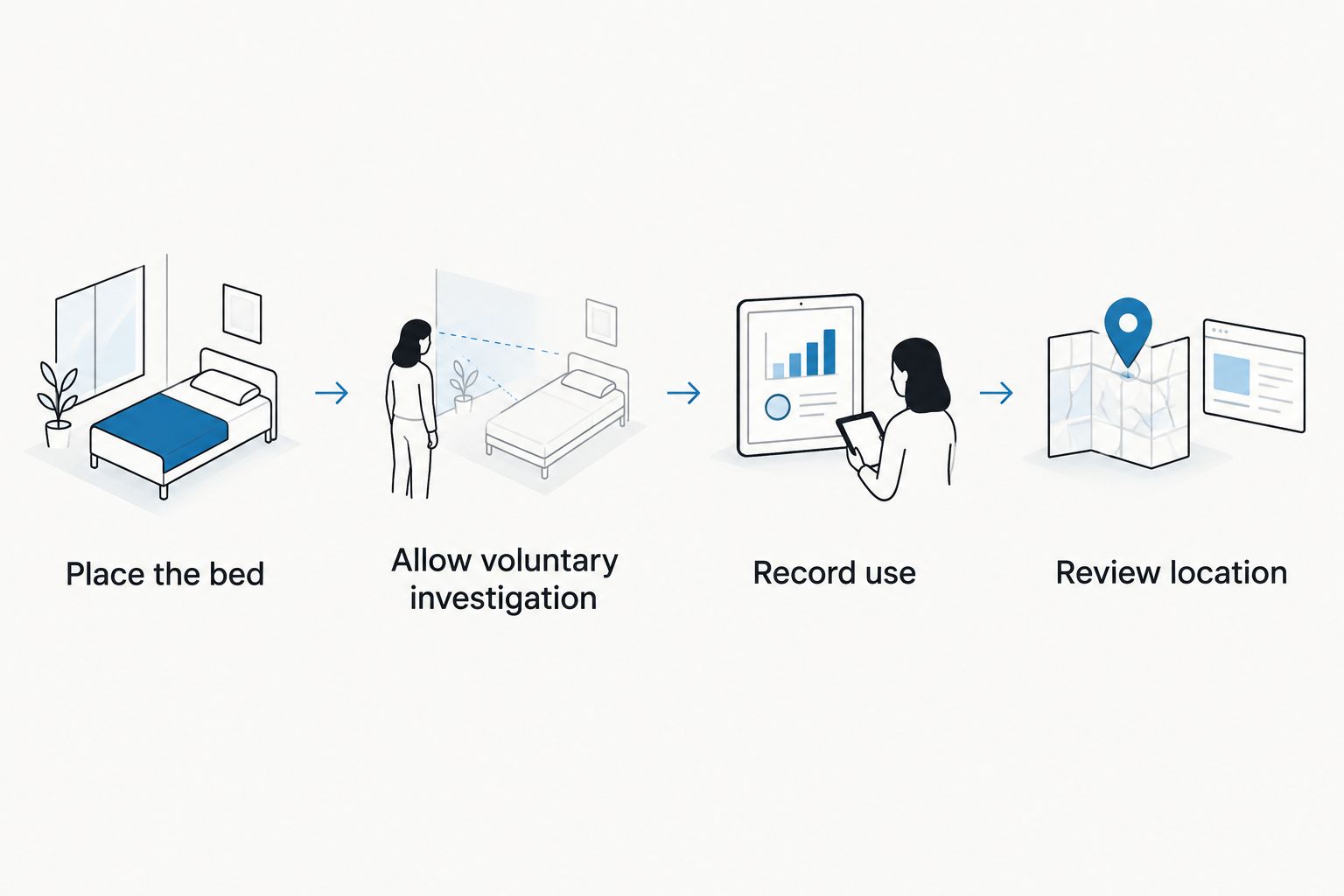
For a manageable 2026 pilot, schedule a 7-day observation period and make 2 brief observation checks per day, including a quiet period and a visitor period. These are suggested staff routines, not promised adjustment times. If a cat avoids the bed, review its location and shape rather than extending pressure.
- Place the bed before inviting guest interaction nearby.
- Allow voluntary investigation and entry.
- Keep familiar beds available during the pilot.
- Record use during quiet and visitor periods.
- Change one feature at a time when troubleshooting.
A short observation sheet keeps the process simple: note location, voluntary use, guest interruptions, and any cleaning difficulty. Staff can then discuss the same evidence instead of relying on a memorable photograph.
Protect occupied beds from visitor attention
Make the resting rule easy to understand: when a cat enters a cave, guests leave the cat alone. Explain it during the welcome, repeat it near resting areas, and give staff a consistent way to redirect people.
A cave entrance facing a guest chair invites accidental contact. Position the bed so a visitor cannot casually reach inside while seated. Keep guest bags, coats, and drinks away from the resting area too.
Check that staff can still assess the cat without repeatedly disturbing it. Privacy should not make care impossible. If a cat guards an entrance or another cat blocks access, review the layout and provide separate retreat choices.
- Tell visitors that occupied caves are hands-off spaces.
- Stop reaching, tapping, and attempts to draw cats out.
- Keep guest belongings away from entrances.
- Redirect interaction toward cats that approach voluntarily.
- Watch for cats blocking another cat’s route.
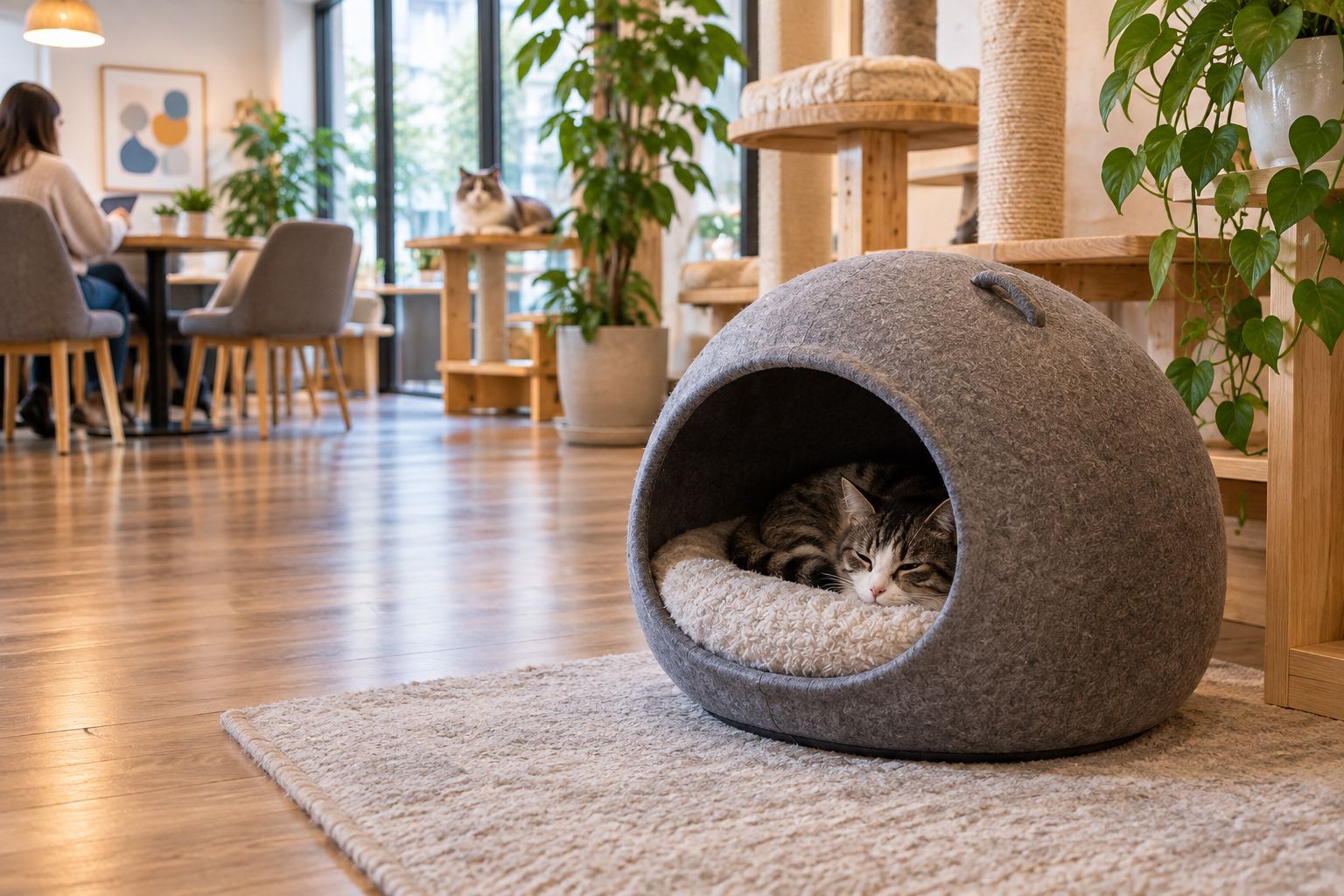
A practical arrangement gives the cat a sheltered corner while preserving a clear staff route. The guest area stays welcoming without making the retreat part of the entertainment.
Build cleaning and replacement into the routine
Write down what staff do when a bed becomes soiled, how they clean each component, and where clean replacements are kept. Follow the manufacturer’s instructions and your veterinary sanitation plan. Do not invent a universal wash temperature or disinfectant concentration for different materials.
Remove a soiled bed from use rather than covering it with a fresh blanket. Inspect hidden seams and the inner base as well as the visible cushion. Return bedding only when it is clean and fully dry according to its care instructions.
For your 2026 maintenance sheet, include a condition check at opening and whenever soiling occurs. Keep replacement resting options ready so cleaning does not remove a cat’s only retreat. Consult your veterinarian about bedding procedures when a resident cat has a suspected contagious illness.
- Assign responsibility for inspecting resting areas.
- Remove soiled bedding promptly.
- Follow product-specific washing and drying instructions.
- Keep clean replacements separate from used bedding.
- Retire beds with exposed filling or unstable entrances.
- Record recurring cleaning problems before buying more.
Compare resting options for a cat cafe
Best for labels describe the use case, not a guarantee that a particular cat will accept the bed. Evaluate the complete item: its shell, cushion, entrance, base, and care instructions. Material names alone do not establish cafe suitability.
| Option | Best for | Practical advantage | Key limitation |
|---|---|---|---|
| Enclosed fabric cave | Cats that choose covered resting spaces | Provides a sheltered interior | Hidden seams and enclosed surfaces need inspection |
| Felted cave | Cats that prefer a shaped hideaway | Offers enclosure without a separate frame | Care instructions must fit the cafe’s cleaning process |
| Covered bed with removable components | Cafes prioritizing access for cleaning | Separate parts can simplify handling when their care instructions permit | Removable does not necessarily mean machine washable |
| Open cushion or nest bed | Cats that prefer an unobstructed view | Makes the resting cat easier to observe | Does not provide the visual shelter of a cave |
| Cardboard hideaway | Supervised location trials | Lets staff test retreat placement before choosing a permanent bed | Must be discarded when soiled or damaged |
Furmatesusa’s pet-bed selection belongs in the ready-made options stage, after you identify the needs of your cats and staff. Choose by the individual item’s stated features. Do not treat the brand’s home-comfort focus as evidence of commercial cleaning suitability.
For the first purchase, favor a small pilot over matching the entire room at once. Staff handling and voluntary cat use are more useful selection criteria than whether every bed looks identical.
Common mistakes cat cafes make
Making the retreat a photo attraction
A cave bed loses its purpose when visitors gather around the opening. Keep photo opportunities outside protected resting zones. Staff should redirect guests before attention turns into reaching or tapping.
Buying every bed in the same shape
Uniform bedding looks tidy, but cats do not all choose the same resting position or degree of enclosure. Keep open and covered choices available. Review which locations each cat actually uses before expanding your order.
Checking the cushion but ignoring the shell
A removable cushion solves only part of the cleaning task. The shell, seams, and entrance still need attention. Confirm the care method for every component before adding a bed to shared use.
Treating unused beds as a training failure
A cat that ignores a cave is giving you useful information. Move the bed or offer another resting shape instead of placing the cat inside. Keep the comparison fair by changing 1 feature at a time: location, enclosure, or bedding.
Sharing bedding without a health plan
Moving beds between cats or rooms requires a sanitation decision, not just a furniture decision. Follow your veterinary plan, especially when illness is suspected. A cave bed provides a resting space; it does not prevent disease transmission.
FAQ
What are the best cat cave beds for cat cafes?
The best cat cave beds for cat cafes fit the resident cats, support the cafe’s cleaning routine, and sit in protected resting areas. Compare the complete bed’s care instructions and observe voluntary use before buying a matching set.
Are enclosed cat beds better than open beds in a cat cafe?
Enclosed cat beds are better for cats that choose covered retreats; open beds suit cats that prefer an unobstructed view. Offer both so each cat can choose a resting space.
How many cave beds should a cat cafe have?
A cat cafe needs enough separate retreats for cats to rest without competing for access. Plan around the resident cats, available quiet areas, and replacement bedding during cleaning rather than guest seating capacity.
Can visitors pet a cat inside a cave bed?
Visitors should not reach into an occupied cave bed. Treat entry into the cave as a break from interaction and invite guests to engage with cats that approach voluntarily.
Can cat cafe beds go in the washing machine?
Only components explicitly identified as machine washable should go in the washing machine. Check the shell and cushion separately, and follow the stated washing and drying instructions.
Does Furmatesusa sell beds suitable for every cat cafe?
Furmatesusa sells cozy pet beds, but cafe suitability requires an item-by-item assessment. Check fit, entrance access, and cleaning instructions against your cats’ needs and your sanitation plan.
What should I do if a cafe cat will not use a cave bed?
Keep another resting option available and review the cave’s location and shape. Do not force the cat inside; observe what the cat chooses and change one feature at a time.
One last thing
An empty cave is not automatically a failed purchase. A cat might choose it only when the room becomes busy, which is exactly when a retreat is useful. For your 2026 review, judge the bed by voluntary use across different cafe conditions—not occupancy in a single snapshot.
Protect the quiet moment first; choose the bed second. That keeps comfort at the center of a room built for sharing time with cats.