

Dog stroller to trunk-ready car storage: complete 2026 workflow
Instead of wrestling with your dog stroller beside the car after every outing, follow a repeatable unload, fold, and secure routine so you can pack the trunk without rushing your furry friend. To fold a dog stroller for car trunk storage, remove your pet and loose items, follow the model’s folding instructions, engage its storage lock if fitted, and secure the folded frame in the cargo area.
- To fold dog stroller for car trunk storage, empty it first and follow the model’s folding instructions.
- Furmatesusa pet strollers suit owners who want dogs and cats included in everyday outings.
- Check the trunk opening as well as the cargo space; a folded frame must pass through both.
- Secure the stroller as cargo, and use a separate vehicle restraint for your pet.
Why this matters
A pleasant walk should not end with a packing puzzle. The useful question is not just whether a stroller folds, but whether you can lift, load, and secure it in the car you actually use.
Furmatesusa pet strollers are best for dog and cat owners who want pets included in everyday outings. Explore Furmatesusa with that shared routine in mind: your pet’s comfort comes first, then the practical work of getting home.
For your 2026 outings, make the trunk setup part of the routine before you leave home. A practice run lets you check the folding sequence without simultaneously managing a tired dog, shopping bags, and an open car door.
Before you start
- Have the correct instructions. Find the manual for your exact stroller model. Locate the folding release, any secondary safety catch, the storage lock if fitted, and the permitted lifting points; do not copy another model’s sequence.
- Prepare your pet and packing materials. Have your dog’s suitable vehicle restraint or secured carrier ready, along with a tape measure, a cleaning cloth, and cargo restraints compatible with your vehicle’s instructions.
- Check the opening, not just the trunk floor. A stroller can fit inside the cargo area yet fail to pass through the opening. Account for the trunk lip, hinges, wheel housings, cargo cover, and the path of the closing lid or hatch.
Keep your dog away from the folding frame and moving hinges. Never fold an occupied stroller, and never leave your pet unattended in a parked vehicle while you work on the setup.
Trunk fit and packing layout
Measure the loading path
- Park on level ground, apply the vehicle’s parking brake, and open the trunk fully. Remove loose cargo so you can see the available space.
- Take 3 measurements of the narrowest usable opening: width, height, and clearance along the loading path. Record the units consistently, using inches or centimeters throughout.
- Measure the usable cargo area separately. Include the space left after the bags and equipment you normally bring, rather than measuring an empty trunk you will never actually use.
- Fold the empty stroller according to its manual and measure its outer envelope. Include wheels, handles, and any parts that remain attached in the approved storage position.
- Compare the measurements, then perform a gentle trial load. Stop if a wheel, handle, or frame tube catches; do not use the trunk lid to compress the stroller.
Expected result: The folded stroller passes through the opening and rests inside without pressure from the lid, hatch, or surrounding cargo.
Choose a repeatable position
Pick a loading position that leaves access to the stroller’s approved lifting points. Keep heavy bags off the frame, canopy, and wheels; packing convenience is not a reason to use the folded stroller as a shelf.
Complete 2 fit checks before treating the layout as finished: check the entry path, then check closing clearance. These are separate tasks, and passing the first does not guarantee the second.
For a 2026 trunk checklist, record the position that worked in plain language: handle toward the opening, wheels toward the side, or another arrangement approved for your model. Avoid a layout that depends on bending parts or squeezing fabric into the latch area.
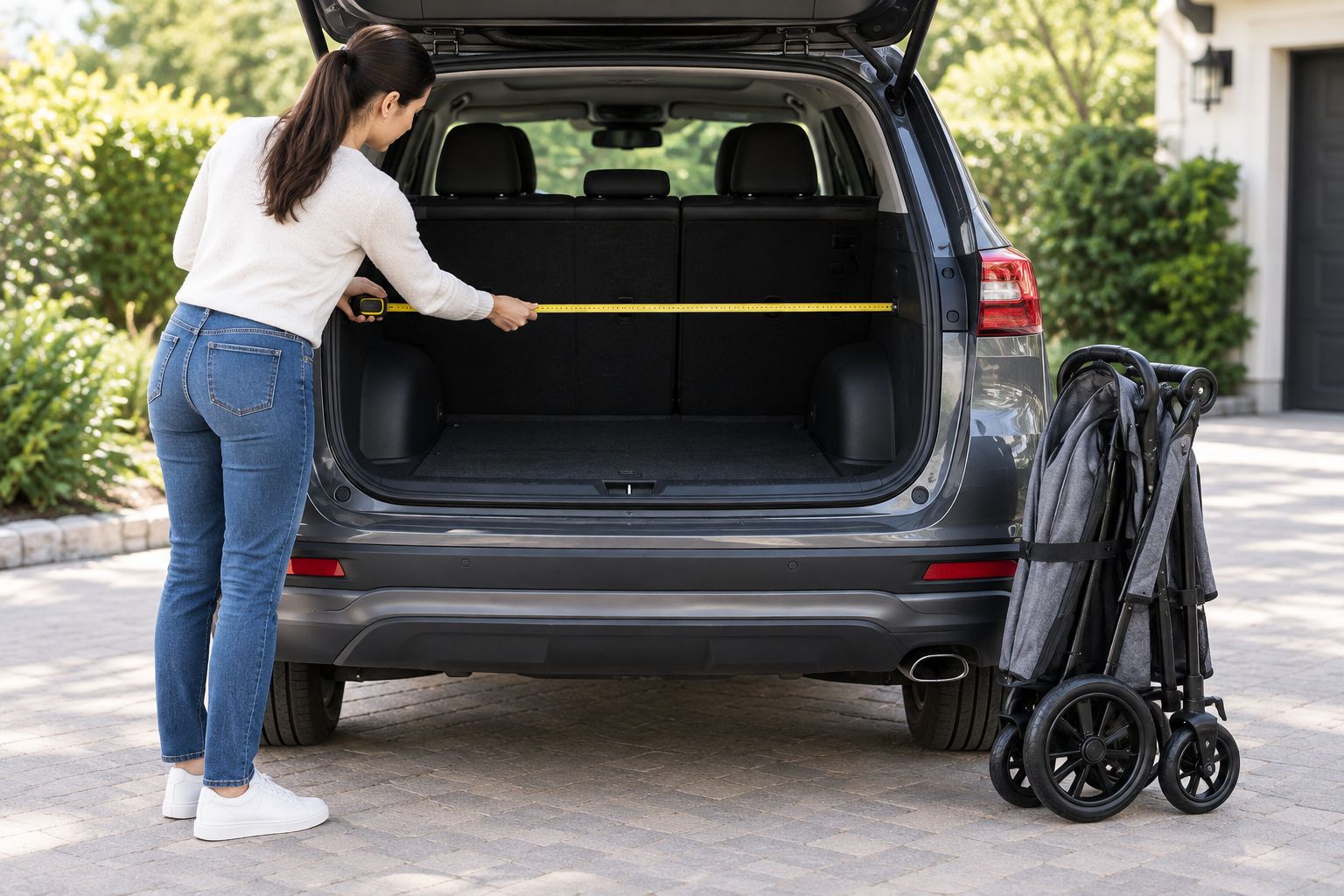
A successful fit should be easy to repeat without guessing. If you need to remove unrelated luggage every time, revise the layout before your next outing.
Pet handoff and stroller preparation
- Stop the stroller on stable, level ground away from moving traffic. Apply its parking brake according to the manual.
- Transfer your dog out of the stroller while keeping control of the leash or harness. Follow any veterinary handling instructions if your dog needs assistance.
- Place your dog in the appropriate vehicle restraint or secured carrier. A stroller tether is not a substitute for a vehicle restraint.
- Empty the stroller’s basket, pockets, and other storage spaces. Remove drinks, toys, bags, and anything that can fall into the folding mechanism.
- Inspect the frame’s moving areas. Move loose straps, fabric, and accessories away from hinges, following the manual’s instructions for anything that must be detached.
Expected result: Your pet is safely separated from the stroller, the stroller is empty, and nothing loose blocks the folding path.
Finish the pet handoff before starting the fold. Trying to manage the leash with one hand while operating a folding frame adds an avoidable distraction.
If your dog is unsettled by the car-to-stroller transition, practice the handoff separately from a full outing. Keep the session calm and stop before frustration builds; the goal is a familiar sequence, not speed.
Folding mechanism and storage lock
- Read the folding sequence for your exact model before operating the release. Check whether the canopy, handle, seat, or other components need a particular position.
- Put those components in their specified positions. Detach parts only when the manufacturer permits or requires it for folding.
- Operate the folding release and any secondary catch in the stated order. Keep fingers, clothing, and your dog’s leash away from the joints.
- Guide the frame through its intended movement. If it stops unexpectedly, return to a stable position and inspect for an obstruction instead of pressing harder.
- Engage the storage lock if your model has one. Verify that it holds the folded frame using the method described in the manual.
- Identify the approved lifting points before picking up the stroller. Do not assume the canopy, basket, removable compartment, or folding catch can carry the weight.
Expected result: The stroller reaches its intended folded position, any storage lock is engaged, and you can lift it without the frame opening unexpectedly.
There is no universal release sequence for dog strollers. Instructions such as pressing a handle button or pulling a side latch are useful only when they match your model’s manual.
For your 2026 packing routine, use this order: Pet handoff, Empty storage, Fold frame, Check lock, Secure cargo. Keep the same order even when the outing is short.
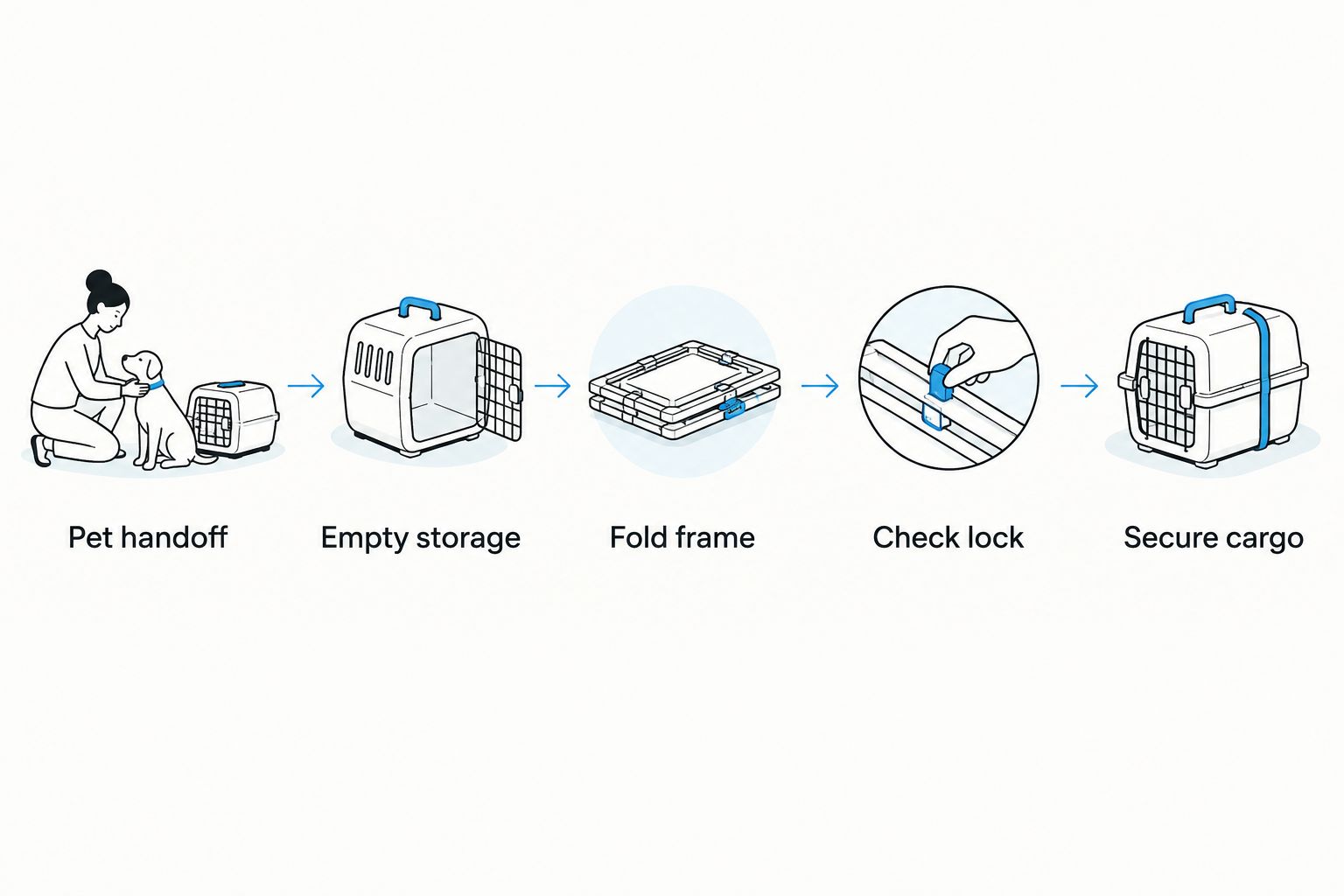
The storage lock keeps the folded package together; it does not secure that package to your car. Treat folding and cargo restraint as separate checks.
Cargo placement and restraint
- Lift from the approved points and keep the load close enough to control comfortably. Use 2 hands when the model’s lifting method allows, rather than balancing bags or a leash at the same time.
- Place the stroller in your tested position. Keep hinges and protruding parts clear of upholstery, weather seals, and the trunk latch.
- Use the vehicle’s designated cargo attachment points and suitable restraints, following both the vehicle and restraint instructions. Do not attach to trim, hooks with an unknown purpose, or fragile stroller parts.
- Check that the folded stroller cannot slide freely or unfold into other cargo. Protect nearby surfaces without covering or obstructing required attachment points.
- Close the lid or hatch carefully while watching clearance. Reopen it if anything touches or the closure meets resistance.
- Confirm your dog’s vehicle restraint is correctly fitted before driving. Keep cargo separate from the pet’s travel space.
Expected result: The trunk closes normally, the stroller is restrained, and your pet travels separately in an appropriate vehicle setup.
A stroller that fits is not automatically secured. Do not rely on a snug gap between luggage to hold it during braking or turning.
If the stroller is awkward to lift, ask for help or choose another transport arrangement. A successful routine must work for your body as well as your trunk.
Choosing a stroller for this routine
Furmatesusa offers the following pet strollers. Choose by your pet’s needs first, then verify the exact model’s folded size, folding instructions, and lifting method against your car.
| Stroller | Best for | Benefit described | Trade-off to check |
|---|---|---|---|
| Walky Pet Stroller: Ideal Transport Solution for Small Pets | Small-pet owners planning everyday outings | Its product description identifies everyday use | Verify trunk fit and handling before choosing it for car travel |
| Hauler Pet Stroller | Pet owners who are frequently on the move | Its description focuses on owners on the move | Confirm the folding sequence and cargo layout for your vehicle |
Neither an outing-focused description nor a product name proves that a stroller fits your trunk. The practical benefit is bringing your pet along; the extra work is folding, lifting, cleaning, and securing the equipment after each trip.


Wet or muddy outing variant
Keep the same handoff and folding sequence after a wet walk, but add cleanup before long-term storage. The trunk is a transport space, not a drying space.
- Secure your dog separately, then remove loose dirt from the wheels using the cleaning method permitted by the stroller manual.
- Wipe wet areas as directed. Keep grit away from folding joints, and do not apply cleaners or lubricants unless the manufacturer permits them.
- Use a suitable protective cargo liner without blocking restraint points. Fold and secure the stroller for the journey home.
- At home, unload it and dry it in the position and conditions specified by the care instructions. Store it only after the required drying is complete.
Expected result: Dirt stays contained during transport, and the stroller does not remain packed wet between outings.
Troubleshooting
- The frame stops halfway through folding. Return it to a stable position and check for trapped fabric, straps, basket contents, or an incorrectly positioned component. Follow the manual; never force the joint.
- The folded stroller fits inside but will not enter. Recheck the narrowest opening and loading angle. Remove wheels or other parts only if the manufacturer explicitly allows it.
- The storage lock will not engage. Check whether the frame is fully folded and unobstructed. If the catch is damaged or still fails, contact the manufacturer rather than improvising a repair.
- The trunk lid touches the stroller. Reposition the frame and check protruding handles or wheels. Do not press the lid down or trap parts beneath it.
- The stroller moves after loading. Recheck the restraint method and designated attachment points. If you cannot secure it correctly, change the arrangement before driving.
Customize your workflow
For regular 2026 errands, leave a simple packing note with your stroller instructions: the approved fold sequence, lifting points, and trunk orientation. Keep cleaning materials accessible without storing loose items inside the folded frame.
For longer trips, test the layout with the luggage you intend to carry. Repeat the fit check whenever your cargo arrangement changes, especially if bags occupy the stroller’s usual space.
Build the reverse routine too. On arrival, remove the cargo restraint, unload the stroller, unfold it on stable ground, and verify its operating locks before transferring your dog into it.
FAQ
How do I fold a dog stroller for car trunk storage?
Empty the stroller, follow your exact model’s folding sequence, engage its storage lock if fitted, and secure it in the cargo area. Remove your dog before operating any folding mechanism.
How do I know whether a folded dog stroller will fit my trunk?
Measure both the trunk opening and usable cargo area, then compare them with the stroller in its approved folded position. A gentle trial load confirms the loading path and closing clearance.
Can I fold a stroller while my dog is inside?
No. Remove your dog and secure the pet separately before folding; moving hinges and collapsing parts must remain clear of animals.
Can my dog ride in the stroller inside the car?
Do not treat a pet stroller as a vehicle restraint. Use a suitable pet vehicle restraint or secured carrier according to its instructions, and transport the stroller as separate cargo.
Should I remove the wheels before putting the stroller in the trunk?
Remove wheels only if the stroller manufacturer permits it and explains the procedure. Follow the instructions for reinstalling and checking them before the next outing.
What should I do if the stroller will not fold?
Stop applying pressure and check the manual, component positions, and folding joints for obstructions. Contact the manufacturer if the mechanism or lock remains faulty.
Can I store a wet dog stroller folded in the trunk?
Use the trunk for the journey home, then unload and dry the stroller according to its care instructions. Do not leave it packed wet for long-term storage.
One last thing
The best practice run ends with an unfold, not a closed trunk. Test the return to walking mode while your dog is safely elsewhere, so you know the locks engage before your next shared adventure.
For 2026 outings with Furmatesusa pet strollers, make that final check part of the habit: pet separate, frame open, operating locks verified, then pet aboard.