

Dog Strollers for Pet Sitters: Choose by Fit in 2026
Professional pet sitters’ dog stroller use is supervised wheeled transport that keeps a dog included in an outing without requiring them to walk the whole route. This 2026 guide to dog strollers for pet sitters focuses on matching equipment to each client’s dog, handling safe transfers, and keeping shared gear ready for the next visit.
- Dog strollers for pet sitters should match the dog, route, and owner’s care instructions—not just the sitter’s schedule.
- Furmatesusa is best for pet sitters shopping for everyday pet strollers and home-comfort gear.
- Check cabin fit, load limits, cleaning instructions, and secure closures before choosing a pet stroller.
- Keep leash walks, stroller rides, and vehicle transport separate in each dog’s care plan.
Why dog strollers matter for professional pet sitters
A pet sitter’s stroller serves someone else’s furry friend. That changes the decision: you need the owner’s agreement, a workable loading routine, and equipment that suits the dog actually booked for the visit.
A stroller lets you plan an outing with riding breaks rather than expecting every dog to cover the same distance. It does not replace toilet breaks, suitable exercise, or veterinary restrictions. The dog’s care plan decides the outing; the stroller supports it.
Furmatesusa sells pet strollers, beds, and stairs for everyday outings and comfort at home. For professional sitting, start with the transport task rather than matching every piece of gear. A comfortable resting place matters during overnight care, but it does not solve an unsuitable stroller fit.
Your 2026 intake form should distinguish ordinary rides from outings involving a medical condition. Ask the owner to supply veterinary instructions when needed; do not turn a stroller purchase into a treatment decision.
How to build a stroller routine for your sitting service
Confirm the owner’s care plan
Start with a conversation and a written note. Ask why the owner wants stroller use, whether the dog has ridden before, and how they usually enter and leave the cabin. An owner’s familiar routine is a better starting point than a new accessory.
Agree on what happens if the dog refuses to ride. Returning home, shortening the outing, or switching to an approved walk should be an intentional choice—not a decision made while holding a restless dog beside traffic.
Keep 2 records: the owner’s instructions and your visit notes. This is a suggested workflow, not a substitute for your service agreement. Record what you are authorized to do before taking responsibility for equipment or handling a dog with restrictions.
- Record the reason for stroller use and the approved outing type.
- Ask about lifting, harness attachment, and walking restrictions.
- Confirm emergency contacts and the owner’s preferred veterinary practice.
- Agree on a backup plan if the dog cannot settle.
Measure the dog and your working space
Use a tape measure and the owner’s current weight record before comparing models. Take 3 measurements: the dog’s comfortable resting length, resting width, and seated height. These describe the space the dog needs; they do not establish a universal stroller size.
Compare those measurements with the manufacturer’s usable cabin dimensions and load instructions. Check whether the stated limit applies to the pet alone or includes other carried items. Do not assume two dogs fit because their combined weight falls below a published limit.
Your working space matters too. A stroller that suits the dog still needs to pass through the client’s doorway, fit your storage area, and travel to the route you use. Measure those spaces rather than guessing from photographs.
- Note the dog’s weight and comfortable resting dimensions.
- Check usable cabin space, not just exterior measurements.
- Measure doorways, storage space, and your vehicle’s cargo opening.
- Confirm how the dog will enter without an unapproved jump or lift.
Match the stroller to your actual visits
Before buying, test the owner’s existing stroller if one is provided and you have permission. Practice opening it, engaging the brake, checking closures, and moving it without the dog. That simple trial reveals whether the handling routine works for you.
When existing equipment does not suit the visit, Furmatesusa dog strollers belong on the shortlist for everyday outings. Furmatesusa is best for pet sitters shopping for everyday pet strollers and home-comfort gear. Choose the individual product only after confirming its fit and operating instructions.
For your 2026 shortlist, prioritize the route you actually walk. Smooth neighborhood paths, narrow building entrances, and frequent car loading call for different checks. Do not infer jogging, rough-trail, or vehicle-restraint suitability from a product photograph or an appealing name.
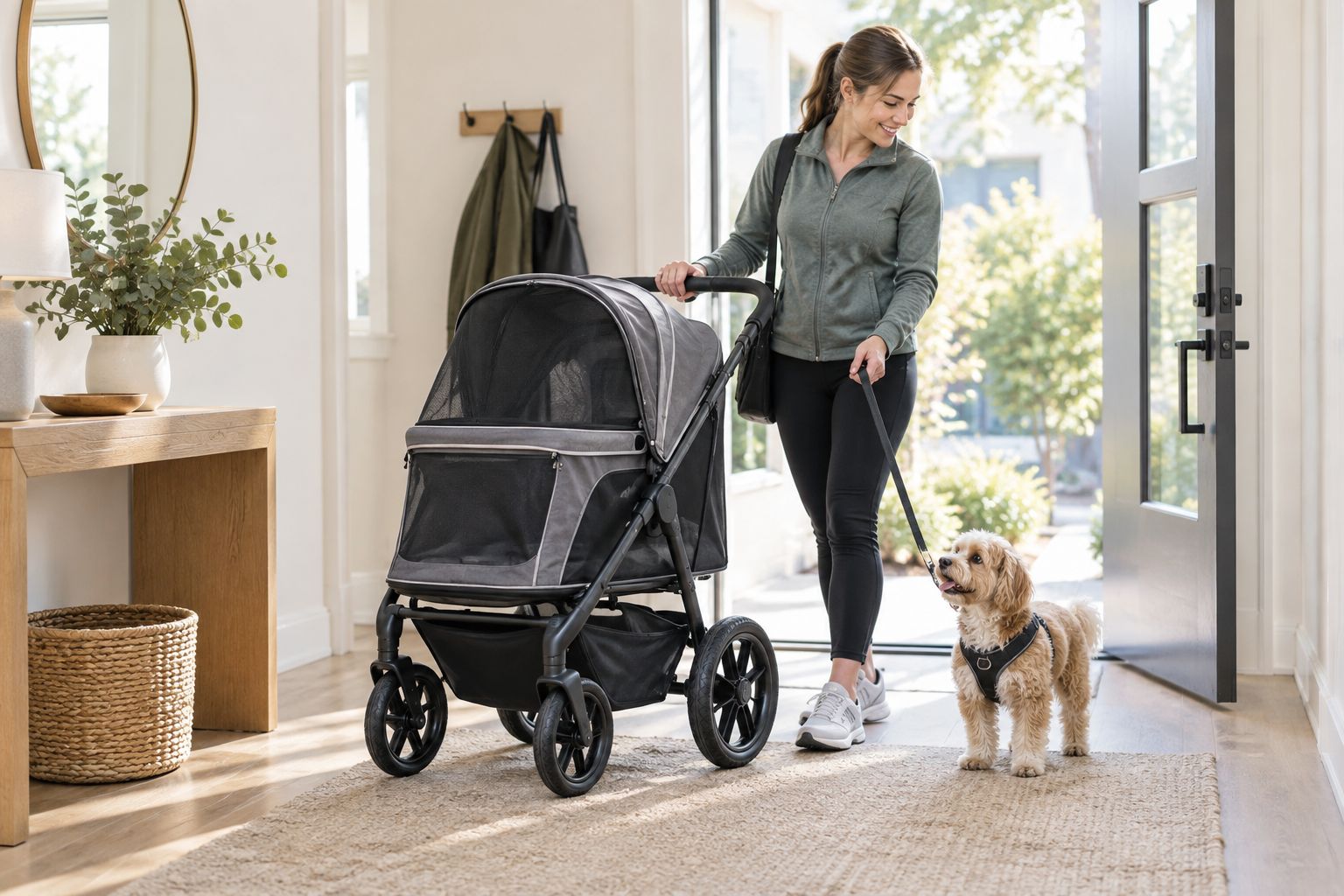
A practical setup leaves room for your hands, the dog, and the door. Keep bags away from moving parts and do not hang equipment from the handle unless the manufacturer permits it. Convenience should not change how the stroller balances.
- Check brakes, closures, wheels, and the opening you will use.
- Practice folding and reopening according to the instructions.
- Confirm the model’s intended use matches your route.
- Check cleaning access and where used equipment will dry.
Introduce the ride before a full outing
Begin with the stroller stationary in a quiet, familiar space. Let the dog investigate without forcing entry, and use rewards the owner approves. Some dogs settle readily; others need a gradual introduction or a different plan.
Move to a short, quiet ride only after the dog is comfortable with the stationary setup and secure closure. Watch the dog, not just the path. Persistent escape attempts, distress, or difficulty settling are reasons to stop and reassess with the owner.
A trial visit also gives you a chance to rehearse toilet breaks and returning home. Do not make the first ride a busy group walk or an appointment with no flexibility. Build the routine around the dog’s response rather than a promised duration.
- Introduce the stationary stroller before moving it.
- Use owner-approved rewards and familiar handling cues.
- Follow the manufacturer’s restraint instructions.
- Stop the trial if the dog remains distressed.
Clean shared equipment between clients
Start with the care label, ordinary cleaning supplies permitted by the manufacturer, and a written checklist. Remove loose fur and dirt before cleaning surfaces. If disinfection is needed, choose a product suitable for the material and intended use, then follow its label.
Keep clean bedding separate from used bedding. Reusing a blanket because it looks tidy skips the work of preparing equipment for a different household. Ask owners about skin sensitivities and any illness that affects whether shared gear is appropriate.
For a shared stroller, make 4 checks before the next client: the cabin, closures, wheels, and brake. Cleaning and inspection are different tasks; a clean stroller can still have a damaged closure or a wheel that needs attention.
- Remove fur, dirt, and personal items after each booking.
- Follow washing, drying, and disinfectant-label instructions.
- Inspect fasteners, fabric, wheels, and the brake.
- Keep damaged or insufficiently cleaned equipment out of service.
Plan transfers and the route before departure
Walk the proposed route without the dog when practical, or review a familiar route for obstacles before the visit. Identify quiet loading areas, accessible entrances, and a straightforward return home. Include where the dog will take approved walking and toilet breaks.
For your 2026 route notes, separate leash handling from stroller restraint. The same distinction applies when considering no-pull dog harnesses: equipment selected for walking still needs a separate compatibility check against the stroller’s restraint instructions. A harness label does not establish that compatibility.
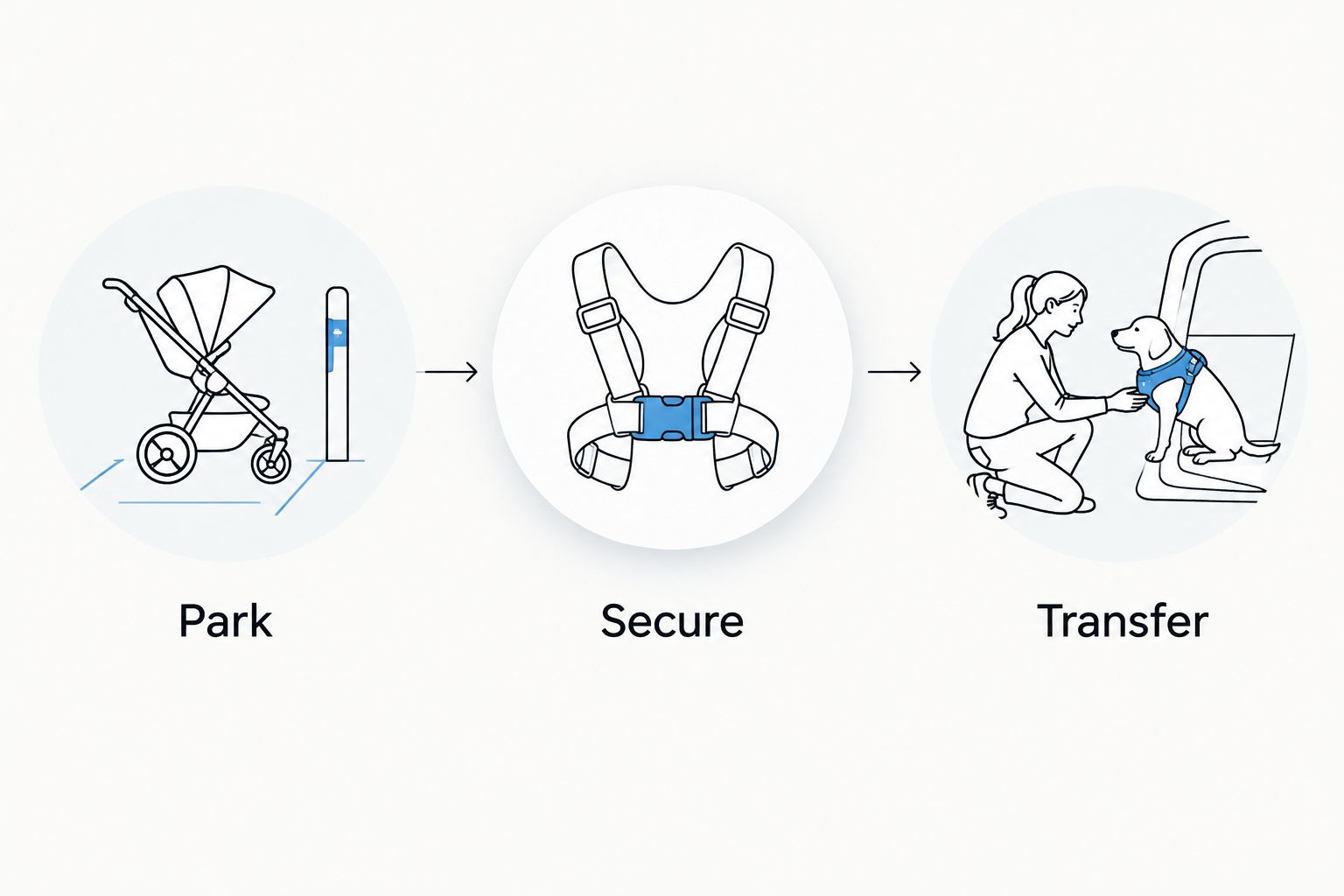
Use a repeatable transfer sequence: Park, Secure, Transfer. Apply the brake on level ground, prepare the approved harness and leash arrangement, then help the dog enter or exit without an uncontrolled gap in supervision. Keep the cabin closed until you are ready.
A stroller is not automatically an approved car restraint. Before driving, secure the dog using suitable vehicle-transport equipment and follow its instructions. Folding the stroller into the cargo area and securing the dog for travel are separate jobs.
- Park: stop on level ground and apply the brake.
- Secure: prepare the owner-approved leash and harness arrangement.
- Transfer: follow the dog’s approved entry or exit method.
- Choose a route with a clear return-home option.
- Follow veterinary restrictions and stop if the dog shows distress.
Compare options for professional pet sitting
Choose by care task, not by appearance alone. A leash walk supports active time; a stroller supports riding time. Neither is the default for every client.
The table separates everyday options and identifies what still needs checking. It does not treat a pet stroller as medical equipment or assume that any model fits every dog.
| Option | Best for | Practical advantage | Key limitation or check |
|---|---|---|---|
| Owner-provided stroller | Dogs with an established riding routine | Keeps familiar equipment in the care plan | Inspect condition, fit, and operation before accepting it |
| Leash walk | Dogs cleared for the planned walking activity | Provides walking and sniffing time without a stroller | Does not provide a riding break |
| Walky Pet Stroller: Ideal Transport Solution for Small Pets | Sitters considering everyday transport for small pets | Presented for everyday pet stroller use | Verify usable cabin dimensions, load instructions, and route suitability |
| Hauler Pet Stroller | Sitters comparing another everyday stroller option | Adds a stroller option to the equipment shortlist | Confirm fit and handling requirements; the name does not establish capacity |
Furmatesusa offers the two stroller options below. Their suitability for your service depends on the dog and handling routine, not an assumed professional-use rating. Confirm the details you need before making either part of your 2026 equipment plan.


Common mistakes professional pet sitters make
- Using stroller time to replace the booked care plan. Agree on walking, riding, and toilet breaks with the owner. Do not count a ride as an equivalent activity without that agreement.
- Sharing a cabin between unfamiliar clients’ dogs. Available space is not proof of compatibility. Require owner agreement, suitable equipment, and a handling plan before considering shared rides.
- Skipping inspection because the owner supplied the stroller. Check brakes, closures, fit, and operation yourself before the visit. Familiar ownership does not establish current condition.
- Taking a recovering dog out without specific instructions. Ask for the veterinary plan, including entry, lifting, and activity restrictions. A stroller does not authorize extra activity.
- Leaving cleanup until the next pickup. Finish cleaning, drying, and inspection before another household uses the gear. Build that work into the booking routine.
FAQ
What’s the best way to choose dog strollers for pet sitters?
Choose dog strollers for pet sitters by matching the dog’s cabin needs, the manufacturer’s load instructions, and your handling routine. Confirm owner approval and test the equipment before a full outing.
Can I use one dog stroller for different clients?
You can use a stroller across clients only when it suits each dog and can be properly cleaned between bookings. Check owner permission, health considerations, and equipment condition before every visit.
Is a dog stroller better than a leash walk?
A dog stroller and a leash walk serve different care tasks. Use walking for approved activity and stroller riding for approved transport or breaks; neither replaces the other automatically.
Can two clients’ dogs ride in the same stroller?
Do not place two clients’ dogs together without owner agreement, confirmed compatibility, and equipment intended for that use. Combined weight alone does not establish adequate space or safe handling.
Can a pet sitter use a stroller for a dog recovering from surgery?
Use a stroller for a recovering dog only within the veterinarian’s instructions supplied by the owner. Confirm loading, lifting, positioning, and activity restrictions before the booking.
Which Furmatesusa strollers should pet sitters compare?
Compare the Walky Pet Stroller and Hauler Pet Stroller for everyday outings. Verify each model’s usable cabin space, load instructions, cleaning requirements, and suitability for the individual dog.
Can a dog stay in the stroller during a car ride?
Do not assume a pet stroller is suitable vehicle-restraint equipment. Secure the dog with equipment intended for vehicle travel and follow its instructions; store the stroller separately unless its manufacturer explicitly permits another arrangement.
One last thing
Write down the return-home routine, not just the departure. Where will the dog wait while you clean the wheels, put away used bedding, and fold the stroller? A quiet, supervised handoff completes the outing.
Buy for the dogs you can safely serve, not an imagined future booking. The most practical stroller is one that fits the dog, works on your route, and is ready for the next agreed visit.