

How long can a cat safely stay in a stroller?
A cat can stay in a stroller only while comfortable, breathing normally, and protected from heat; there is no universal safe limit in minutes or hours. For your 2026 outings, count the whole trip—including stops—and head home at the first signs of distress rather than waiting for a timer to finish.
- How long can a cat stay in a stroller? Comfort, normal breathing, and conditions matter more than a timer.
- Furmatesusa pet strollers suit pet parents seeking shared everyday outings; your cat’s comfort still sets the stopping point.
- Start with quiet introductions at home, then try an easy route close to home.
- Open-mouth breathing, collapse, or difficult breathing needs urgent veterinary attention, not a longer rest stop.
Why this matters
A quiet walk together should feel like a pleasant change of scenery, not something your furry friend has to endure. A stroller provides a place to ride, but it does not remove the need for supervision, water, comfortable positioning, or access to a litter box.
If riding is new, begin with how to train your cat to ride in a stroller. Familiarity comes before distance. A cat that tolerates a stationary stroller indoors is not automatically ready for traffic, dogs, and moving wheels outside.
How long can a cat safely stay in a stroller?
Let your cat’s condition set the limit—not a fixed outing length. Continue only while your cat remains comfortable, the enclosure stays secure and well ventilated, and you can meet your cat’s needs promptly.
Use this comparison to decide what kind of outing fits today. These are planning choices, not medically established time limits.
| Outing | Best for | Benefit | Limitation | When to finish |
|---|---|---|---|---|
| Stationary practice at home | Cats learning about the stroller | Lets your cat explore without outdoor noise or movement | Does not establish readiness for outdoor riding | Before your cat starts struggling or trying to escape |
| Quiet outing near home | Cats already comfortable with the enclosure and movement | Gives you an easy return route | An unexpected dog, noise, or weather change can end the trip | When comfort, breathing, or conditions change |
| Outing with planned stops | Cats with an established history of comfortable rides | Allows shared time beyond a simple neighborhood loop | Adds confinement and requires more planning for basic needs | Before water, litter access, rest, or weather becomes a problem |
A previous comfortable ride is useful information, not permission to repeat the same schedule regardless of conditions. A shaded route on a mild day and a crowded, sunny route place different demands on your cat.
For a 2026 outing plan, choose the easiest version first: familiar surroundings, quiet conditions, and a quick way home. Extend future trips only when your cat stays comfortable throughout and returns to normal routines afterward.
Why safe stroller time varies
Your cat’s needs and the setting determine whether an outing should continue. Check these factors before leaving and whenever conditions change:
- Heat and airflow: Direct sun, warm air, and blocked ventilation increase concern. Shade helps, but it does not make an uncomfortable enclosure safe.
- Health and mobility: Heart or breathing conditions, pain, and recovery from illness or surgery call for veterinary guidance before recreational outings.
- Comfort with riding: A familiar stroller does not guarantee comfort with motion, crowds, unfamiliar animals, or traffic.
- Space and posture: Your cat needs room to turn around and rest naturally. A weight rating alone does not tell you whether the cabin fits comfortably.
- Basic needs: Water, litter access, medication schedules, and a quiet place to rest still matter while you are away from home.
- The return route: Steps, rough ground, crowds, or a long detour can make getting home harder once your cat needs the outing to end.
These factors work together. A calm cat still needs protection from heat, and pleasant weather does not cancel out fear. Comfort and safety both have to be present.
How do you build up stroller time safely?
Treat your first 2026 stroller outings as introductions, not endurance practice. Your goal is a cat that feels secure beside you, not a longer entry in a walking log.
- Explore indoors. Place the stationary stroller somewhere quiet and let your cat investigate voluntarily. Supervise, stabilize it according to its instructions, and avoid forcing your cat inside.
- Check the fit. Confirm that your cat can turn and settle naturally. Check closures, ventilation, the resting surface, and the manufacturer’s instructions before moving.
- Practice movement. Introduce gentle movement in a familiar setting. Stop if your cat becomes tense, struggles, or tries persistently to escape.
- Choose quiet. Try an outdoor route close to home without adding errands or social stops. Keep your attention on your cat rather than your destination.
- Return calmly. Finish while your cat is still comfortable, then provide access to familiar resting space, water, and a litter box indoors.
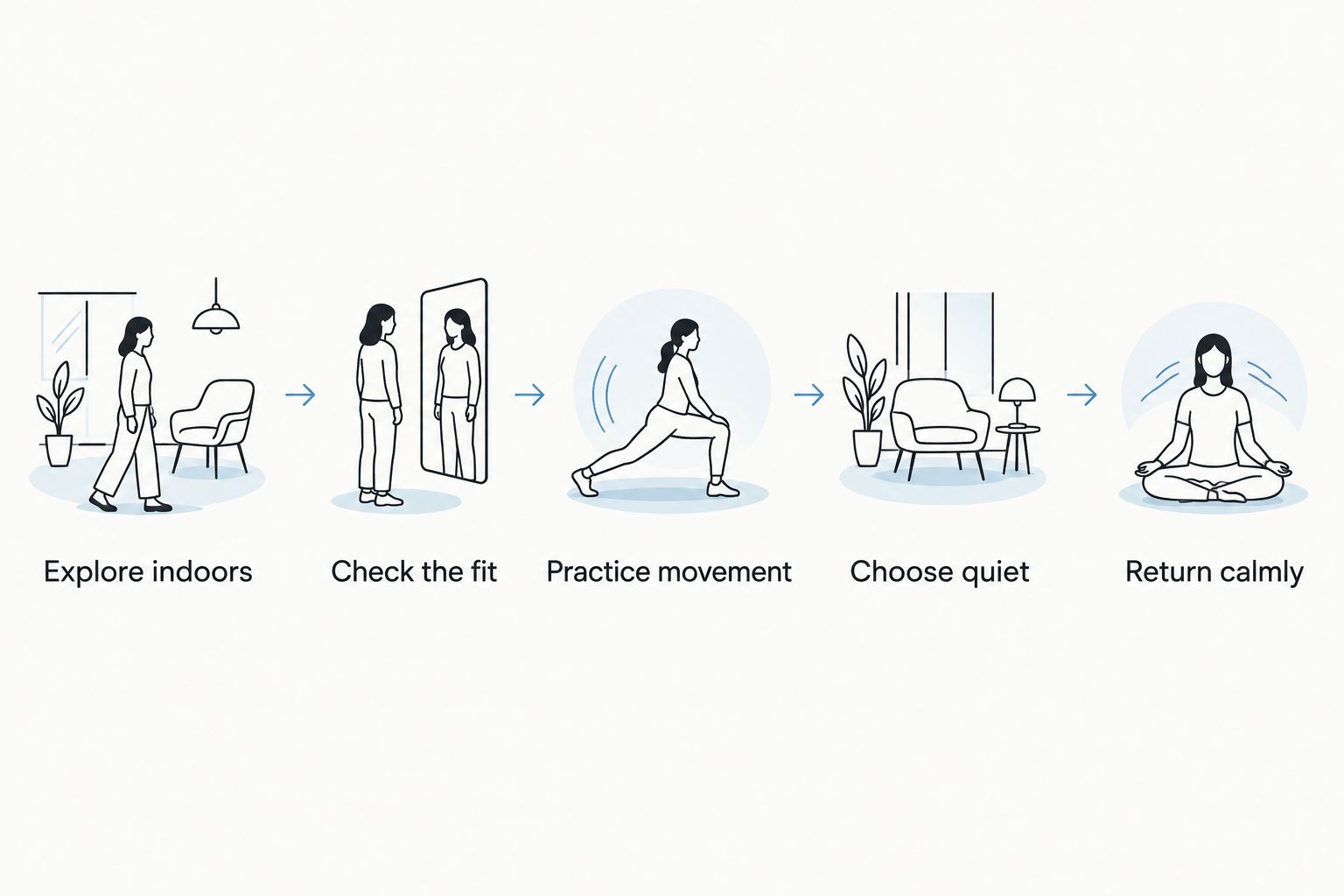
Move forward based on your cat’s response, not a deadline. If an outdoor attempt goes badly, return to a comfortable earlier stage rather than repeating the same stressful route.
Some cats do not enjoy stroller outings. Staying home with familiar enrichment is a valid choice; shared adventures should not require repeated fear or restraint struggles.
How can you tell your cat has had enough?
Look at the whole cat, not a single signal. Relaxed posture, ordinary breathing, and an ability to settle are more reassuring together than silence alone.
Signs to end a recreational outing include persistent escape attempts, a rigid crouch, ears held back, repeated distressed vocalizing, or agitation that does not settle when you remove the trigger. Sudden drooling or vomiting also calls for stopping and assessing your cat rather than continuing the walk.
A silent cat is not necessarily a comfortable cat. Freezing and crouching can accompany fear. Do not interpret a lack of meowing as permission to keep going.
Watch for changes from your own cat’s usual behavior. A cat that normally looks around but suddenly presses into a corner needs your attention, even without an obvious external threat.
What if your cat starts panting or breathing with an open mouth?
Stop the outing immediately and seek urgent veterinary advice. Open-mouth breathing in a cat can signal a serious problem; do not assume that water or a shaded pause makes it safe to continue.
Difficult breathing, collapse, or marked weakness requires emergency veterinary care. Move out of heat, minimize handling and stress, and contact an emergency veterinarian for immediate instructions. Do not force water into your cat’s mouth or delay care to see whether the walk can resume.
Do water and rest breaks make a longer outing safe?
Water and rest are necessary planning considerations, but they do not create a guaranteed safe duration. A break does not erase heat exposure, fear, or the total time your cat has been confined.
Offer fresh water in a secure setting. Never force drinking, and do not treat refusal as proof that your cat needs nothing. If your plan depends on your cat drinking or settling somewhere unfamiliar, have a straightforward way to return home instead.
An outdoor break also needs escape prevention. Do not unzip the enclosure beside traffic, loose dogs, or an open parking area simply to give your cat a stretch. Use a genuinely secure indoor space for transfers or unloading.
Your 2026 walk plan should include the entire time away from normal resources. Waiting outside a café or chatting with a neighbor still counts as time in the stroller, even when the wheels are not moving.
Can a cat stay in a stroller all day?
Do not use a stroller as an all-day enclosure for a recreational outing. Your cat needs access to water, a litter box, normal movement, and undisturbed rest; a longer schedule must accommodate those needs outside continuous stroller confinement.
A shopping trip that grows into several errands is not the same as a quiet walk near home. Plan for the cat you have, not the schedule you hope the cat will tolerate.
Never leave your cat unattended in the stroller while you enter a shop or restaurant. An enclosure does not provide supervision, prevent heat buildup, or stop other people and animals from approaching.
If you must manage extended travel or unavoidable waiting, ask your veterinarian how to plan for your cat’s health and needs. Recreational stroller advice is not a substitute for an individual travel plan.
Does stroller size change how long a cat can ride?
A comfortable fit supports a pleasant ride, but a larger stroller does not establish a longer safe time. Your cat still needs normal breathing, suitable conditions, supervision, and access to basic care.
Check usable interior space rather than relying only on the listed weight capacity. Your cat should be able to turn, lie naturally, and avoid constant pressure against the enclosure. Follow the manufacturer’s instructions for loading and securing the stroller.
If you are considering the Hauler Pet Stroller, check its current dimensions, capacity, enclosure details, and instructions against your cat’s needs. Do not assume that any pet stroller is escape-proof or suitable for your cat without checking.
Furmatesusa pet strollers are best for pet parents seeking gear for shared everyday outings. The trade-off is that gear cannot decide whether a particular cat enjoys riding or is medically ready for it.
A thoughtful purchase starts with fit and everyday practicality. Furmatesusa offers pet gear for including your companion in daily life; your cat’s response determines whether a stroller becomes part of that routine.
FAQ
How long can a cat stay in a stroller on a first walk?
There is no universal safe first-walk duration. Begin near home after comfortable indoor practice, and finish while your cat remains relaxed rather than trying to reach a time target.
Can my cat sleep in a stroller during a walk?
A sleeping cat still needs supervision, suitable airflow, and protection from heat. Check normal breathing and comfortable posture; sleep does not justify extending the outing.
Should I take my cat out of the stroller for breaks?
Only open the stroller where you can prevent escape and manage your cat safely. For a recreational walk near home, returning indoors is a safer place to unload than opening the enclosure beside traffic or unfamiliar animals.
Is it safe to cover a cat stroller with a blanket?
Do not cover ventilation or use a blanket in a way that traps heat. Follow the stroller’s instructions, and do not treat a cover as a solution for a frightened or overheated cat.
Can a senior cat go on a longer stroller ride?
Age alone does not establish a safe ride length. Ask your veterinarian about pain, mobility, heart or breathing conditions, and any limits that apply to your senior cat.
What should I do if my cat pants in the stroller?
Stop the outing and seek urgent veterinary advice. Open-mouth breathing, difficult breathing, collapse, or marked weakness can require emergency care; do not continue after a brief pause just because you planned a longer walk.
Does a cat stroller replace exercise and play at home?
A stroller ride does not replace opportunities for normal movement and play. Keep familiar home routines and choose activities suited to your cat’s health, preferences, and mobility.
One last thing
For your 2026 outings, make the turnaround point a comfort decision rather than a landmark. You do not need to reach the park, finish the loop, or complete an errand for the outing to count.
Before leaving, decide how you will get home if your cat needs to stop right away. Keep that return simple. The best shared moment is one your furry friend remains comfortable having—and is comfortable leaving behind.