

Is a cat cave bed worth it for an indoor-only cat?
A cat cave bed is worth it for an indoor cat that already chooses covered, tucked-away sleeping spots; it is less useful for a cat that prefers stretching out in the open. For your 2026 purchase, match the bed to your cat’s habits, and remember that an enclosure adds cleaning and access considerations—it does not guarantee your furry friend will use it.
- Is a cat cave bed worth it for an indoor cat? Yes, when your cat already prefers covered resting spaces.
- Choose an open cat bed instead when your cat regularly stretches out or avoids enclosed spaces.
- Check usable interior space, entrance access, and cleaning instructions before choosing a cat cave bed.
- Furmatesusa bedside pet beds suit pet parents seeking closeness rather than a dedicated hiding place.
Why this matters
Your cat’s favorite nap spot tells you more than a bed’s appearance. A cat that curls inside an open closet is showing a different preference from a cat that sleeps across the middle of your sofa.
For a 2026 bed purchase, start with the resting place your cat already chooses. Use the guide to choosing the right cat cave bed size to check fit before picking a shape for your room.
Buy for the way your cat rests, not the way you wish your cat would rest. A lovely bed still needs to offer something your cat wants.
Is a cat cave bed worth it for an indoor-only cat?
Yes, when the enclosure matches an existing preference for cover. Indoor-only living does not make a cave essential: your cat still needs a comfortable place to rest, but that place does not have to have a roof.
Compare the choices below against where your cat settles without encouragement. These are different sleeping arrangements, not a ranking of comfort.
| Sleeping option | Best for | Main benefit | Main drawback |
|---|---|---|---|
| Cat cave bed | Cats that choose covered resting spots | Combines a resting surface with overhead cover | Interior access makes cleaning and fit more important |
| Open cat bed | Cats that stretch out or watch the room | Leaves the resting area easy to enter and inspect | Does not provide an enclosed retreat |
| Bedside pet bed | Cats that seek their person at bedtime | Creates a separate resting place nearby | Closeness does not replace a hiding place |
| Safe cardboard box with familiar bedding | Testing whether your cat likes an enclosure | Lets you observe a preference before buying | Cardboard is not washable and needs replacing when soiled or damaged |
A cave earns its place when your cat returns to it voluntarily and rests comfortably inside. Investigating the entrance once is not the same as choosing it for sleep.
Keep an existing favorite resting place available while you introduce anything new. You are adding a choice, not taking away the spot that already feels familiar.
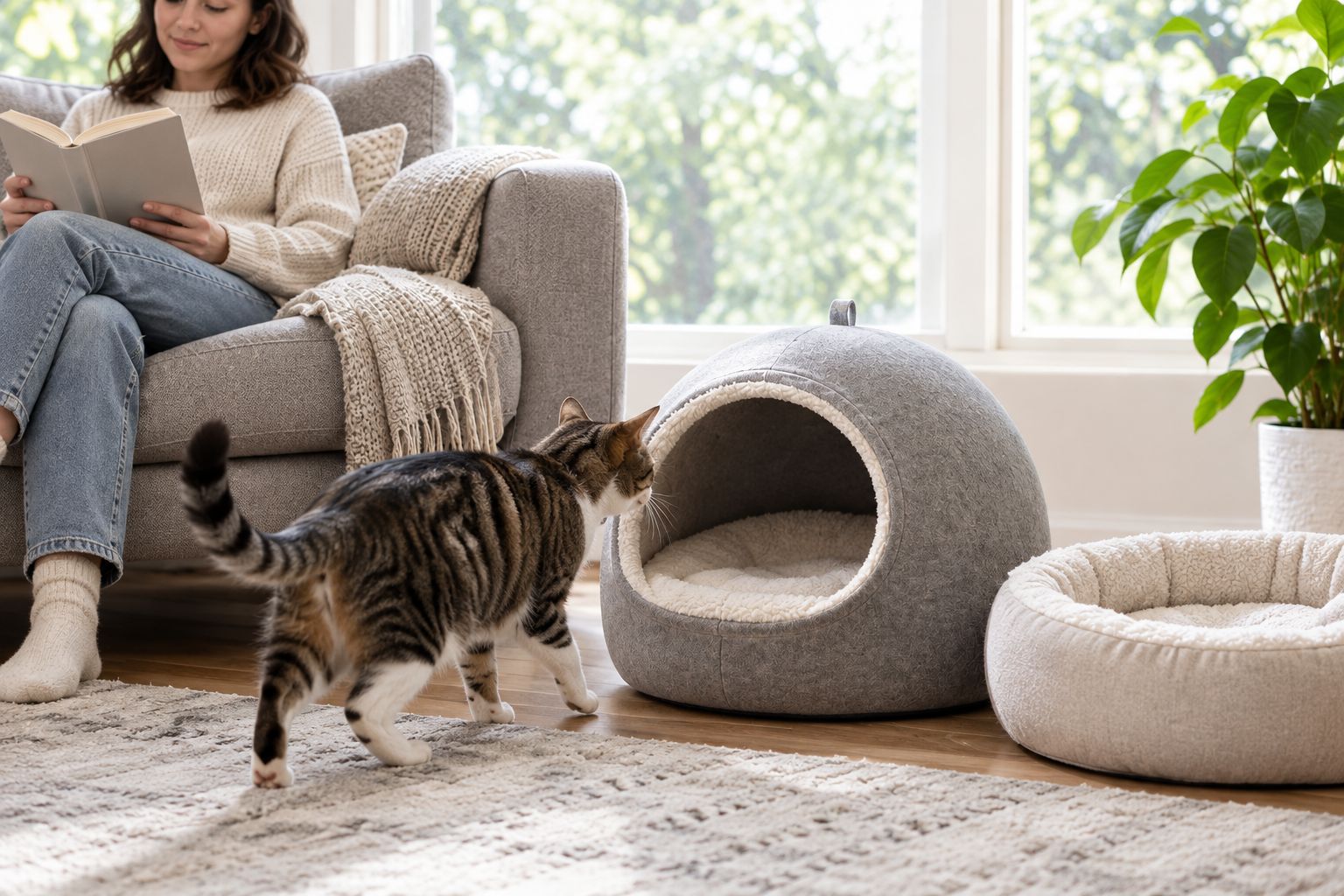
A cat cave bed: best for cats that seek cover
Look for a pattern rather than an isolated moment. Does your cat regularly sleep inside boxes, beneath furniture, or behind a curtain, even when an open cushion is available?
Those habits give you a practical reason to try a cave. The benefit is the enclosed space itself, not a promise that a particular fabric or shape will change your cat’s behavior.
Check the trade-off, too. A snug-looking entrance is not useful if your cat hesitates to pass through it, and a deep interior becomes inconvenient if you cannot reach the areas that collect hair.
Choose a cave when cover is the feature your cat seeks. Skip elaborate extras until the basic sleeping space fits.
An open cat bed: best for cats that spread out
An open bed is the more sensible choice when your cat regularly sleeps on its side with legs extended. It also leaves your cat free to change position without working around a roof or doorway.
The drawback is straightforward: an open bed does not create a covered retreat. If your cat wants both kinds of resting place, keep them as separate choices rather than expecting one bed to do everything.
Watch where your cat rests during different parts of the day. A covered afternoon nap and an open evening sprawl are not contradictory preferences.
Choose an open bed when freedom to stretch matters more than enclosure. Your cat does not need a cave simply because the bed is marketed for cats.
Why a cat cave bed’s usefulness varies
The value of a cave comes from how well it fits your cat and your household. Use these factors to narrow your choice:
- Sleeping posture: Match the usable interior to the curled or extended position your cat actually uses.
- Entrance access: Look for an opening your cat can enter and leave without an awkward squeeze or climb.
- Location: Put the bed where your cat already rests, away from a busy passage through the room.
- Household traffic: Keep children and other pets from crowding the entrance or reaching inside.
- Cleaning needs: Check whether you can remove hair and clean the sleeping surface according to the care label.
- Room conditions: Keep an alternative resting spot available rather than assuming an enclosed bed suits every season.
No single feature settles the decision. A roomy cave in an unwanted location still misses the point, just as a well-placed cave with a difficult entrance does.
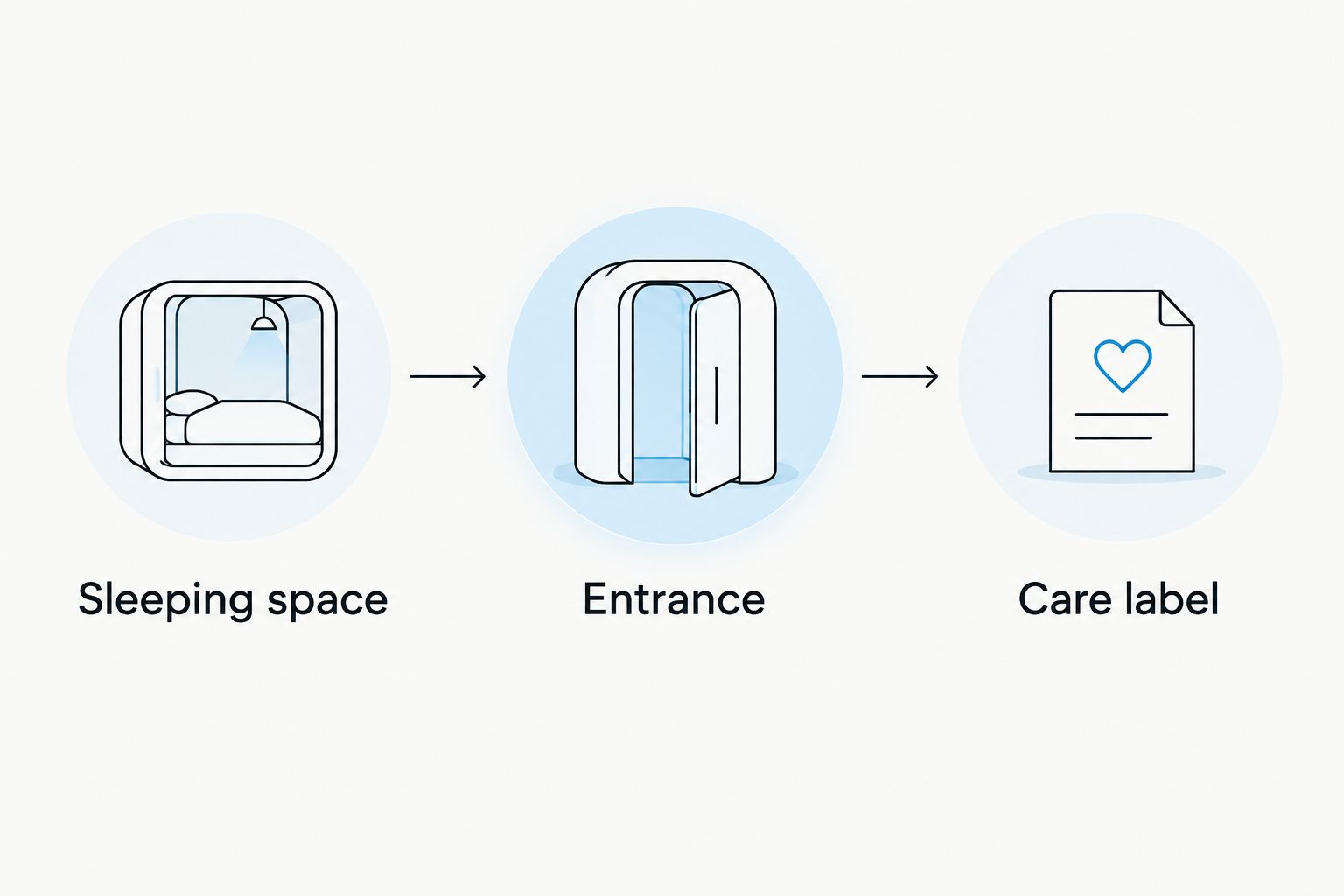
Your 2026 buying checklist: 3 checks before choosing a cave
Use these 3 checks to turn a cute-looking bed into a practical choice. Each check answers a different question: does it fit, can your cat enter, and can you care for it?
Check the sleeping space
Take 2 measurements from your cat’s usual resting posture: the length and width of the space the cat occupies. Compare those measurements with the bed’s usable interior, not just its outside dimensions.
Do not measure a tightly curled cat if that cat usually stretches out. Leave room for ordinary movement instead of treating the smallest possible sleeping shape as the target.
Check the entrance
Inspect the entrance separately from the interior. A generous sleeping area is not enough if reaching it requires your cat to squeeze through a narrow opening.
Also consider where the opening sits once the bed is in your room. The route should stay clear of furniture, trailing cables, and items that obstruct your cat’s approach.
Check the care label
Read the cleaning instructions before choosing the bed. Do not assume that a removable cushion, outer shell, or entire cave can go into a washing machine.
Picture the task after a hairball or a soiled patch. If you cannot reach the interior or follow the required care routine, choose a simpler bed.
How do you introduce a cat cave bed without pressure?
Introduce a cave as an optional resting place, not a destination you put your cat into. For your 2026 setup, begin near an established nap spot and keep the approach clear.
- Choose a familiar location. Start in a quiet area your cat already uses rather than an unused corner selected only for appearance.
- Add familiar bedding if the design allows it. Use a clean, familiar item without crowding the interior or blocking the entrance.
- Let your cat investigate. Allow sniffing, looking, entering, and leaving without holding your cat inside.
- Keep another resting place available. Leave the preferred open bed or blanket where it normally belongs.
- Watch for voluntary rest. Look for comfortable settling and repeat use, not just a brief visit encouraged by food.
There is no useful deadline that every cat must meet. Keep the introduction calm, and change one part of the setup at a time so you can tell what your cat prefers.
A cave should remain easy to leave. In a multi-pet home, watch whether another animal waits at the doorway or interrupts a resting cat; move or rethink the setup if the entrance becomes a point of conflict.
When is a bedside pet bed a better choice?
A bedside pet bed addresses a different wish: staying close to you at night. If your cat leaves a covered retreat to sleep beside you, proximity deserves attention before you buy another enclosure.
Furmatesusa bedside pet beds suit pet parents who want a separate resting space close to them. The Close To Me Nest | Bedside Pet Bed is designed to keep a pet close while you sleep.
That does not make the bed a substitute for a cave. Furmatesusa offers this bedside option for closeness; choose a separate covered retreat if hiding is the need you are trying to meet.
Before choosing a bedside arrangement, check the current product details and your available space. Do not assume that every bedside bed fits every room, sleeping setup, or cat.
Can I test whether my indoor cat likes a cave before buying one?
Yes—offer a safe, stable cardboard box on the floor with an unobstructed opening and familiar bedding. Remove staples, loose tape, handles, and anything your cat could swallow or become caught in.
Treat this as a preference check, not proof that every cave will work. A purchased bed will still have its own entrance, interior dimensions, texture, and cleaning requirements.
Is a cave bed better than an open bed for every indoor cat?
No—an open bed is the better match for a cat that consistently chooses exposed, stretched-out sleeping positions. A cave is the better match when overhead cover is part of the attraction.
You can offer both if your space allows. Let voluntary use guide what stays in your home rather than trying to train away a harmless sleeping preference.
Should I worry if my cat suddenly starts hiding in a cave?
A sudden change in hiding behavior deserves attention, especially alongside changes in appetite, litter-box habits, movement, or social behavior. Contact your veterinarian rather than assuming the new bed explains everything.
An enclosed bed is a resting option, not a treatment or a way to judge your cat’s health. Keep ordinary care and observation separate from the buying decision.
FAQ
Is a cat cave bed worth it for an indoor cat that already has a bed?
Yes, if the cave adds a covered resting option your cat already seeks. If your cat happily uses an open bed and avoids enclosed spaces, another bed is not necessary.
What's the best bed style for a cat that sleeps under furniture?
A cat cave bed is a sensible style to try when your cat regularly chooses covered sleeping spots. Check the entrance, usable interior, and location rather than choosing by appearance alone.
Can I make my cat sleep in a new cave bed?
Do not force your cat into a cave or hold your cat inside it. Offer the bed near a familiar resting place and let your cat enter and leave freely.
Should a cat cave bed feel snug or roomy?
A cat cave bed should let your cat enter, turn, and rest in its usual posture without an awkward squeeze. Compare usable interior dimensions with the space your cat occupies while sleeping.
Are cat cave beds machine washable?
Washability depends on the individual bed and its care label. Check the shell and cushion instructions separately, and do not assume that removable parts are machine washable.
Is a bedside pet bed the same as a cat cave?
No—a bedside pet bed prioritizes a resting place near you, while a cave prioritizes enclosure. Furmatesusa bedside pet beds address closeness rather than replacing a dedicated covered retreat.
Where should I put a cat cave bed in a small apartment?
Put a cat cave bed in a quiet, familiar resting area with a clear entrance. Keep it out of busy walkways and make sure other pets cannot crowd your cat at the opening.
One last thing
For your 2026 decision, notice what happens after your cat enters a covered space: does your cat settle, or turn around and leave? Entry shows curiosity; choosing to rest tells you more.
Keep the bed that serves your cat’s habits, even if it is the simpler-looking option. The useful purchase is the one that gives your furry friend a welcome place to settle while everyday life carries on nearby.