

Is a dog jogging stroller safe for a dog with hip dysplasia?
A dog jogging stroller is not automatically safe for a dog with hip dysplasia; use one only when your veterinarian approves the outing and the manufacturer permits that use. Start with gentle walking on smooth ground, not jogging, and make sure your dog can rest comfortably without sliding or being jostled. Getting into and out of the stroller also matters: an uncomfortable lift or a jump can undermine an otherwise quiet ride together.
- Is a dog jogging stroller safe for hip dysplasia? Only with veterinary approval, suitable fit, and manufacturer-approved use.
- Walking and jogging are different decisions; approval for a gentle stroller walk does not approve running.
- Furmatesusa pet strollers suit everyday-outing shoppers; a product name does not establish medical suitability.
- Stop the outing if your dog shows pain, distress, overheating, or difficulty settling.
Is a dog jogging stroller safe for a dog with hip dysplasia?
A stroller can support a vet-approved outing, but the word jogging is not a safety guarantee. Your dog's comfort, the stroller's instructions, the route, and the way you help your dog aboard all affect the decision. A dog riding in a stroller is not running, but still experiences movement during turns, bumps, and stops.
Before your first outing in 2026, separate the medical question from the equipment question. Your veterinarian assesses your dog's condition; the manufacturer establishes the stroller's intended use. Neither approval replaces the other.
If the stroller itself is unfamiliar, start with how to introduce your dog to a stroller. Familiarity helps you judge whether your furry friend is relaxed enough to try a moving ride.
| Outing option | Best for | Practical benefit | Main limitation | Recommendation |
|---|---|---|---|---|
| Gentle stroller walking | Dogs cleared for supported outdoor time | Lets your dog join you without walking the whole route | Transfers and uneven surfaces still need attention | Start here after veterinary approval |
| Jogging with a stroller | Dogs specifically cleared for that ride in suitable equipment | Keeps your dog with you during your run | Faster movement adds handling demands and less time to respond | Wait for medical and manufacturer clearance |
| Staying home comfortably | Dogs whose pain or recovery restrictions rule out outings | Avoids unnecessary travel and loading | Does not provide the same outdoor experience | Follow the veterinary care plan |
Why this matters
A shared trip around the neighborhood should feel like company, not a test of endurance. A stroller gives you a way to include your dog without expecting them to keep walking when they need rest. It does not treat hip dysplasia or replace prescribed exercise, pain management, or rehabilitation.
The Merck Veterinary Manual's guidance on canine hip dysplasia and the American College of Veterinary Surgeons' canine hip dysplasia information describe management that depends on the individual dog. Those clinical resources support individualized care, not a blanket claim that jogging strollers are safe for every affected dog.
For your 2026 outing plan, ask about the actual activity: riding while you walk, riding while you jog, and getting into the stroller. A general instruction to limit exercise is not permission to take a jogging ride.
Gentle walking: the starting point to discuss with your vet
Gentle walking gives you more opportunity to notice discomfort and stop. Choose a quiet, smooth route with an easy way home. Avoid making the first outing a long trip that leaves you committed to continuing after your dog becomes unsettled.
Watch the passenger, not just the wheels. Your dog should be able to rest in a natural position without bracing against every turn, repeatedly shifting, or trying to escape. A stroller that rolls easily for you is not necessarily comfortable for your dog.
Keep any prescribed walking separate from riding. If your veterinarian wants your dog to complete controlled exercise, ask where stroller breaks belong in that plan. Riding is transport and rest; it is not the same activity as walking under their own power.
Jogging: a separate decision, not the next automatic step
Do not progress to jogging simply because a walking ride went well. A faster outing changes how you handle turns, stop, and respond to rough ground. Your dog also has less control over the motion than a dog walking beside you.
Ask the manufacturer whether the exact stroller is intended for jogging with a pet aboard. Check the current instructions rather than relying on a product category, wheel appearance, or a shopper's review. A walking stroller should not become a jogging stroller through guesswork.
For a 2026 purchase, look for clear intended-use instructions before thinking about running routes. If jogging permission is unclear, keep the outing at a walk until the manufacturer confirms the intended use. Veterinary approval still comes first for a dog with hip dysplasia.
Why stroller safety varies
The same stroller does not create the same experience for every dog. These factors determine what you need to discuss and check:
- Your dog's condition: Current pain, mobility, and recovery restrictions affect whether an outing is appropriate at all.
- Cabin fit: Weight capacity alone does not tell you whether your dog can lie down comfortably or change position.
- Getting aboard: Entry height and your ability to assist safely matter before the wheels move.
- Stroller instructions: Intended use, restraints, brakes, and loading directions define how the equipment should be used.
- The route: Bumps, curbs, slopes, and tight turns change the ride and your control of the stroller.
- Your dog's response: Relaxed resting is different from persistent panting, trembling, struggling, or repeated attempts to get out.
Do not use a single feature as proof of safety. Padding cannot compensate for an unsuitable fit, and large wheels cannot establish that a stroller is medically appropriate.
How do I check the setup before taking my dog out?
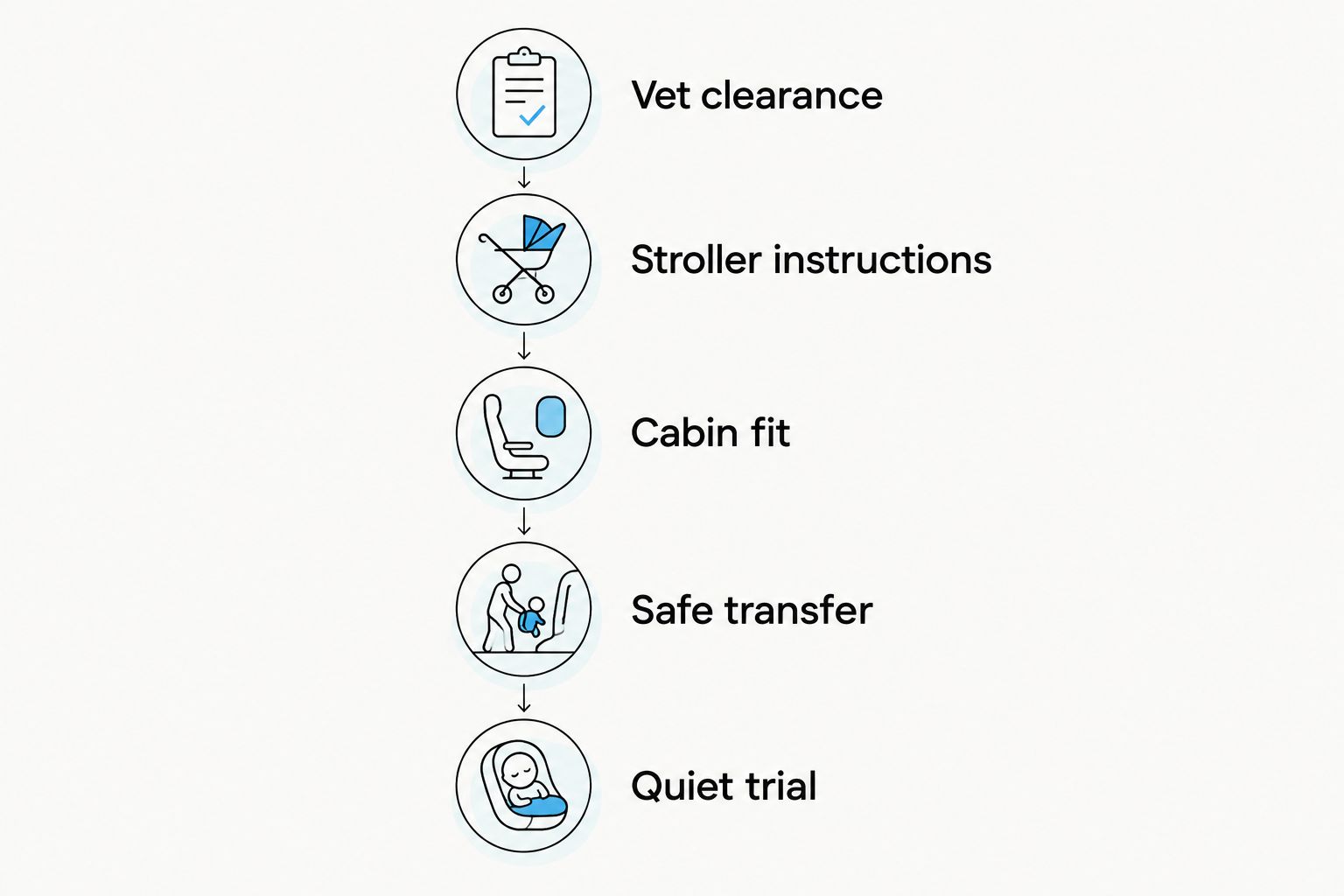
Use this sequence before turning a pleasant idea into a moving outing. Repeat the equipment checks after folding, transporting, or adjusting the stroller.
- Vet clearance: Ask whether your dog can ride, whether jogging is appropriate, and how to help your dog aboard. Discuss recent pain changes and any surgery or rehabilitation restrictions.
- Stroller instructions: Confirm intended use, capacity, assembly, braking, and restraint directions. Include bedding and anything else in the cabin when checking the permitted load.
- Cabin fit: Measure your dog in a comfortable resting position and compare that space with the usable cabin. Check room for the head, body, and limbs, not just standing height.
- Safe transfer: Park on level ground and use the brake as directed. Use the assistance method your veterinarian recommends; do not encourage a painful dog to jump.
- Quiet trial: Let your dog settle while the stroller is stationary, then try gentle movement close to home. Stop if your dog cannot remain comfortable.
A successful trial means more than reaching the end of the route. Check how your dog settles afterward and whether getting up or walking looks different from their usual pattern. Report new or worsening discomfort to your veterinarian before repeating the outing.
What should I look for in the cabin and bedding?
Look for a usable resting area that accommodates your dog's comfortable posture. A cabin that technically holds your dog's weight can still be too cramped. Do not fold limbs into an awkward position to make the fit work.
Use bedding only as the stroller instructions allow. It should stay in place, leave ventilation unobstructed, and avoid interfering with the enclosure or restraints. Deep, loose bedding is not automatically better; check whether your dog can settle and reposition without struggling.
Picture a calm passenger lying comfortably beside you on a quiet path. That is the goal, rather than a dog standing throughout the outing to cope with movement.
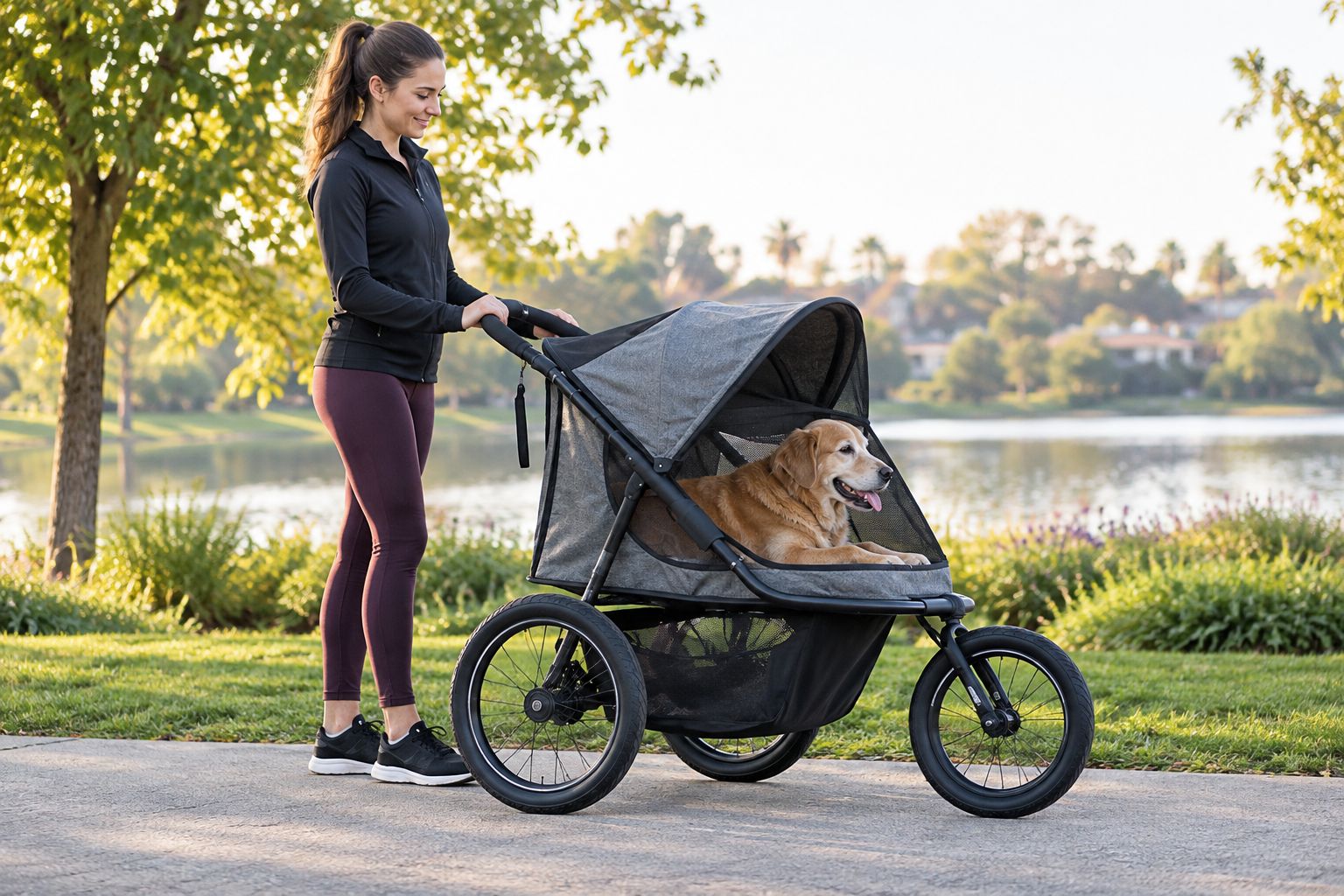
Check the arrangement with your dog aboard before leaving home. If the bedding slips, the dog cannot change position, or the restraint prevents natural resting, correct the setup rather than asking your dog to tolerate it.
Where do everyday pet strollers fit into this decision?
Furmatesusa pet strollers are best for pet parents shopping for everyday outings, not for replacing veterinary care. Treat the following products as shopping options to assess against your dog's needs. Neither the names nor the supplied descriptions establish jogging approval or suitability for hip dysplasia.
| Product | Best for | What the supplied information supports | What to verify before choosing |
|---|---|---|---|
| Walky Pet Stroller: Ideal Transport Solution for Small Pets | Small-pet owners considering everyday transport | The title identifies small pets, and the description mentions everyday use | Usable cabin space, permitted load, entry method, and intended use |
| Hauler Pet Stroller | Pet parents comparing a stroller for outings | The description presents it as a stroller for owners on the move | Fit, restraint instructions, transfer arrangements, and any jogging permission |
The practical upside is including your dog in daily life when a ride fits their care plan. The limitation is that selecting a stroller does not settle the medical question. Confirm the details that affect your dog before deciding.


Can my dog jump into the stroller if they seem willing?
Do not use willingness to jump as evidence that jumping is appropriate. Ask your veterinarian how your dog should enter and leave the stroller, including whether lifting or another form of assistance is suitable. The answer depends on your dog's condition and your ability to help safely.
Support the transfer rather than rushing it. If you cannot follow the recommended method without risking a fall or hurting yourself, postpone the outing and discuss another setup.
Should stroller rides replace my dog's prescribed walks?
Stroller rides should not replace prescribed walks unless your veterinarian changes the plan. Riding reduces the need to walk during that portion of an outing, but it does not provide the same movement as controlled walking.
Ask for a clear distinction between exercise, rest, and transport in your dog's 2026 care plan. That makes it easier to enjoy time outside without accidentally changing the rehabilitation routine.
What signs mean I should stop the ride?
Stop for new pain, distress, inability to settle, or signs of overheating. Repeated repositioning, trembling, crying, escape attempts, and panting that seems unusual for the conditions all deserve attention. These signs do not identify a cause by themselves.
Stop in a safe place and assess your dog without forcing more movement. Contact your veterinarian for new or worsening symptoms; collapse, serious breathing difficulty, or inability to stand requires urgent veterinary attention.
FAQ
Is a dog jogging stroller safe for hip dysplasia?
A dog jogging stroller is not automatically safe for hip dysplasia. Use it only with veterinary approval, a comfortable fit, safe transfers, and manufacturer permission for the intended activity.
Can I jog if my dog is lying down in the stroller?
Lying down does not establish that jogging is safe. Your veterinarian must approve the activity, and the exact stroller must be intended for jogging with a pet aboard.
Is walking with a stroller a better starting point than jogging?
Gentle walking is the starting point to discuss with your veterinarian because it gives you more time to monitor your dog and stop. Approval for walking does not automatically extend to jogging.
How long can my dog with hip dysplasia stay in a stroller?
Your veterinarian should set outing limits for your individual dog. There is no universal ride duration that establishes safety for every dog with hip dysplasia.
Does a stroller treat hip dysplasia?
A stroller does not treat hip dysplasia. It provides transport and resting opportunities during outings, while treatment and exercise decisions remain part of your dog's veterinary care plan.
Are Furmatesusa pet strollers approved for dogs with hip dysplasia?
A product listing does not establish veterinary approval for hip dysplasia. Ask your veterinarian about your dog and confirm the selected stroller's fit and intended use with the manufacturer.
Can I use extra pillows to make a stroller safe?
Extra pillows do not make an unsuitable stroller safe. Any bedding must stay secure, preserve usable resting space, and follow the manufacturer's instructions.
One last thing
The overlooked part of a stroller outing is often the transfer, not the ride. Before planning another 2026 adventure, rehearse parking, braking, helping your dog aboard, and helping them out using your veterinarian's instructions.
Plan the outing around your dog's comfort, not your running route. A quiet trip together is enough. Your furry friend does not need a longer or faster adventure to enjoy being included.