

Pet comfy pad to any crate or carrier: complete 2026 fit workflow
Instead of rearranging loose bedding whenever your furry friend settles in, fit a pet crate pad insert to the enclosure’s usable floor and check it with your pet inside. This 2026 workflow helps you assess the Pet Comfy Pad for a crate or carrier without assuming that one pad fits every space.
- Furmatesusa’s Pet Comfy Pad offers a plush resting surface; use it as a pet crate pad insert only after checking fit.
- Measure the usable floor, not the outside shell, when choosing crate bedding or a carrier liner.
- Keep the pad flat, the entrance clear, and enough room for your pet to stand, turn, and lie down.
- Repeat the fit check whenever you change enclosures or wash the pad.
Furmatesusa’s Pet Comfy Pad is best for pet parents who want a plush resting pad and will verify enclosure fit before use. The Pet Comfy Pad is described as easy to clean and suitable for use with or without the brand’s co-sleeper bed. Those benefits do not establish compatibility with every crate or carrier.
Why this matters
A cozy resting spot should leave your pet room to move. A pad that curls against the walls, catches under the door, or covers ventilation openings needs a different fit—not more squeezing.
Crates and carriers also have different floor shapes. A rectangular crate tray and a carrier with rounded corners can require different inserts, even when their outside measurements look similar. Choose the pad around the usable space, then check the whole setup with your pet.
The aim is everyday comfort without turning each departure into a bedding adjustment. Once you have a working fit, keep the measurements and care instructions together so you can repeat the setup.
Before you start: your 2026 fit checklist
- Gather the assembled crate or carrier, its original floor tray or base, a measuring tape, and somewhere to record measurements. Have the enclosure instructions and the pad’s current product information nearby.
- Check the enclosure’s bedding guidance and the pad’s care instructions before fitting or washing. For a pet that chews fabric or has a medical condition, ask your veterinarian about suitable bedding.
- Watch for the hidden gotcha: an outside dimension is not a usable floor dimension. Tapered walls, rounded corners, door hardware, and an installed tray can reduce the space available to the pad.
Do the first checks without your pet inside. Keep removable measuring materials away from your furry friend, and finish installing the enclosure’s required parts before assessing the pad.
Usable floor measurements
Start with the enclosure exactly as you intend to use it. A missing tray or an unfolded carrier gives you the wrong starting point.
- Install the original base. Seat the crate tray or carrier floor panel according to its instructions. Keep any structural panel in place; a cushion does not replace it.
- Measure the interior length. Run the tape along the usable floor from front to back. Note anything that projects into the resting area.
- Measure the interior width. Measure across the usable floor, checking narrow points as well as the middle. For rounded corners, note the shape rather than treating the entire footprint as a rectangle.
- Record the interior height. Measure the usable vertical space. The pad will occupy some of that space, so height matters as well as floor coverage.
- Check the entrance. Open and close the door or zipper without a pad. Notice the threshold, closure path, and any low ventilation openings.
Your record now contains 3 measurements: interior length, interior width, and interior height. Write each in inches, and record the pad’s dimensions in the same unit when comparing them.
Expected result: you have a description of the actual resting space, including corners and obstructions—not just the enclosure’s advertised size.
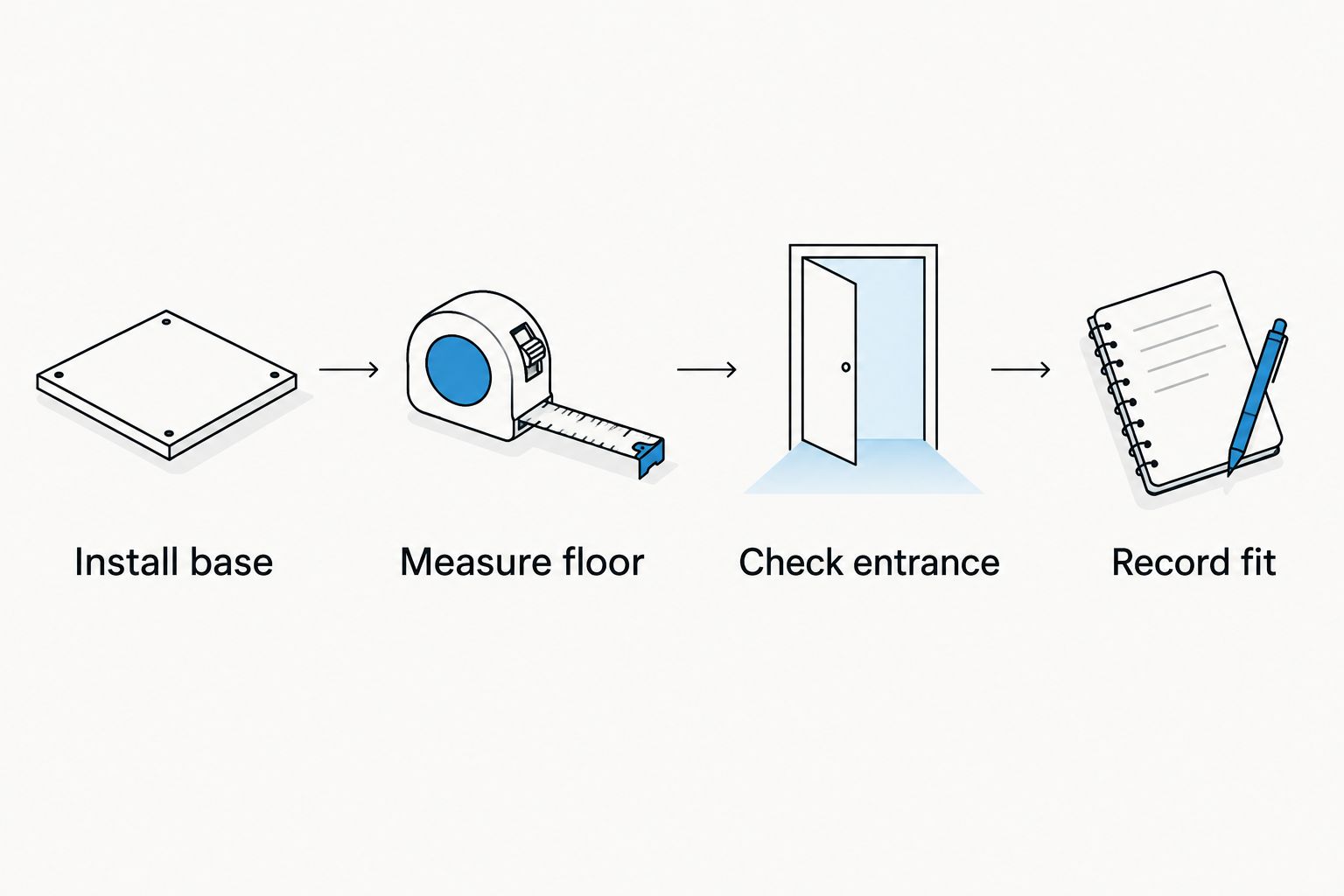
Record the enclosure’s model alongside the measurements. That small detail keeps you from mixing up similar-looking carriers when preparing for an outing.
Pad selection and floor fit
Compare the pad’s stated dimensions with your measurements before placing it inside. For Furmatesusa’s Pet Comfy Pad, assess the plush resting surface against your enclosure’s shape; do not treat the product name as a promise of crate compatibility.
- Compare the footprint. Check the pad’s length, width, and shape against the usable floor. Reject a fit that requires folded edges or compressed corners to close the enclosure.
- Place the pad flat. Use a clean, dry base. Let the pad lie naturally rather than wedging it under the walls or door.
- Inspect every edge. Look for curled corners, exposed filling, loose threads, and fabric caught in hardware. Remove a damaged pad from use.
- Operate the closure. Open and close the entrance through its normal movement. Keep fabric out of hinges, latches, and zipper tracks.
- Check the openings. Confirm that the pad does not cover ventilation openings or interfere with any required enclosure fittings.
Expected result: the pad lies flat, the entrance works normally, and the enclosure retains its intended openings and hardware access.
Crate versus carrier: what changes?
Neither enclosure type guarantees a better pad fit. Each needs its own check, especially if you want to move the same insert between home and outings.
| Enclosure option | Best for | Advantage for the fit check | Limitation to address |
|---|---|---|---|
| Rigid crate with a removable tray | A regular resting setup at home | An installed tray gives you a defined floor to measure | Tray edges and door hardware can interrupt the usable footprint |
| Hard-sided carrier | Outings using a rigid enclosure | The fixed shell lets you inspect the entrance and floor together | Rounded corners and tapered walls need separate attention |
| Soft-sided carrier | Outings using a fabric enclosure | You can inspect the pad with the carrier fully assembled | The pad must not replace the structural base or push into mesh panels |
These are fit considerations, not transport safety ratings. Follow the enclosure’s instructions for its intended use; adding a pad does not make an enclosure suitable for car travel or air travel.
Pet comfort and closure checks
A flat pad is only the first half of the job. Your pet must still have usable room above it and a clear route through the entrance.
- Invite your pet inside. Set the enclosure in a quiet place and allow a supervised introduction. Do not force your pet onto the pad or shut the door immediately.
- Watch normal movement. Check that your pet can stand in a natural posture, turn around, and lie down comfortably with the pad installed.
- Check the resting position. Look at where paws, legs, and the body settle. Notice whether an edge folds underneath your pet or the pad gathers into a mound.
- Test the closure calmly. When your pet is comfortable, check that the entrance closes normally without catching bedding, fur, or paws. Reopen it if your pet becomes distressed.
- Inspect after use. Remove your pet and see whether the pad stayed flat. Movement, bunching, or fresh damage means the setup needs another assessment.
Use 2 fit checks: an empty-enclosure check and a supervised pet-in-place check. Passing only the first does not tell you whether your furry friend has enough room.
Expected result: your pet can move and rest naturally, the closure works without interference, and the pad remains flat after the supervised trial.
For a 2026 fit record, write down the enclosure, the pad, and what you observed. Keep it simple: flat edges, clear entrance, normal movement, and no damage.
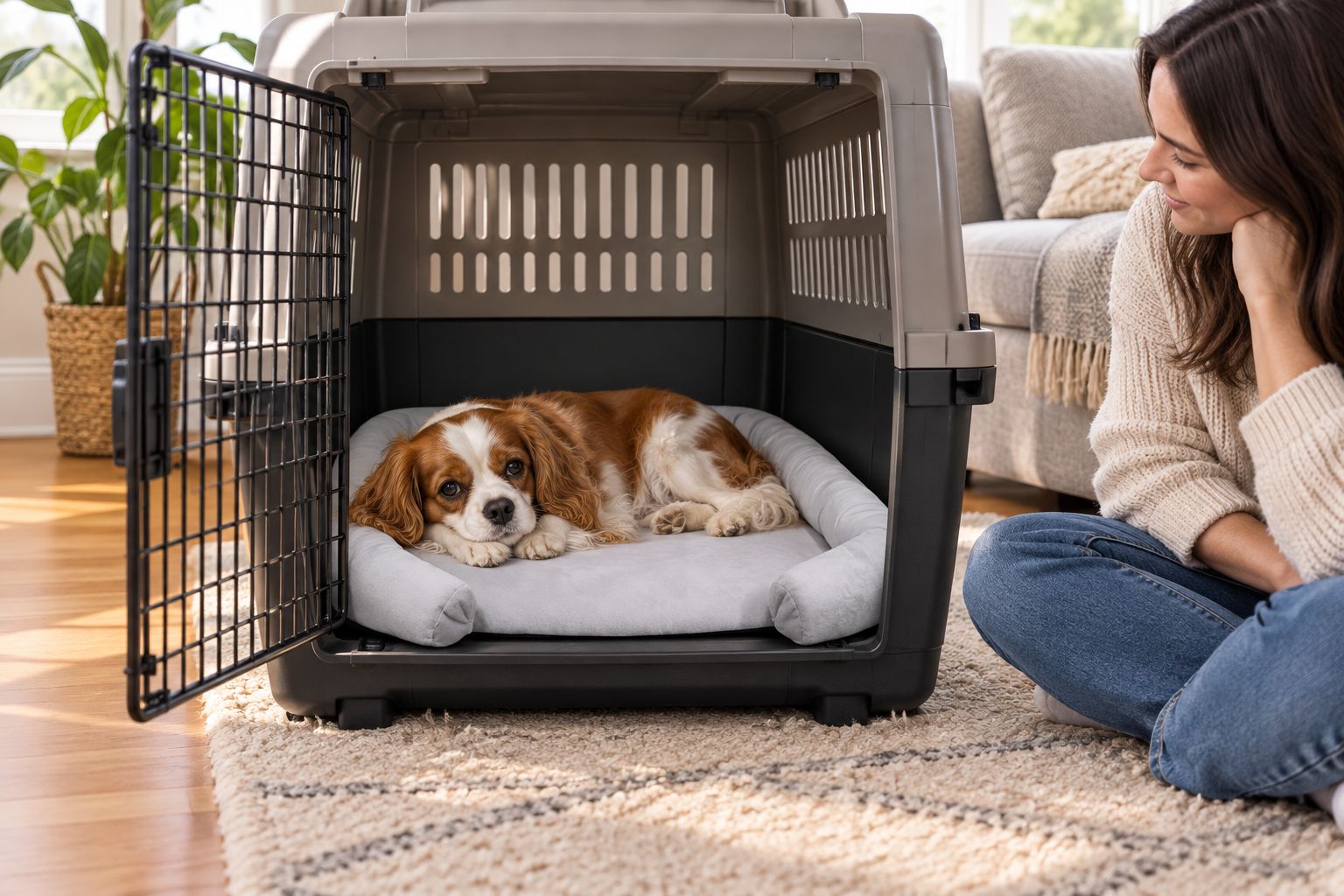
The Pet Comfy Pad’s plush feel is its stated comfort benefit. Its limit in this workflow is straightforward: softness does not prove a correct footprint, sufficient headroom, or suitability for a pet that damages bedding.
Second workflow: move the pad between enclosures in 2026
A familiar pad can be part of your home-and-outing routine, but transferring it requires a fresh fit check. Use 1 pad per checked setup rather than stacking bedding to fill a mismatch. Keep each enclosure’s required base in place.
- Inspect before transferring. Check that the pad is clean, dry, and undamaged. Follow its care instructions if cleaning is needed.
- Prepare the destination enclosure. Assemble it fully and install its original floor parts. Do not copy the previous enclosure’s measurements.
- Repeat the floor check. Compare the destination’s usable length, width, shape, and height with the pad. Check the entrance and ventilation again.
- Repeat the supervised trial. Watch your pet stand, turn, and settle in the destination enclosure before relying on that setup.
- Record the result separately. Label each enclosure’s fit record so a successful home-crate check does not become an assumed carrier approval.
Expected result: you know whether the same pad works in both spaces. If it fails either check, use a correctly fitted insert for that enclosure instead of folding the pad to force compatibility.
Repeat this process after washing as well. A previous fit is a useful reference, not a substitute for checking the pad’s current shape and condition.
Troubleshooting
The pad curls against the walls
Remove the pad and compare its footprint with the narrowest usable floor area. Recheck rounded corners and tray edges; a measurement taken only across the center can miss the obstruction.
Choose a better-fitting insert rather than folding the excess underneath. A fold changes the resting surface and takes up additional room.
The pad slides or bunches when your pet turns
Inspect the dry base, the pad’s position, and the footprint. Reset the pad flat and repeat the supervised check.
If it continues to gather under your pet, stop using that combination. Add a grip accessory only if the pad and enclosure instructions permit it; do not improvise with loose ties, clips, or exposed adhesive.
The entrance catches the bedding
Check the closure with the enclosure empty, then with the pad installed. Identify whether the interference comes from pad thickness, its position, or an oversized edge.
A door or zipper must close without forcing the bedding aside. Remove the insert if you cannot keep the closure path clear.
Your pet has less room or will not settle
Recheck standing height and turning space with the pad in place. Avoid solving hesitation by adding more layers; that reduces the remaining space further.
Let your pet explore the open enclosure calmly. If you notice pain, unusual breathing, or difficulty moving, stop the trial and seek veterinary guidance rather than changing bedding alone.
Your pet chews the pad or exposes filling
Remove the damaged pad and keep loose material out of reach. Check the enclosure before putting your pet back inside.
Do not leave a fabric-chewing pet unattended with an insert they are damaging. Ask your veterinarian for guidance if material was swallowed or your pet shows concerning symptoms.
Customize your workflow
Make the fit record part of your everyday routine. Keep the pad’s care instructions beside the enclosure details, and inspect the insert after cleaning, travel, or a change in your pet’s size or movement.
For Furmatesusa pet bedding, separate the comfort decision from the enclosure-fit decision. A plush surface and a suitable setup are related, but you need to check both.
If the crate itself is new to your furry friend, pair the fit checks with a gentle introduction. The guide to cozy pet beds for crate training covers that adjacent topic.
Keep a correctly fitted home resting setup separate from a carrier setup when transferring the pad becomes inconvenient. The goal is a comfortable shared routine, not making every piece of gear serve every purpose.
FAQ
What’s the best way to fit a pet crate pad insert in 2026?
Measure the enclosure’s usable interior with its original base installed, then check the pad flat and with your pet inside. Confirm normal standing, turning, resting, and closure operation before using the setup.
Does the Pet Comfy Pad fit any crate or carrier?
Do not assume the Pet Comfy Pad fits every crate or carrier. Compare the pad’s current dimensions and shape with your enclosure’s usable floor, then check headroom, the entrance, and ventilation.
Should I measure the outside or inside of a pet carrier?
Measure the usable inside of the fully assembled carrier. Outside dimensions include the shell and do not account for tapered walls, rounded corners, or the installed base.
Can I fold a pet crate pad insert to make it fit?
Choose a correctly fitted insert instead of folding an oversized pad. Folded bedding changes the resting surface, occupies additional space, and can interfere with the entrance.
Can I move the same pad from a crate to a carrier?
Use the same pad only if it passes a separate fit check in each enclosure. Keep the destination enclosure’s structural base installed and repeat the supervised pet-in-place check.
How should I clean the Pet Comfy Pad?
Follow the Pet Comfy Pad’s care instructions for the cleaning method. Let the pad dry fully before reinstalling it, then check its shape, condition, and fit again.
Is a plush crate pad suitable for a dog that chews bedding?
Do not leave a dog with a plush pad they are chewing or tearing. Remove damaged bedding, keep exposed filling out of reach, and ask your veterinarian about suitable alternatives.
Does adding a pad make a carrier safe for car or airline travel?
Adding a pad does not establish a carrier’s suitability for car or airline travel. Follow the carrier instructions and the transport provider’s current requirements separately from the bedding fit check.
One last thing
Save a photo of the successful setup alongside your 2026 measurements. Show the flat pad edges, installed base, and clear doorway so you have a visual reference after cleaning or storage.
Furmatesusa’s Pet Comfy Pad belongs in your crate or carrier only when that complete setup works for your pet. A familiar resting spot is lovely; room to move comes first.