

Pet Stairs for Veterinary Clinics: Choose Safely in 2026
Veterinary clinics' pet-stair planning is the process of deciding when a dog or cat can use steps to reach a raised surface, with the aim of making movement safer during a visit. Unlike stairs at home, clinic stairs must suit changing patients, staff supervision, cleaning routines, and the treatment plan for each animal. This 2026 guide covers when to use stairs, when to keep an examination at floor level, and what to tell owners about access at home.
- Pet stairs for veterinary clinics are an access option, not a default for every patient.
- A floor-level exam is the better choice when a pet cannot climb comfortably or has movement restrictions.
- Furmates pet stairs are best considered for an owner's home routine, not assumed suitable for shared clinic use.
- Check the pet, destination, floor grip, and cleaning requirements before choosing steps or a ramp.
Why pet stairs matter for veterinary clinics
A pet that climbs onto a sofa at home will not necessarily climb confidently in an unfamiliar examination room. The surface, destination, and reason for the visit all change the decision. Start with the patient, not the equipment: ask whether climbing is appropriate before inviting a dog or cat onto any steps.
That distinction matters when you speak with owners, too. A stair arrangement that works beside a bed may not match an examination table, and a pet recovering from a procedure needs instructions specific to its care plan. For owners who need a starting point for practice outside the clinic, the guide to training your dog to use pet stairs addresses a different task: learning the steps in a familiar setting.
In 2026, keep clinic advice separate from a general shopping recommendation. Your staff can assess whether stairs belong in a visit; an owner can then check which home setup fits the access you discussed. Those are related decisions, but they are not interchangeable.
Plan pet-stair access around the patient
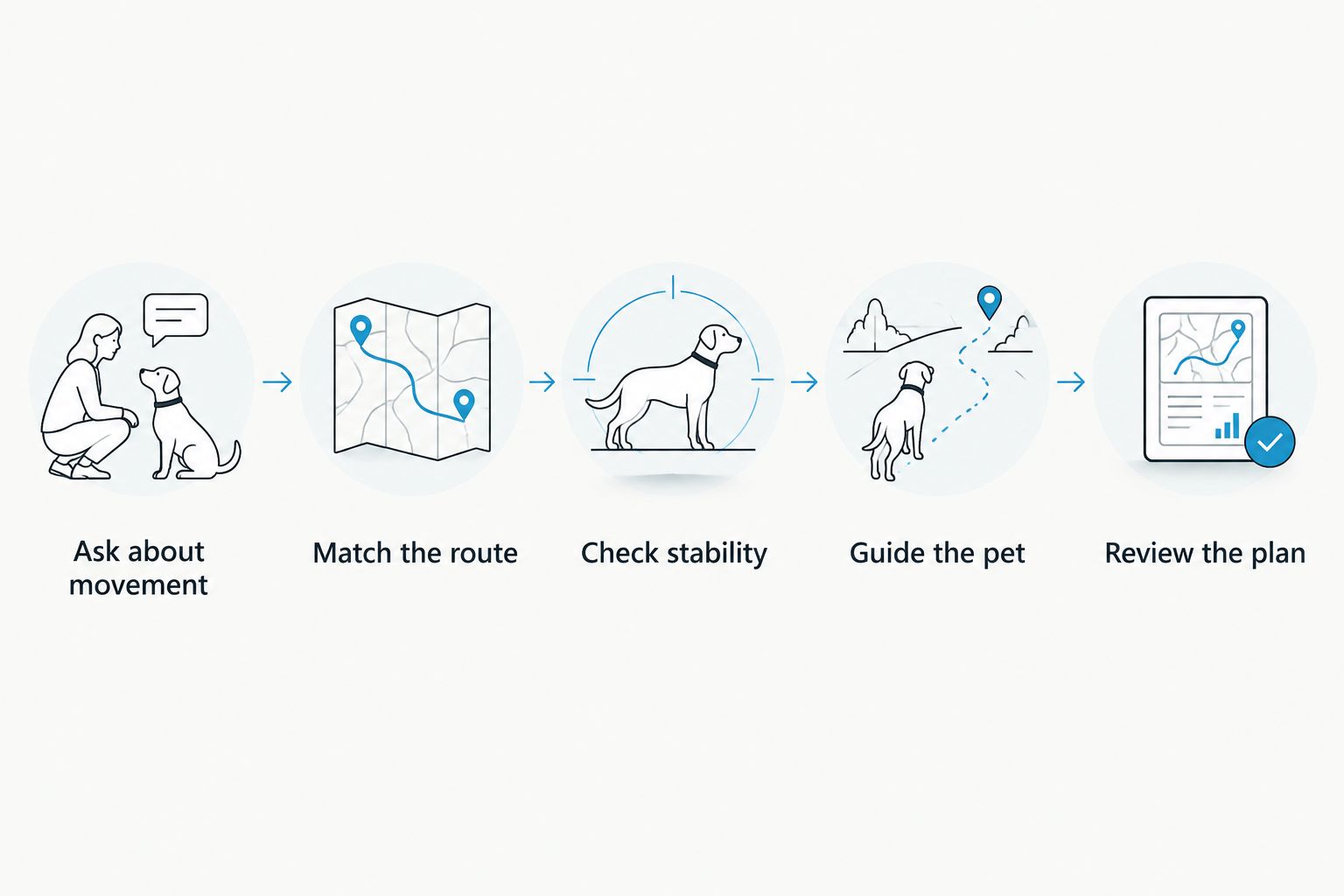
A useful clinic process begins before anyone sets stairs beside a raised surface. Move through the following steps in order, and return to a floor-level option whenever the patient or setup fails a check.
Ask whether the patient should climb
Find out how the pet normally reaches furniture and whether that has changed. Then compare the owner's account with the reason for this visit and any movement restrictions in the care plan. Familiarity with stairs is useful context, not permission to use them during an examination.
Do not turn a mobility concern into a demonstration. If climbing would conflict with clinical instructions, keep the pet on a suitable lower surface and follow your handling protocol. The immediate goal is an appropriate examination, not proving that the animal can reach the table.
- Ask the owner which surfaces the pet climbs at home.
- Ask whether the pet hesitates, slips, or avoids its usual route.
- Check the current care plan for movement restrictions.
- Choose a lower examination position when climbing is unsuitable.
Match the route to the destination
Look at the entire journey, not just the steps. A pet needs a clear approach, a stable place to arrive, and a way back down that staff can supervise. Stairs that appear convenient in a small room can put the pet's path through a doorway or busy working area.
For a cat, also consider whether the destination invites an unwanted jump after the climb. For a dog, watch how it turns at the top. If you cannot set up a clear route in both directions, change the examination position rather than trying to make the steps fit.
- Identify the exact surface the pet needs to reach.
- Clear the approach of bags, leads, and equipment.
- Check the landing and the route back down.
- Keep the route out of staff traffic.
Check grip and stability before use
Place the stairs on the actual clinic floor and assess them there. A unit that stays put elsewhere can shift on a different surface. Check each contact point and the step surfaces before you invite a pet to climb; stop if the arrangement moves under controlled pressure.
The same check applies to an owner's home setup, where a rug, polished floor, or change in furniture position can alter the route. A willing pet is not a substitute for a stable setup. Do not rely on a staff member holding loose stairs in place while the animal climbs.
- Test the unit on the floor where it will be used.
- Check that each step stays steady.
- Remove obstacles from the approach.
- Recheck stability after moving the unit.
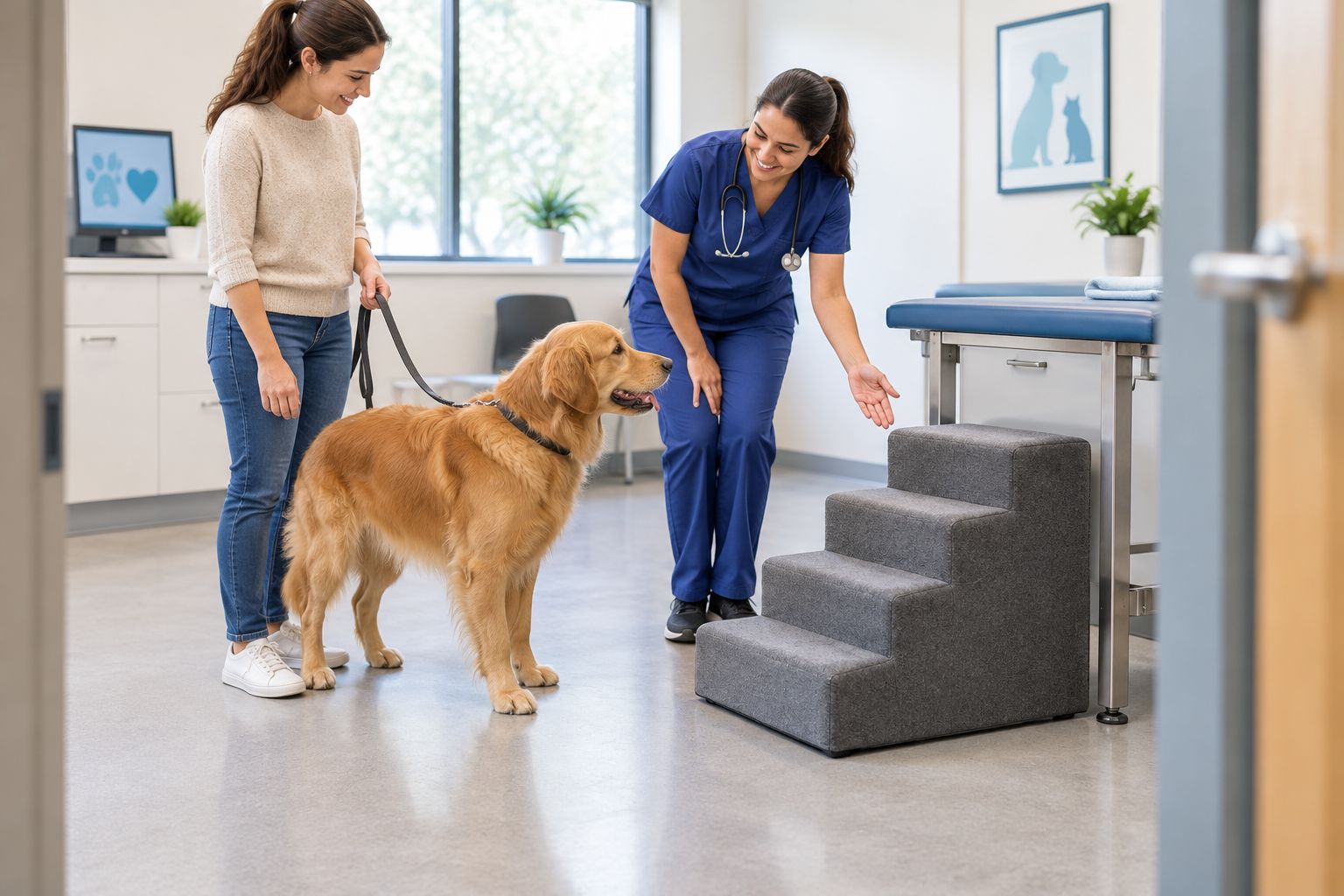
Guide the pet without forcing the climb
Let the pet see and investigate the route before asking for movement. Keep the owner and staff aligned on who is guiding and who is managing the space. If the animal pauses, turns away, or tries to jump past the steps, stop and use another examination position.
Clinic staff should not treat a familiar home command as proof that a pet is comfortable in this room. A short, calm attempt tells you more than repeated prompting. The decision to stop is part of a good access plan, not a failed training session.
- Give the pet time to look at the steps.
- Assign a staff member to manage the surrounding space.
- Watch for hesitation or attempts to bypass the route.
- Switch to a lower surface when the pet declines.
Set a cleaning rule for shared equipment
A clinic accessory moves between patients; a household stair usually does not. Before adding stairs to a shared room, check whether their surfaces and construction fit your existing cleaning protocol. A convenient storage compartment at home does not answer that clinic requirement.
If the unit cannot be cleaned in line with your protocol, do not place it in shared clinical use. Keep the equipment decision with the staff who manage infection control, and keep the pet's access decision with the team handling that patient.
- Identify every surface touched during use.
- Check the unit against your cleaning protocol.
- Set a place for the unit between patients.
- Remove it from shared use if cleaning is impractical.
Give owners a home-specific recommendation
After the visit, tell the owner what access the pet can use at home under the current care plan. Be explicit about the destination: a low couch, a bed, and a vehicle present different routes. If steps are appropriate, ask the owner to check placement and stability where the pet will actually use them.
Furmates sells pet stairs for dog and cat owners, including a 2-step storage option. Furmates pet stairs are best for owners planning a familiar home route, not for clinics seeking a shared-use accessory without a separate cleaning and handling assessment. The benefit is a step option that also provides storage; the limitation is that its presence in a home product range does not establish suitability for every clinic patient.
- Name the home surface the pet needs to reach.
- State any movement restrictions from the care plan.
- Ask the owner to check the steps on their own floor.
- Recommend supervised introduction rather than an immediate climb.
Review the plan when the pet's movement changes
A recommendation made during one visit should not become a standing instruction for every future visit. Ask again if the owner reports new hesitation, a change in mobility, or a different recovery plan. Reassess the route in the examination room as well; the same equipment can be appropriate for one patient and unsuitable for another.
For 2026 owner handouts, keep the rule short: the care plan decides whether the pet climbs, and the room setup decides how. That makes the advice easier to apply without suggesting that a particular stair design treats a medical condition.
- Revisit climbing advice after a change in mobility.
- Check for new restrictions at each relevant visit.
- Reassess the room rather than relying on past use.
- Update home guidance when the destination changes.
Compare access options for a veterinary clinic
Use the least complicated route that fits the patient and the visit. Stairs are one option, not the reference point for every examination. The table separates equipment for a clinic decision from products an owner might consider for home.
| Option | Best for | Key limitation |
|---|---|---|
| Floor-level examination | Pets whose care plan or behavior makes climbing inappropriate | Staff must arrange a workable examination position. |
| Clinic-selected pet stairs | Patients cleared to climb when a stable route and cleaning process are in place | Suitability changes with the patient, floor, destination, and cleaning protocol. |
| Clinic-selected ramp | Patients for whom the clinical team prefers a sloped route | It still needs a stable approach, landing, and space in the room. |
| Furmates 2Step pet stairs with storage | Owners setting up a familiar home route where 2 steps fit the destination | Home-oriented storage does not establish shared-clinic suitability or fit for every pet. |
| Furmates 1Step pet stair with storage | Owners assessing a shorter home route | A single step will not suit every destination or care plan. |
The Furmates options belong in an owner discussion only after the clinical decision about climbing. If you suggest either one, describe the home task and tell the owner what to check. Do not imply that the steps replace a mobility assessment or a recovery instruction.
For an owner whose pet is cleared to use steps at home, the two storage designs below offer different routes to consider. Match the choice to the surface and the pet rather than treating the number of steps as a medical recommendation.


Common mistakes clinics make with pet stairs
Treating home habits as clinical clearance. An owner may say their dog takes the bedroom stairs every day. Ask about current mobility and check the care plan anyway. A familiar habit does not settle what is appropriate during this visit.
Checking the steps but not the landing. A stable climb can still end at an awkward destination. Inspect where the pet will stand or turn, then plan the descent before starting.
Buying a household stair for shared use without a cleaning check. Features that make a stair useful at home do not answer a clinic's between-patient requirements. Confirm the cleaning process before putting any accessory into rotation.
Assuming reluctance calls for more practice. In an unfamiliar room, hesitation is a reason to pause. Change the examination setup instead of repeatedly asking the pet to climb.
Sending owners home with vague advice. Telling someone to get pet stairs leaves the destination, restrictions, and floor setup unanswered. Name the surface, explain whether climbing is allowed, and tell them what to check at home.
FAQ
Are pet stairs for veterinary clinics suitable for every dog or cat?
No. The patient's care plan, movement, behavior, and the room setup determine whether stairs are appropriate. Use a lower examination position when climbing is unsuitable.
When should a veterinary clinic use a floor-level examination instead of pet stairs?
Use a floor-level examination when climbing conflicts with the care plan or the pet cannot take the route comfortably. Staff still need a workable, supervised examination position.
Are stairs or a ramp better for a clinic patient?
Neither is better for every patient. The clinical team should choose a route that fits the pet's movement, the destination, and the available space.
Can a clinic use the same pet stairs for multiple patients?
Only if the unit fits the clinic's handling and cleaning protocols. Check stability and cleaning requirements before placing shared equipment into use.
Should an owner buy Furmates stairs after a veterinary visit?
Furmates stairs are a home option when the pet's care plan permits climbing. The owner still needs to check the destination, floor stability, and the pet's response to the steps.
Do pet stairs help a pet recover after surgery?
Pet stairs are not a substitute for recovery instructions. Follow the treating veterinary team's movement restrictions before allowing any climb.
How do you introduce a hesitant pet to stairs in an exam room?
Give the pet a calm chance to inspect a stable route without forcing a climb. If it hesitates or tries to bypass the steps, use another examination position.
One last thing
The most useful answer to a 2026 request for pet stairs for veterinary clinics is sometimes no stairs in the examination room. If the patient needs a lower examination position, choose it. Then give the owner separate, specific guidance for home so everyday closeness and comfort never get confused with clinical clearance.