

Pet stairs to bunk bed ladders: complete 2026 fit workflow
Instead of lifting your furry friend onto the lower bunk each evening, fit pet stairs for bunk bed access by checking the landing height, floor space, and route back down. Use stairs for a suitable lower bunk—not as an extension of the bunk ladder or a route to the upper bunk.
- Pet stairs for bunk bed access belong at a suitable lower bunk, not against upper-bunk ladder rungs.
- Furmatesusa pet stairs with storage suit pet parents seeking lower-bed access and useful bedroom storage.
- Measure the mattress landing, stair footprint, and final step before introducing your dog or cat.
- Choose a nearby pet bed when the route needs jumping, ladder climbing, or an exposed landing.
Why this matters
Being close at bedtime should not require your pet to tackle a human ladder. Bunk beds add obstacles that an ordinary bed does not: ladder feet, side rails, tight approaches, and a sleeping surface above another sleeping surface.
This 2026 workflow separates a workable lower-bunk setup from a poor fit before you start training. For the basic measurement method, see how to pick the right pet stairs height for your bed.
Furmatesusa pet stairs with storage are best for pet parents who want lower-bed access and bedroom storage, not an upper-bunk climbing route. Their practical benefit is combining steps with storage; the limit is that storage stairs do not solve an unsuitable height, landing, or ladder arrangement.
Before you start
- Gather a tape measure, paper, the bunk-bed instructions, and the stair instructions. You need the actual dimensions, intended use, and stated load limit of the stairs—not dimensions estimated from a photo.
- Choose the lower bunk as the destination and check your pet’s movement needs. If your dog or cat has pain, balance difficulties, or recovery restrictions, ask your veterinarian whether stairs are appropriate before arranging access.
- Check the hidden snag: the ladder can occupy the same floor space your pet needs for the approach. Do not attach stairs to ladder rungs, remove guardrails, or obstruct the human climbing route. If both routes cannot remain clear, choose another sleeping arrangement.
You do not need an app or account for this setup. You need a route that fits the furniture and your pet, with no improvised connection between them.
Landing and room measurements
Start your 2026 fit record with the lower bunk dressed as you normally use it. A bare bed frame does not show the same landing as a mattress covered with bedding.
- Identify the destination. Choose a clear section of the lower mattress edge. Reject any position that makes your pet climb through ladder rungs, step over a rail, or turn immediately beside an exposed edge.
- Record 3 measurements in inches: floor-to-mattress height, available floor depth, and available approach width. Measure the usable space after allowing for the ladder, doors, drawers, and normal walking routes.
- Record the stair dimensions in inches. Include overall height, base length, base width, tread depth, and the rise between steps. Take these from the instructions or the assembled stairs themselves.
- Check the final transition. Compare the top step with the actual mattress edge. Do not count a large final jump as part of the stair route or assume your pet will stretch across a gap.
- Check the destination surface. Move trailing blankets out of the approach and inspect whether the mattress edge shifts when touched. Your pet needs a clear place to step onto, not a loose fold of bedding.
Expected result: you have written measurements and a clear lower-bunk landing. If the proposed route still depends on a jump, a ladder rung, or a rail crossing, stop here.
Keep the fit record simple
| Fit check | What to record | What makes you stop |
|---|---|---|
| Landing height | Floor to the dressed mattress, in inches | Stair height leaves an unsuitable final transition |
| Floor space | Usable depth and width, in inches | Stairs block the ladder, door, or walking route |
| Stair shape | Height, footprint, tread depth, and step rise | Your pet cannot use the steps comfortably |
| Weight limit | Your pet’s weight in pounds and the stated stair limit | No stated limit, or your pet exceeds it |
| Mattress edge | Whether the landing stays clear and supported | Bedding or the mattress shifts into the route |
There is no single inch measurement that makes every pet-and-bunk combination suitable. Match the actual setup to the stair instructions and your pet’s needs rather than borrowing dimensions from another bedroom.
Stair choice and floor placement
Choose the access arrangement after measuring, not before. A compact stair unit fits some lower beds; it does not become a taller staircase simply because a bunk ladder stands nearby.
Compare the practical options
| Option | Best for | Benefit | Limitation |
|---|---|---|---|
| 2Step | Pet Stairs with Storage | A measured lower-bed route that fits the stairs | Combines pet steps with hidden storage | Height and load suitability still need checking; not a ladder attachment |
| Close To Me Nest bedside pet bed | Pet parents seeking a separate sleeping space nearby | Gives your pet a bedside resting place | Bunk-frame compatibility and access must be confirmed |
| A pet bed on the floor | Keeping your pet nearby without elevated access | Removes the need to reach the mattress | Does not place your pet at mattress height |
| Human bunk ladder | Human access as specified by the bed instructions | Preserves the bed’s intended climbing route | Not a substitute for pet stairs |
Choose the lower route only when the whole route fits. A nearby sleeping space is the better choice when the stairs crowd the room or leave an awkward landing. Neither bedside furniture nor a floor bed should be placed where someone stepping off the ladder will land.
- Assemble the stairs exactly as instructed. Complete every required support or fastening step. For storage stairs, secure any lids or removable parts as the instructions require before use.
- Place the base on the intended floor. Do not raise it with books, boxes, cushions, or another stair unit. Use only floor protection or anti-slip measures compatible with the manufacturer’s directions.
- Align the stairs with the lower landing. Give your pet a direct approach without asking them to weave around ladder feet. Keep the human ladder route separate.
- Inspect the full route without your pet. Check for rocking, sliding, loose components, snagging fabric, and a changing gap at the mattress. A hand check finds obvious movement; it does not establish a load rating.
- Keep the bedroom usable. Open doors and drawers, move bedding as you normally would, and check the walking route. Do not ask a person to stand on pet stairs to test them.
Expected result: the assembled stairs sit as intended, the lower landing remains clear, and people can use the room without stepping over the pet route.
A practical 2026 bedroom setup should still work when you change the sheets or open a drawer. Fit includes daily use, not just a tidy photograph.
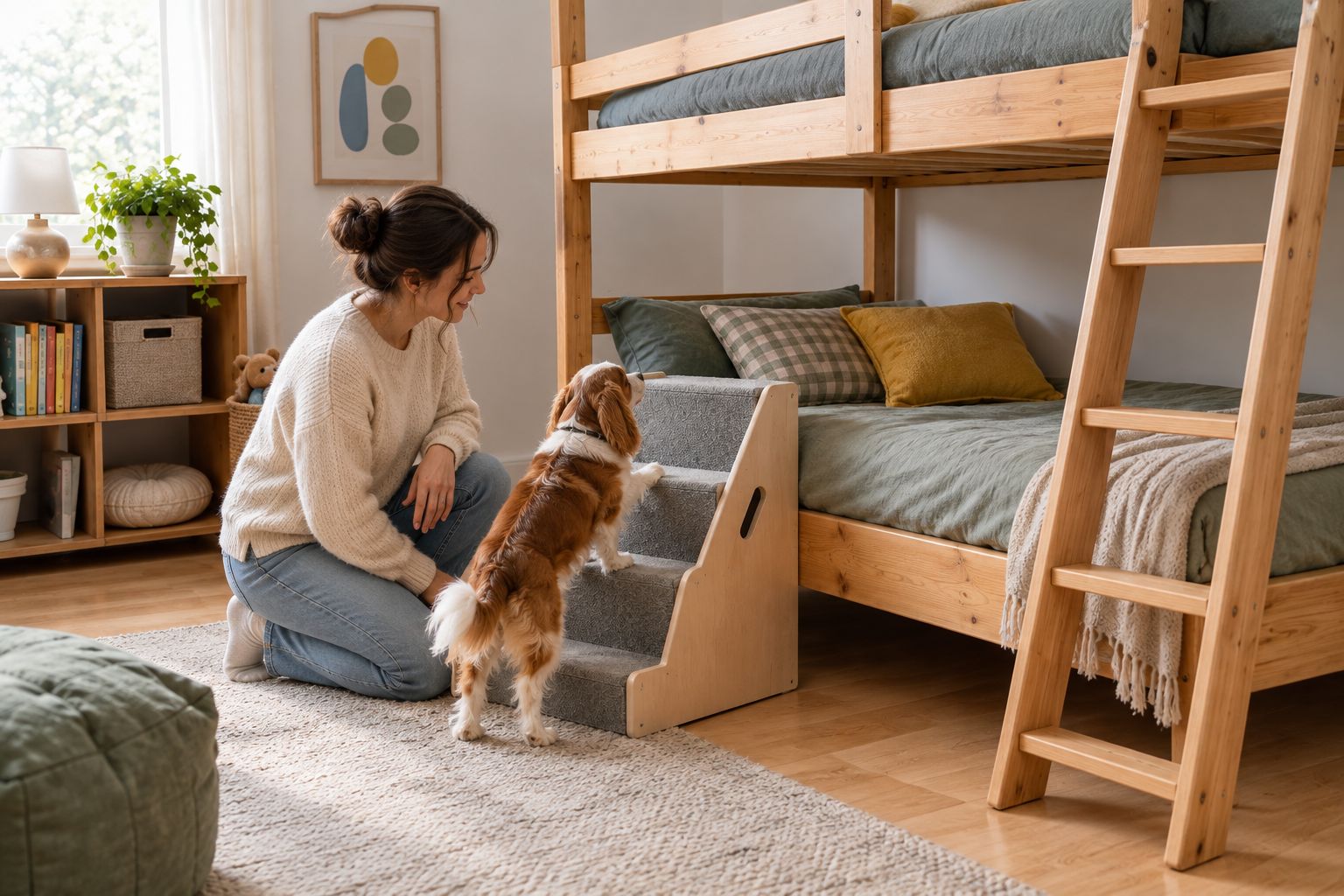
Nearby comfort without a ladder extension
Furmatesusa offers storage stairs and bedside pet beds for different bedroom needs. Consider the stairs only after confirming their fit; consider the bedside bed only after checking its placement and access instructions. Neither product is presented here as a verified match for your bunk frame.


Pet introduction and return route
Introduce the stairs while you are awake and watching. Reaching the mattress once does not establish that your dog or cat can use the route comfortably in both directions.
- Start with floor exploration. Let your pet look at and sniff the stairs without pressure. Reward calm interest; do not place your pet halfway up to make them continue.
- Invite a voluntary step. Use a familiar reward if it suits your pet’s diet. Keep the invitation within easy reach instead of holding it high enough to encourage jumping.
- Watch the movement. Look for slipping, rushed leaps, awkward turns, or hesitation. Stop if your pet shows discomfort, and revisit the arrangement rather than urging another attempt.
- Practice the descent separately. Let your pet approach the return route under supervision. Do not assume that an easy climb means an equally comfortable trip down.
- Repeat only while your pet stays comfortable. End the session when attention fades or movement becomes uncertain. Remove access whenever you cannot supervise a setup your pet is still learning.
Expected result: your pet voluntarily follows the same lower-bunk route up and down without using the ladder or jumping past the steps. If that does not happen, change the arrangement or use a nearby bed.
A route check you can repeat
Use the same sequence whenever something changes: measure, place, introduce, and check descent. Training does not fix stairs that are the wrong height or a landing that moves.
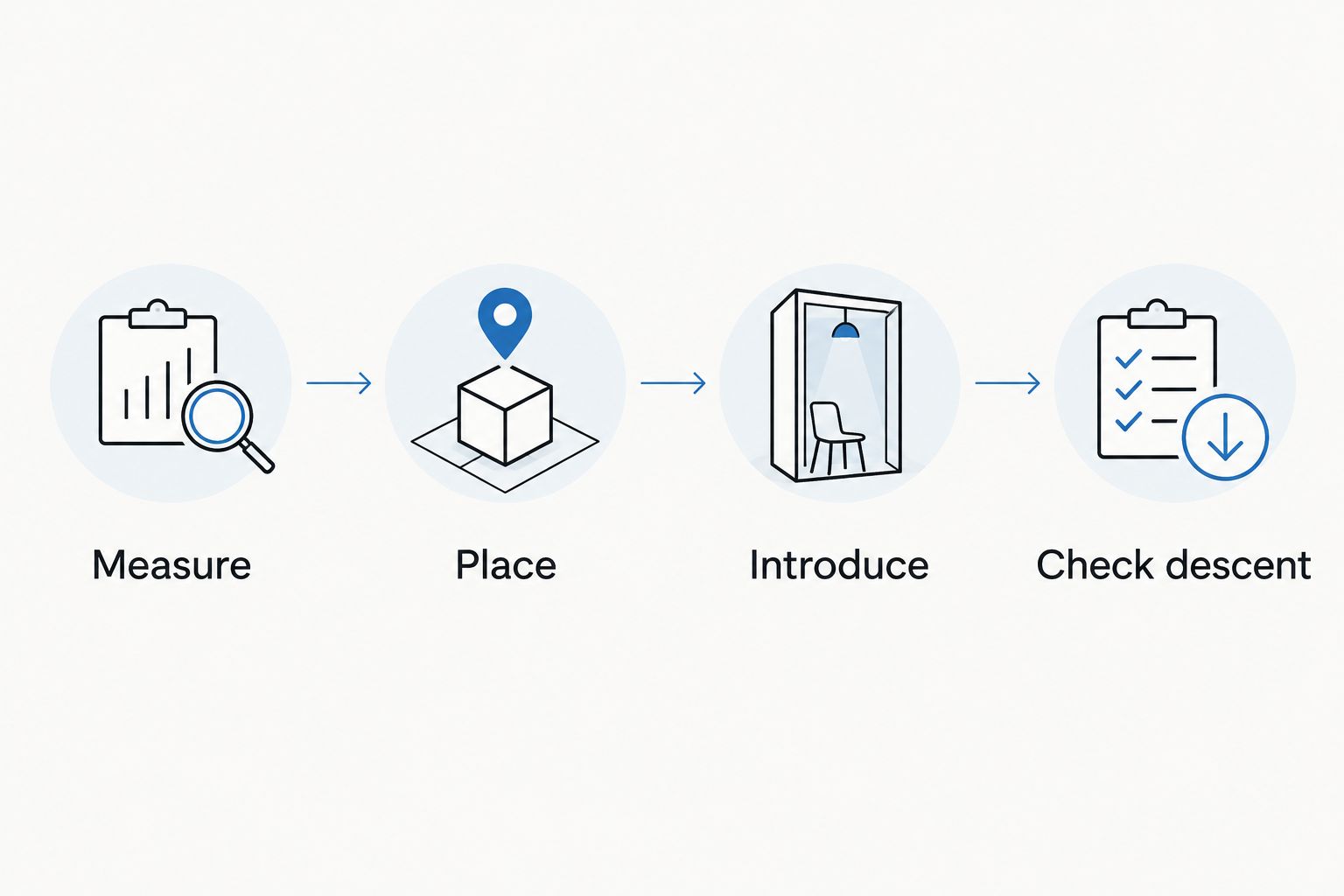
Refit whenever bedding or room layout changes
A mattress topper, a moved ladder, or a different stair position changes the setup. Treat each change as a fresh fit check, even when your pet knows the old route.
For your 2026 record, note the date and what changed. Keep the earlier measurements so you can see whether the landing height or usable space is different.
- Remove pet access while moving furniture or changing the stair setup.
- Remeasure the dressed mattress and usable floor space in inches.
- Repeat the placement checks with the new bedding and furniture position.
- Supervise another climb and descent before restoring the routine.
Expected result: the changed room passes the same checks as the original arrangement. Your pet is not expected to adapt to a new gap or obstacle without another introduction.
If the lower bunk no longer provides a workable route, switch to a nearby sleeping space. That preserves bedtime closeness without trying to stretch a stair unit beyond its intended use.
Troubleshooting
The stairs slide when your pet approaches
Stop access and inspect the floor, base, and assembly. Clean away debris and follow the stair manufacturer’s approved anti-slip instructions. Do not wedge the stairs against ladder rungs or add improvised straps to hide the movement.
The top step leaves an awkward gap
Remeasure the actual mattress landing and compare it with the stair dimensions. Reposition only within the intended setup. If the transition still requires a leap or stretch, choose a different suitable route or a nearby pet bed—not a makeshift platform underneath.
Your pet climbs up but refuses to come down
End the trial and help your pet down using an appropriate handling method. Check for a narrow approach, slippery treads, or an intimidating final transition. Restart at floor level; seek veterinary advice if refusal accompanies pain or a change in movement.
The storage section shifts during use
Remove access and inspect the assembly instructions, supports, and closures. Do not add stored items as substitute ballast. If a component remains loose or damaged, stop using the stairs and contact the seller for product-specific guidance.
The stairs obstruct the bunk ladder
Move the pet route only if another lower-bunk position meets every fit check. If none does, use a separate sleeping space outside the ladder landing. Human access and the pet route must both remain clear.
Customize your workflow
Choose the routine around your pet’s comfort rather than around reaching a particular mattress. Lower-bunk stairs suit a pet who can use the measured route comfortably; a nearby bed suits a room or pet that cannot.
For Furmatesusa bedside pet beds, confirm the selected model’s setup instructions before planning its position beside a bunk. An ordinary bedside arrangement does not establish bunk-frame compatibility.
If you choose a separate sleeping space, use the guide to transition your dog from your bed to a co-sleeper. Keep familiar bedtime cues and introduce the resting place without forcing your pet into it.
FAQ
Can I use pet stairs for bunk bed access?
Use pet stairs only for a suitable lower-bunk route that matches the stair instructions and your pet’s needs. Check the landing, floor space, load limit, and descent before introducing access.
Can pet stairs attach to a bunk bed ladder?
Do not improvise an attachment between pet stairs and bunk ladder rungs. Follow the furniture and stair instructions, and keep the human ladder route clear.
How do I measure a lower bunk for pet stairs?
Measure floor-to-mattress height, available floor depth, and approach width in inches. Compare those measurements with the assembled stair dimensions and check the final transition onto the dressed mattress.
Are 2-step storage stairs tall enough for my bunk bed?
The step count alone does not establish a fit for your lower bunk. Check the product’s actual height, tread dimensions, load limit, and intended use against your measurements.
Can my cat use stairs to reach the upper bunk?
This guide does not recommend creating an upper-bunk route with pet stairs or a human ladder. Choose a lower sleeping destination rather than adding an improvised elevated route.
What should I do if my dog will not walk down the stairs?
Stop the trial and check the stair shape, grip, approach, and landing. Introduce the descent separately, and ask your veterinarian about discomfort or changed movement.
Is a bedside pet bed better than bunk-bed stairs?
A nearby pet bed is the better choice when the stair route cannot fit comfortably or leaves an unsuitable transition. Confirm any bedside model’s placement instructions rather than assuming it works with your bunk frame.
One last thing
The return trip decides whether the setup works. Your pet reaching the lower mattress is only half the check; a comfortable descent matters just as much.
Keep your 2026 fit record with the stair instructions. When bedding or furniture changes, you can repeat the checks instead of relying on a setup that used to fit.