

Is a dog stroller worth it for a healthy dog in 2026?
Yes—a dog stroller is worth it for a healthy dog when it helps you share outings that include more walking than your dog comfortably enjoys. It works best as an occasional ride between walking and sniffing breaks, not as a replacement for exercise. In 2026, the practical trade-off is the extra loading, cleaning, and storage you take on to keep your furry friend beside you.
- Is a dog stroller worth it for a healthy dog? Yes, for useful riding breaks—not replacement exercise.
- Furmatesusa dog strollers suit pet parents who want their dogs included in everyday outings.
- Keep leash walks and sniffing time; skip a stroller if your dog dislikes riding or you lack storage.
- Choose by your dog's fit, your usual route, and how easily you can load and store it.
Is a dog stroller worth it for a healthy dog in 2026?
A dog stroller earns its place when it solves a recurring outing problem without taking away your dog's walking time. A healthy dog does not need to ride simply because a stroller exists. But being able to walk does not mean every part of your day needs to happen on paws.
Think about the actual outing: your dog enjoys the park, while you also want to continue along the promenade afterward. A stroller gives you another way to stay together once the walking portion is finished. Before choosing one, use the guide to choosing the right dog stroller size to focus on comfortable fit rather than appearance alone.
| Approach | Best for | Main benefit | Main drawback | Recommendation |
|---|---|---|---|---|
| Leash walking | Outings your dog comfortably completes | Keeps walking, sniffing, and interaction central | Your route needs to suit your dog | Keep as your default |
| Walking with stroller breaks | Shared outings with a walking portion and a riding portion | Lets your dog stay with you without walking the whole route | Adds equipment to push, load, and store | Choose when you have a clear use |
| Stroller-only outings | Transport rather than exercise | Keeps your dog alongside you during the journey | Does not provide a walking workout | Do not treat as exercise |
| Shorter outings without a stroller | Owners happy to change the route | Avoids extra equipment | You need to finish or return sooner | Choose when shorter trips meet everyone's needs |
The deciding question is not whether a healthy dog deserves a stroller. It is whether a stroller makes your real routine easier while preserving what your dog enjoys about going outside.
Why this matters
Sharing an afternoon with your dog should not mean choosing between constant walking and leaving your furry friend at home. A stroller offers another arrangement: walk where walking makes sense, then ride where a ride serves a purpose. That is a convenience decision, not a statement that your dog is unwell.
For your 2026 routine, judge the stroller by the problem it solves, not by how often you can put your dog inside it. An occasional useful ride is better than turning every neighborhood walk into a stroller trip just to justify the purchase.
You also need to account for your own comfort. Pushing equipment while managing a leash, opening doors, and stopping for breaks changes an outing. If those tasks feel harder than simply taking a shorter route, the stroller has not improved the day.
When a stroller makes sense for a healthy dog
You want to continue after your dog's walking portion
A shared outing does not have to be all walking or all riding. You can give your dog a suitable walk, stop for water and rest, and use the stroller for the remaining journey. Plan those changes around your dog's comfort rather than a distance target.
Best for: Pet parents whose outing includes a clear walking portion and a separate transport portion. The benefit is staying together; the limitation is that you still need places where your dog can safely get out.
Your outing includes waiting as well as walking
Some afternoons include standing around, sitting outdoors, or moving slowly between stops. A stroller provides a defined place for a dog that already feels comfortable riding. It does not guarantee that your dog will settle in a busy setting.
Best for: Dogs that willingly rest in the stroller while their owners pause. Check the venue's pet rules before leaving home—a stroller does not turn a pet into an exception to an access policy.
You want an alternative to carrying your dog
Carrying a dog and pushing a stroller are different practical tasks. If you regularly carry your healthy dog during part of an outing, consider whether wheels would make that part easier. Remember that you still need a safe way to get your dog into and out of the cabin.
Best for: Pet parents with a recurring carrying problem on stroller-accessible routes. The drawback is handling curbs, steps, doors, and uneven ground with additional equipment.
When a stroller is not worth it
Skip the stroller if your ordinary walks already suit both of you and you cannot name a separate reason to ride. A pleasant neighborhood loop does not need extra gear. Keeping things simple is a good choice.
A stroller is also a poor match when your dog consistently resists entering, tries to escape, or remains distressed during gentle introductions. Do not interpret tolerating confinement as enjoying an outing. Your dog's response matters more than the picture you had in mind.
Storage is another honest stopping point. If the stroller blocks your entryway, crowds the car, or is difficult to bring downstairs, every trip starts with a chore. Choose a shorter outing over equipment that makes leaving home harder.
Finally, do not buy a stroller to explain away a new change in stamina. A dog that suddenly refuses familiar walks or seems unusually tired needs veterinary advice. Riding is not a diagnosis or treatment.
Why a dog stroller's value varies
The same stroller routine will not suit every healthy dog or every household. These factors determine whether the convenience is real:
- Your usual outing: A walking-and-riding plan has a clearer purpose than putting your dog inside for a route your dog already enjoys walking.
- Your dog's response: Willing entry and relaxed riding matter more than your wish to bring a stroller along.
- Your route: Steps, narrow passages, rough surfaces, and frequent doorways affect how practical wheels are.
- Comfortable fit: Check the cabin measurements and stated weight limit rather than relying on a product photo.
- Home and car storage: Consider where the stroller goes between outings and what loading it involves.
- Ongoing care: Wheels, fabric, and the riding area need attention after outdoor use; convenience includes that work.
Treat these as purchase criteria, not problems to dismiss. A stroller that fits your dog but not your daily route is still the wrong choice for your routine.
How do you keep stroller rides from replacing exercise?
Plan walking first and use riding for a separate purpose. Your dog still needs suitable activity and chances to explore outside the cabin. Ask your veterinarian about exercise needs if you are unsure what suits your dog.
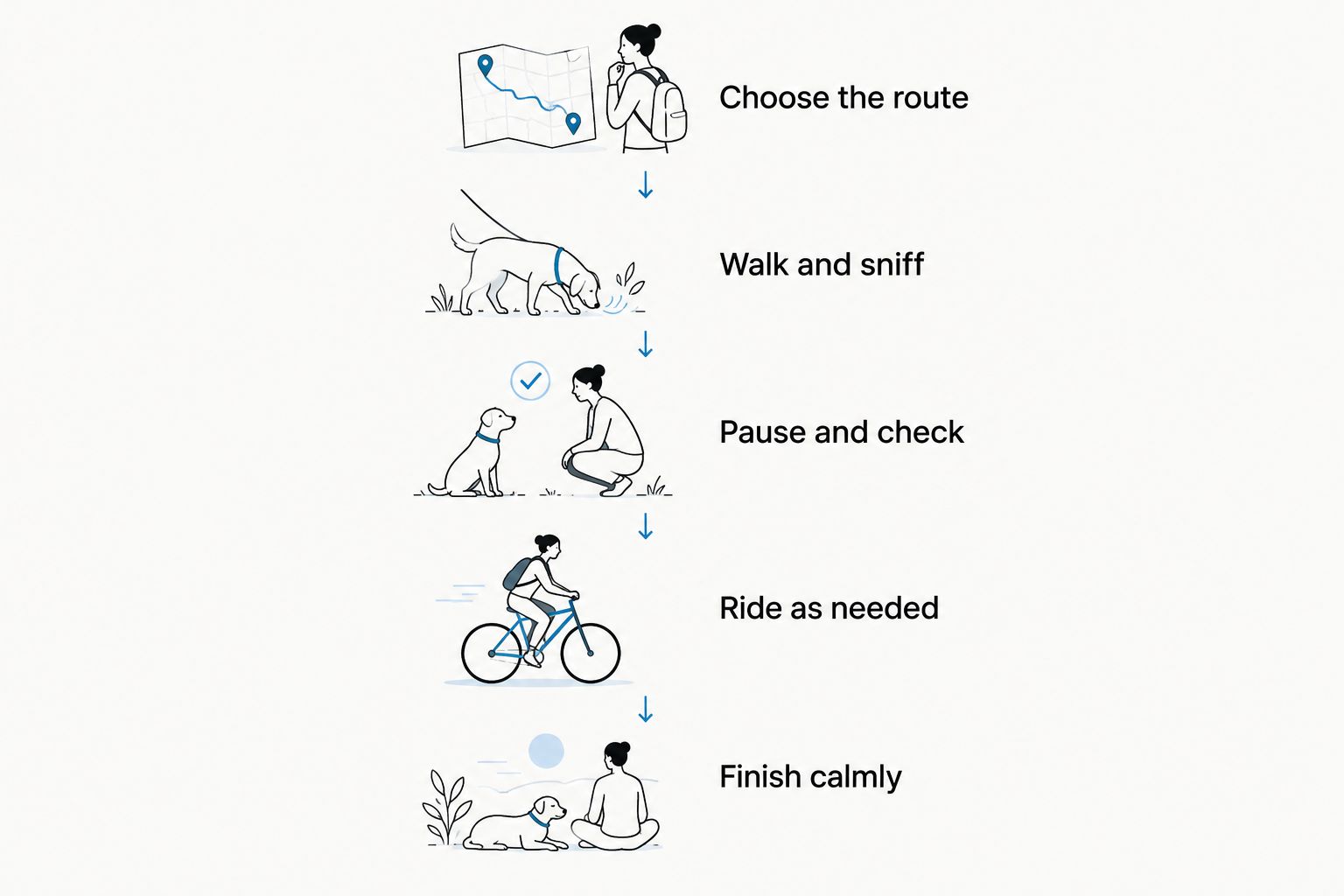
Use this sequence when planning a mixed outing:
- Choose the route. Find a dog-permitted outing with suitable walking areas and a practical path for the stroller.
- Walk and sniff. Let your dog enjoy the walking portion rather than rushing straight into the cabin.
- Pause and check. Offer water and assess your dog's comfort before continuing.
- Ride as needed. Use the stroller for the planned transport portion, not to push through unsafe weather or distress.
- Finish calmly. End the trip if your dog is uncomfortable, even when your original plan was longer.
A stroller ride offers sights and smells, but sitting in a cabin is not the same physical activity as walking. Keep that distinction clear when you look back at your dog's day. Time spent outside and time spent exercising are not interchangeable.
What should you check before choosing a stroller?
Start with your dog, then your surroundings. Check the manufacturer's cabin measurements, weight limit, restraint instructions, and intended use. Do not assume that a stroller is suitable for jogging, rough trails, or multiple pets unless its instructions say so.
Next, picture the entire trip from your front door. You need to bring the stroller out, load your dog, manage the route, unload, and put everything away. A useful 2026 purchase fits that whole sequence—not just the attractive middle part at the park.
Check these practical details before deciding:
- Can your dog rest inside without being cramped?
- Can you follow the manufacturer's securement instructions comfortably?
- Can you operate the brake and closures without struggling?
- Does the folded stroller fit the space you actually have?
- Can you clean the riding area and wheels after outings?
- Is the stroller intended for the surfaces and activity you have planned?
Two stroller options to consider
Furmatesusa dog strollers are best for pet parents who want their dogs included in everyday outings. The right choice still depends on fit and handling; a lifestyle match does not replace checking the product details.
| Product | Best for | Why consider it | What to check before choosing |
|---|---|---|---|
| Walky Pet Stroller: Ideal Transport Solution for Small Pets | Small-pet owners considering everyday use | Its stated purpose matches everyday small-pet transport | Confirm cabin fit, weight limit, and storage needs |
| Hauler Pet Stroller | Pet parents considering a stroller for regular outings | Its description focuses on owners who are often on the move | Confirm suitability for your dog and planned route |
Neither option should be selected on the name alone. Choose the model whose current product information meets your needs; skip either one if the fit or handling does not work for you.


How do you introduce a healthy dog to a stroller?
Begin somewhere quiet with the stroller stationary and the brake engaged. Let your dog investigate without pressure. Follow the manufacturer's loading and restraint instructions, and reward calm participation rather than forcing your dog to remain inside.
Separate getting comfortable in the cabin from getting comfortable with movement. Once your dog settles willingly, try gentle movement in a quiet setting and watch the response. Increase the challenge only when your dog stays comfortable; there is no need to make the first outing busy or ambitious.
The goal is a relaxed shared moment. A dog that chooses to settle beside an owner is a better starting point than a dog being persuaded through a crowded destination.
Can a stroller help in hot weather?
A stroller keeps your dog off the pavement while riding, but it does not make hot weather safe. Shade is not cooling, and a canopy is not permission to continue an outing when your dog is uncomfortable.
For summer outings in 2026, choose suitable conditions, carry water, allow rest, and be ready to go home. Seek urgent veterinary help for suspected heat illness. Never use a stroller to keep an overheating dog on an outing that should end.
FAQ
Is a dog stroller worth it for a healthy dog in 2026?
Yes, when it provides useful riding breaks during shared outings without replacing suitable exercise. Skip it if your usual walks already work well or your dog dislikes riding.
Will using a stroller make my healthy dog lazy?
A stroller ride does not provide the same physical activity as walking. Keep suitable walks, play, and sniffing opportunities in your dog's routine rather than replacing them with rides.
Should I make my dog ride if my dog would rather walk?
No—use the stroller only when it serves a purpose and your dog is comfortable inside. Choose a suitable walking route instead of forcing a ride.
Can I take my dog into shops in a stroller?
Only where the shop's rules permit your dog. A pet stroller does not create an exception to pet-access policies, so check before visiting.
What's the best stroller for a healthy dog?
The best stroller fits your dog, suits your intended route, and is practical to handle and store. Check cabin measurements, weight limits, securement instructions, and intended use before choosing.
Are Furmatesusa dog strollers only for dogs with mobility problems?
No—Furmatesusa describes its stroller offerings around everyday use and outings with pets. A healthy dog's suitability still depends on comfortable fit, willingness to ride, and a clear reason for using the stroller.
Can a stroller replace carrying my dog on part of an outing?
Yes, if the route is suitable for the stroller and your dog rides comfortably. You still need to handle loading, unloading, doors, steps, and storage.
What if my healthy dog suddenly needs more stroller breaks?
Contact your veterinarian about a new change in stamina or willingness to walk. Do not assume that extra riding addresses the reason for that change.
One last thing
Before buying a stroller in 2026, describe the exact moment when you would use it: after the park walk, during a quiet pause, or on the return journey. If you cannot name that moment, wait. The strongest reason to choose a stroller is a real shared outing—not a feeling that your dog needs more gear.