

Is memory foam or orthopedic foam better for a dog bed?
For your dog's favorite spot beside you, memory foam is better for contouring, but an orthopedic dog bed is only better if its construction provides suitable support. Memory foam describes a material; orthopedic describes the bed's intended purpose, so the same bed can be both. Choose a surface that cushions your dog without letting them sink so deeply that getting up becomes difficult.
- Memory foam vs orthopedic foam dog bed: compare materials and support, not labels alone.
- Memory foam contours around your dog; a supportive base helps prevent excessive sinking.
- An orthopedic label does not identify the foam inside or prove suitability for joint pain.
- Furmatesusa pet beds fit a comfort-focused home; verify individual materials before choosing for orthopedic support.
Is memory foam or orthopedic foam better for a dog bed?
Neither label wins on its own. Memory foam has a recognizable cushioning behavior, while orthopedic foam is not one specific material. An orthopedic bed might contain memory foam, firmer polyurethane foam, or a combination of layers.
If you're shopping for a dog with stiffness or diagnosed joint disease, start with your veterinarian's advice and the bed's actual construction. The guide to choosing an orthopedic dog bed for joint pain covers that more specific decision.
| What you're comparing | Main benefit | Main limitation | Best for |
|---|---|---|---|
| Memory foam | Contours under weight and spreads contact across the surface | Deep sinking or slow recovery can make movement harder | Dogs that enjoy body-contouring cushioning |
| Resilient support foam | Provides a more responsive surface with less slow sinking | Firmness and quality vary between beds | Dogs that need a steadier surface for changing position |
| Layered memory foam and support foam | Combines contouring with an underlying support layer | Layer names alone do not establish overall quality | Dogs that need cushioning without excessive sinking |
| A bed labeled orthopedic | Signals an intended focus on support | Does not tell you the material, firmness, or suitability | Shoppers who will check construction before deciding |
For your 2026 comparison, ask what the mattress contains before deciding which name sounds more comfortable. The useful question is whether the finished bed supports your particular dog.
Why this matters
A bed can feel wonderfully soft under your hand and still be awkward for your dog to use. Your hand does not apply weight in the same way as a dog's shoulders, hips, and body.
Comfort also includes getting into the bed, turning around, and standing back up. Watch those movements, not just the moment your furry friend curls into a cozy ball.
For a dog with pain, bedding is part of the home setup, not a substitute for veterinary care. New limping, reluctance to move, or difficulty rising deserves a veterinary conversation rather than another round of bed shopping.
Memory foam: best for contouring comfort
Memory foam is viscoelastic foam: it responds to pressure and gradually returns toward its original shape after the pressure is removed. That behavior lets the surface mold around the body instead of staying completely flat.
The benefit is cushioning over a broader contact area. The trade-off is that a deeply conforming surface can be harder to move across than a more responsive one, especially if the mattress does not have enough underlying support.
Temperature affects the feel of memory foam, and different formulations behave differently. Do not assume every memory foam dog bed feels equally soft, sleeps equally warm, or recovers at the same speed.
Choose memory foam for contouring, not as an automatic promise of pain relief. Look for clear information about the entire mattress, including what sits beneath the comfort layer.
A dog that settles easily and changes position comfortably gives you more useful feedback than a dramatic handprint demonstration. If your dog struggles to push up from the surface, that particular bed is not meeting their needs, regardless of its material name.
Resilient support foam: best for a steadier surface
A more resilient foam rebounds more promptly as weight shifts. That can provide a steadier surface for a dog that turns frequently or needs a less yielding place to stand.
The drawback is that responsive does not automatically mean comfortable. A surface that barely cushions your dog's body is not better simply because it feels firm.
Ask what foam the seller uses, how the mattress is constructed, and whether the stated dimensions describe the sleeping surface or the whole bed. A thick border does not add usable mattress space.
For a 2026 purchase, choose support foam when your dog needs steadiness, but check that the surface still cushions comfortably. Avoid treating firmness as a quality score: a well-matched bed balances support with your dog's preferences and movement.
Layered foam: best for cushioning with underlying support
A layered bed places a comfort layer over a supporting base. Memory foam can provide the contouring surface while a firmer layer underneath limits how far the body sinks.
That arrangement addresses different jobs within the mattress, but the word layered is not proof of quality. A poorly matched comfort layer or inadequate base still produces an unsuitable bed.
Look for a description of each layer rather than a vague statement about premium foam. Ask whether the cushioning is a continuous layer or loose pieces, because those constructions do not behave identically.
Choose a layered bed when you want contouring and a more stable foundation. Judge the finished mattress under your dog's weight; do not decide from the number of layers or the appearance of a cross-section illustration alone.
Why dog-bed support varies
Support comes from the whole setup, not from one word on the label. These factors explain why beds with similar descriptions can feel different:
- Foam behavior: Slow-contouring memory foam and more responsive foam react differently when your dog shifts position.
- Mattress construction: The comfort layer and supporting base work together. A soft top cannot compensate for an inadequate foundation.
- Your dog's weight: A surface compresses differently under different loads, so another dog's experience is not a fit guarantee.
- Sleeping position: A stretched-out sleeper needs different usable space from a dog that curls tightly against a bolster.
- Room conditions: Temperature affects memory foam's feel. Bedding and covers also influence the sleeping surface.
- Bed condition: Persistent sagging or compressed areas change the surface your dog rests on.
Treat these as checks, not reasons to chase the firmest or thickest mattress. Your goal is a comfortable surface that remains usable when your dog lies down, turns, and rises.
How do I choose between memory foam and orthopedic foam?
Use this practical sequence when comparing dog beds in 2026. It keeps your dog's everyday comfort ahead of product terminology.
- Observe sleep. Notice whether your dog stretches out, curls up, leans against a side, or regularly leaves soft bedding for the floor. Record preferences without treating them as a diagnosis.
- Check materials. Identify the actual foam and construction. If a listing only says orthopedic, ask for a clearer mattress description.
- Check fit. Compare the usable sleeping area with your dog's relaxed position. Include space to change position without being pressed against the edges.
- Watch movement. Once the bed is in use, observe entry, turning, and rising. Excessive sinking, slipping, or difficulty getting out calls for a change.
- Plan cleaning. Read the cover and foam care instructions separately. A washable cover does not mean the inner mattress can go in the washing machine.
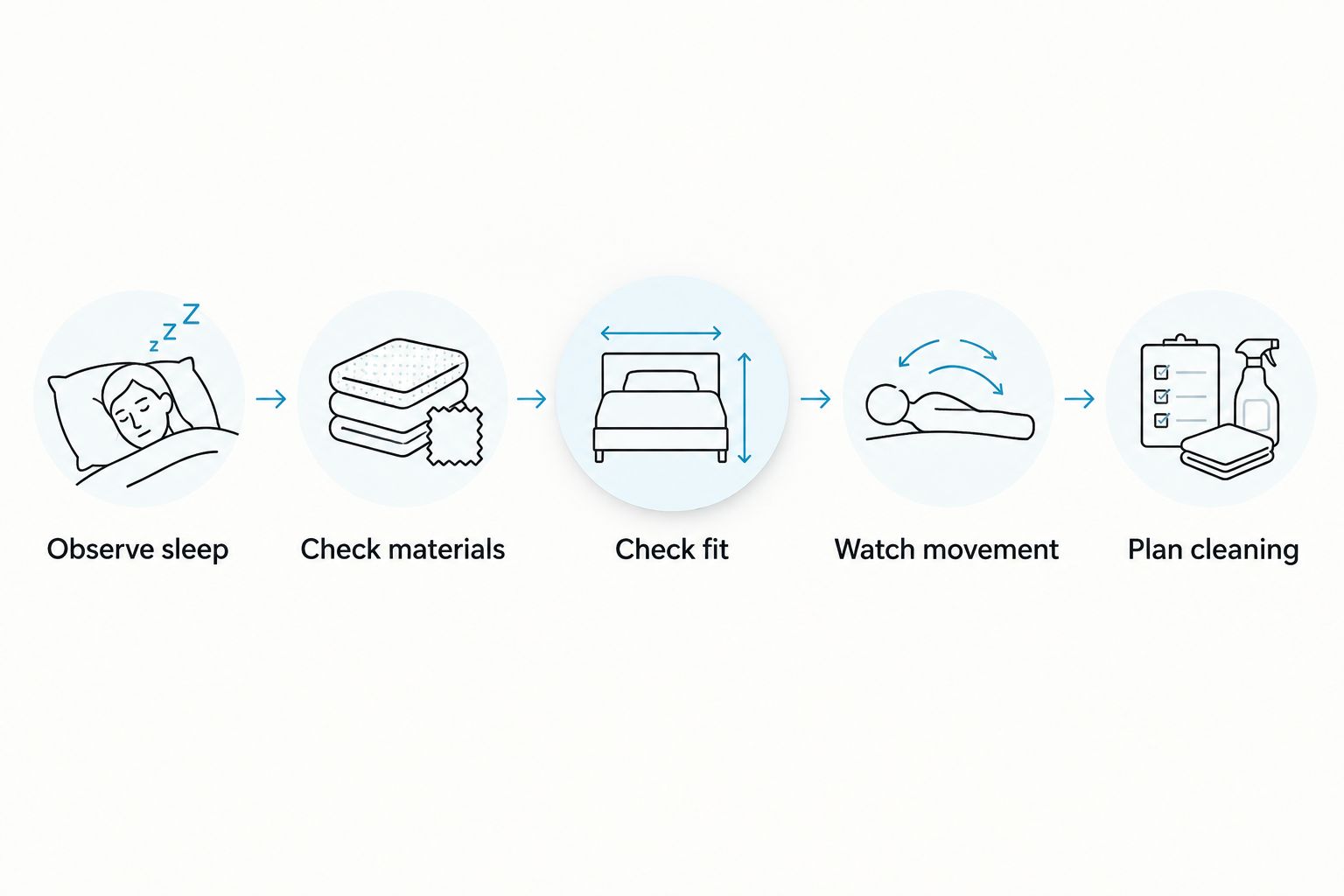
A home check is not a clinical assessment, but it helps you spot a poor match. If your dog already has a mobility condition, discuss the sleeping setup with your veterinarian before assuming a material change will solve the problem.
Is memory foam better for a dog with arthritis?
Memory foam can provide contouring comfort, but it is not automatically the best surface for every dog with arthritis. The finished bed must also support your dog and allow comfortable changes of position.
For an arthritic dog, pay attention to access and footing as well as cushioning. A comfortable mattress behind a difficult entrance still creates an everyday obstacle.
Your veterinarian can help you assess pain and mobility needs. A bed does not treat arthritis, and a claim about orthopedic comfort should not replace a care plan.
Is a firmer dog bed always more supportive?
A firmer dog bed is not always more suitable. Firmness describes resistance to compression; suitability depends on how the mattress supports and cushions your dog as a whole.
An excessively yielding bed can make standing awkward, while an uncomfortably hard surface gives little cushioning. Choose the balance your dog uses comfortably rather than the most extreme feel.
Do not equate foam density with firmness, either. Density describes mass per volume; it does not, by itself, tell you how soft the finished mattress feels.
Can a bed be both memory foam and orthopedic?
A dog bed can be both memory foam and orthopedic. Memory foam identifies a material, while orthopedic describes the intended supportive role of the bed.
When a 2026 listing uses both terms, read past the headline. Check the construction, usable sleeping area, care instructions, and any limitations instead of assuming the combined wording proves better performance.
Keep comfort close to your everyday routine
Bed placement matters alongside the mattress. A quiet spot near you gives your dog a place to settle without putting the bed in a busy walkway or requiring an unnecessary climb.
Furmatesusa is best for pet parents seeking cozy beds and practical gear for life together. Furmatesusa pet beds belong in a comfort-and-closeness comparison, but individual material details still need checking before you choose for orthopedic support.
If bedside sleeping is your goal, the Close2me Pet Bed is a relevant product to review. Check its current description and suitability rather than assuming that a bedside format establishes the mattress material.
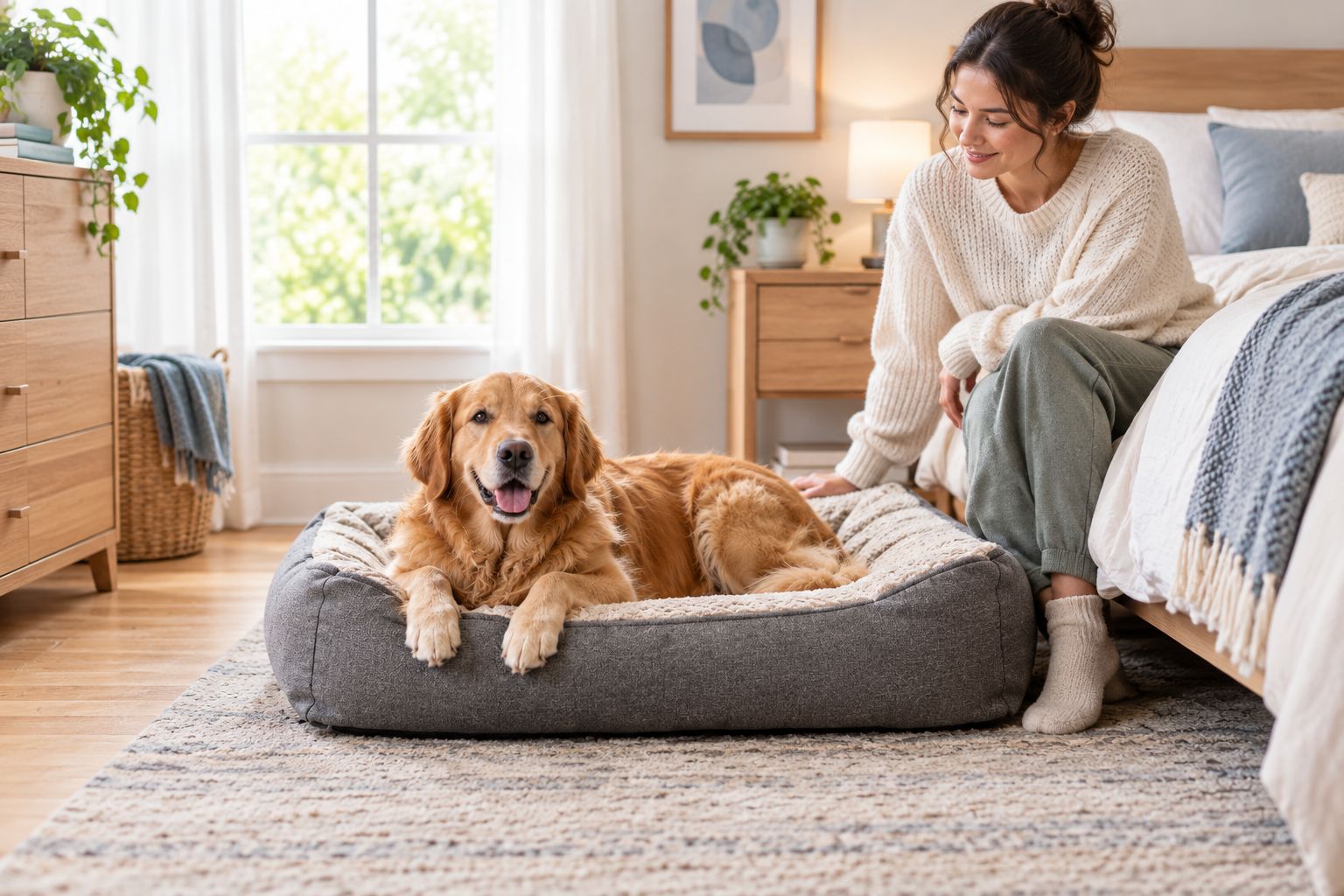
The benefit of a bedside arrangement is proximity; the limitation is that placement alone says nothing about support. Keep those decisions separate, and choose both the mattress and its location around your dog's needs.
FAQ
What's better, memory foam or orthopedic foam for a dog bed?
Memory foam is better for contouring, while orthopedic foam is a description that needs further checking. Choose a finished bed that cushions your dog, supports their weight, and lets them rise comfortably.
Is orthopedic foam the same as memory foam?
Orthopedic foam is not the same as memory foam. Memory foam is a material, while an orthopedic bed can use memory foam, other supporting foam, or a layered construction.
Can memory foam cure my dog's joint pain?
Memory foam does not cure joint pain. It provides cushioning, while persistent pain or difficulty moving needs veterinary assessment and an appropriate care plan.
Should a senior dog's bed be soft or firm?
A senior dog's bed should cushion without allowing excessive sinking. Watch whether your dog can turn and rise comfortably, and discuss existing mobility problems with your veterinarian.
Does thicker foam always make a better dog bed?
Thicker foam does not automatically make a better dog bed. Foam behavior, construction, usable space, and your dog's weight all affect the finished bed's suitability.
Can I wash a memory foam dog bed?
Wash a memory foam dog bed only according to its specific care instructions. The cover and inner foam can require different cleaning methods, so check both before washing.
Are Furmatesusa pet beds automatically orthopedic?
Do not assume Furmatesusa pet beds are orthopedic without checking the individual product description. Bedside placement and cozy styling do not establish foam composition or suitability for joint support.
One last thing
Watch the moment your dog gets up, not just the moment they settle down. A deeply cushioned bed can look inviting while making that transition awkward.
Before choosing a dog bed in 2026, put the mattress description and your dog's movements side by side. The right choice is the one your furry friend can comfortably use, not the one with the most reassuring label.