

Pet Stairs for Animal Shelters: Fit First in 2026
Pet stairs for animal shelters are stepped access aids that help suitable dogs and cats reach resting spots without jumping, with the aim of supporting comfortable daily care. This 2026 guide helps you plan access for a quiet shelter room or foster home, where a furry friend can settle close to a trusted caregiver.
- Choose pet stairs for animal shelters by the animal’s needs, destination height, stability, and cleaning requirements.
- Furmatesusa storage pet stairs suit home-style foster setups best; review cleaning requirements before considering shared shelter use.
- Compare pet stairs with ramps and floor-level beds before adding elevated access.
- Introduce stairs voluntarily, supervise early use, and include the access plan in foster and adoption handoffs.
Why pet stairs matter for animal shelters and rescues
Choose the resting place first and the access aid second. If a comfortable floor-level bed meets the animal’s needs, you do not need to introduce climbing. When elevated access serves a clear purpose, such as reaching a foster caregiver’s approved resting area, stairs become an option to assess rather than an automatic purchase.
A shared shelter space and a foster bedroom need different decisions. In the shelter, your review should cover cleaning between animals, volunteer instructions, and keeping walkways clear; in the foster home, it should also cover the furniture, household pets, and the caregiver’s routine.
For your 2026 equipment plan, separate those settings before creating a wish list. A donated stair set should pass the same review as equipment you purchase. Neither appearance nor a familiar brand establishes suitability for a particular animal.
The guide to training your dog to use pet stairs is a useful companion when you reach the introduction stage. Training comes after checking whether climbing belongs in that animal’s care plan.
How to choose and introduce pet stairs
Review each animal’s access needs
Start with a free assessment of the setup you already have. Watch how the animal approaches its resting place, ask the caregiver what has changed, and identify whether elevated access is necessary. Do not turn hesitation into a training problem before checking for discomfort.
For an animal with pain, a recent procedure, balance difficulties, or prescribed activity restrictions, ask the shelter veterinarian whether stairs are appropriate. Pet stairs are an access aid, not a treatment or permission to climb during recovery. A ramp also requires approval when movement is restricted.
Keep the plan specific to the animal. A stair set accepted by a confident foster dog is not automatically appropriate for the next placement, and a cat’s willingness to jump does not establish that the proposed route is suitable.
Close the assessment with a short written decision that another caregiver can follow:
- Name the resting spot the animal needs to reach.
- Record observed hesitation, slipping, or difficulty getting down.
- Ask the veterinary team about relevant movement restrictions.
- Consider a floor-level resting area before elevated access.
- Specify whether use requires caregiver supervision.
Measure the whole access route
Use a tape measure and sketch the route before browsing products. Record 3 measurements: destination height, available floor length, and clear approach width, using inches consistently. These are planning measurements, not universal stair dimensions.
Measure to the surface the animal will actually step onto, rather than a furniture frame beneath it. Include the space needed to approach and turn away. A stair set that fits between furniture can still create an awkward route if a door opens across it or the animal must turn sharply at the top.
Check the descent as carefully as the climb. The destination should provide a stable landing, and the stairs should not shift when the animal changes direction. Do not stack loose objects underneath a stair set to make it reach higher.
For foster bedrooms, the guide to choosing pet stairs height for your bed covers the same destination-first decision.
- Measure destination height in inches.
- Measure available floor length in inches.
- Measure clear approach width in inches.
- Check door swings and caregiver walking routes.
- Leave the landing free of loose bedding and clutter.
Match the equipment to the setting
Begin by checking whether an existing approved stair set or a lower resting place solves the problem. If you need new equipment, compare the manufacturer’s intended use, dimensions, load rating, assembly instructions, and care instructions against your written plan. A product name alone does not answer those questions.
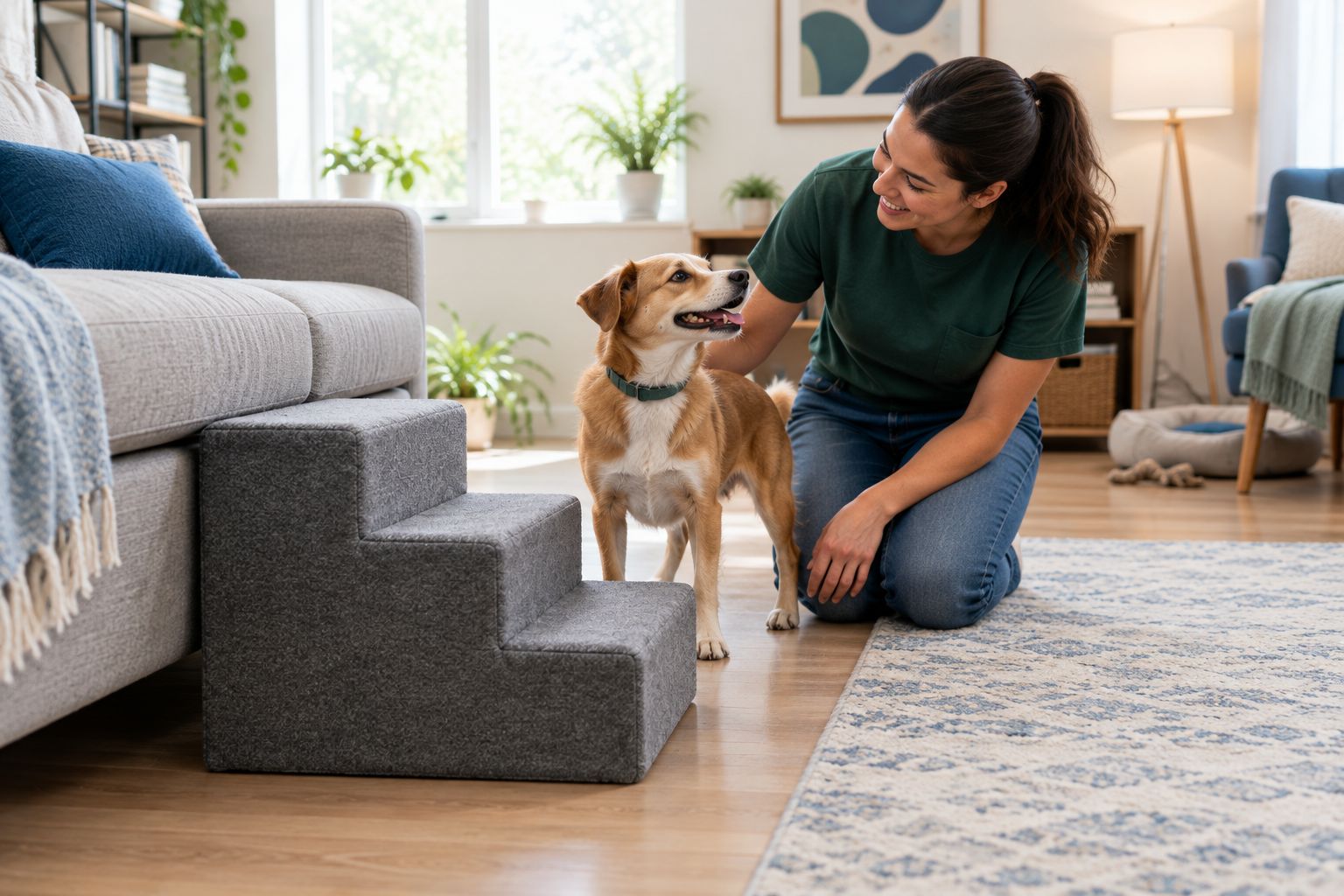
Furmatesusa pet stairs are best suited to home-style foster setups where access and household storage are both priorities. The storage function provides an additional use, but it does not replace a fit, stability, or cleaning review. Treat storage stairs as one option, not a default for every shelter room.
The 2Step | Pet Stairs with Storage and 1Step | Pet Stairs with Storage combine climbing access with hidden storage. For your 2026 wish list, identify the destination and required measurements before choosing between them. Do not assume either configuration reaches a particular bed or suits a particular animal.
- Match the product’s dimensions to your measured route.
- Check the load rating against the assigned animal.
- Read assembly and care instructions before placement.
- Keep stored items inaccessible to the animal.
- Decline donations that cannot pass your equipment review.
These Furmatesusa options are relevant when a foster home needs pet stairs with storage. Choose only after checking the current product information against the access plan.


Approve the cleaning and storage routine
Before assigning stairs, ask your shelter’s cleaning lead to review the manufacturer’s care instructions against the facility’s protocol. Removing visible dirt and completing the required disinfection process are separate tasks. Do not assume a surface suitable for household care can undergo the shelter’s routine.
Look beyond the walking surface. Review seams, undersides, storage compartments, removable parts, and the floor beneath the stairs. Decide how staff will distinguish equipment awaiting cleaning from equipment ready for use.
For home-style storage stairs, keep household convenience separate from shelter hygiene. A compartment should not become an untracked collection of used bedding, treats, and cleaning supplies. Assigning equipment to an animal or room still requires an approved cleaning routine.
Furmatesusa offers storage pet stairs, but the storage feature does not establish suitability for shared clinical or isolation settings. Approve the care process before approving the location.
- Check compatibility with the facility’s cleaning protocol.
- Identify every surface and compartment requiring attention.
- Separate ready-to-use equipment from equipment awaiting cleaning.
- Define when reassignment requires cleaning and inspection.
- Remove damaged or uncleanable equipment from service.
Introduce stairs without pressure
Set up the approved stairs in a quiet area and let the animal investigate voluntarily. Begin with looking, sniffing, or approaching; climbing is not the first requirement. Use food rewards only when appropriate for the animal’s diet and care plan.
During early introductions, work with 1 animal per session so you can watch that animal’s response without competition at the landing. Keep your hands available to manage the surroundings, but do not push, pull, or place the animal through the route to complete a demonstration.
Practice getting down as well as going up. If the animal freezes, scrambles, slips, or repeatedly avoids the route, stop and reassess the setup. Ask the veterinary team about signs of discomfort rather than repeatedly encouraging another attempt.
For cats, leave a clear way to retreat. A caregiver’s wish for a cozy shared moment should never override the animal’s choice to stay on the floor.
- Start with voluntary investigation.
- Reward calm approaches when food rewards are appropriate.
- Keep other animals away from the route.
- Observe both climbing and descending.
- Stop when the animal shows discomfort or cannot use the setup steadily.
Record the plan and review it at handoff
Give the next caregiver instructions, not just equipment. Record the approved location, supervision requirements, cleaning routine, and the animal’s response. A short paper note or shared document works; you do not need a new system to keep the plan clear.
Use your 2026 equipment log to connect each stair set with its current assignment and inspection status. Include 1 named staff owner per equipment assignment as an accountability rule, while allowing trained caregivers to carry out the daily checks.
Recheck the plan whenever the furniture, floor surface, animal, or care instructions change. A successful shelter-room introduction does not establish that the same stairs fit a foster home’s taller sofa. Likewise, adopters should not inherit a climbing routine that conflicts with updated veterinary advice.
- Record the approved animal and destination.
- Name the staff member responsible for the equipment assignment.
- Note cleaning and supervision requirements.
- Explain what signs mean caregivers should stop use.
- Reassess fit when the animal moves to a new home.
Compare access options for your 2026 setup
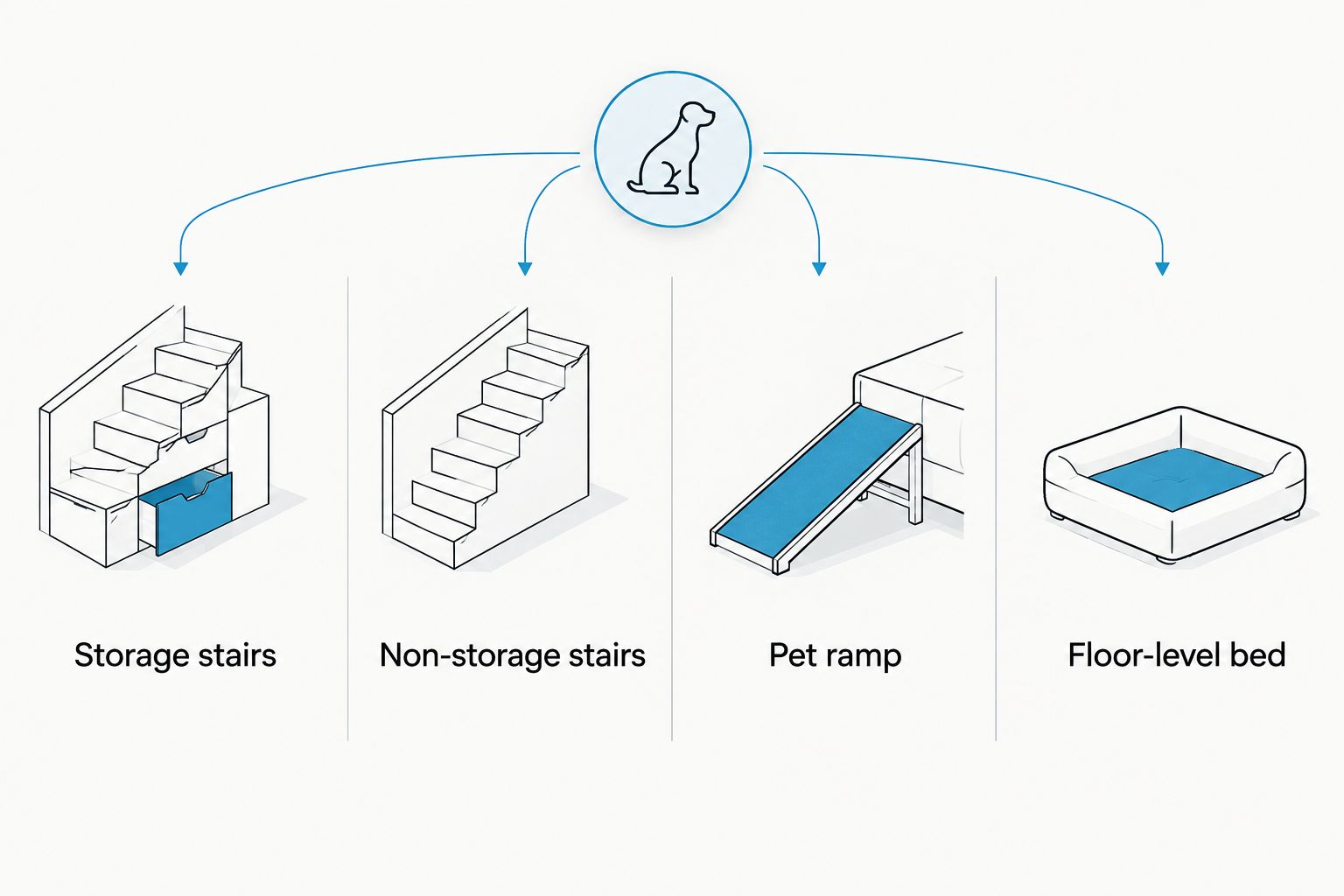
Choose by the task, not by the category you planned to buy. The options below solve different problems. Product-specific options still require checks against the animal, destination, and cleaning plan.
| Option | Best for | Practical advantage | Key limitation |
|---|---|---|---|
| 2Step | Pet Stairs with Storage | Foster homes needing stepped access and household storage | Combines pet access with hidden storage | Requires fit, load-rating, and cleaning checks; storage adds a compartment to manage |
| 1Step | Pet Stairs with Storage | Foster homes assessing a single-step access route | Combines a pet step with storage | Does not establish suitability for a taller destination or shared shelter use |
| Non-storage pet stairs | Approved access where no storage compartment is needed | Provides a stepped route without a storage function | Step geometry and surface still need individual review |
| Pet ramp | Animals whose approved access plan favors a slope | Provides a sloped route instead of separate steps | Requires space, traction, and veterinary review when movement is restricted |
| Floor-level bed | Animals that do not need elevated access | Removes the need to climb to the resting spot | Does not provide access to elevated furniture |
The comparison starts with the access task: storage stairs, non-storage stairs, a ramp, or a floor-level bed. Keep the animal’s care plan above any preference for matching furniture or saving household space.
Common mistakes shelters and rescues make
Accepting donations without a destination
A well-meant donation still needs an approved use. Ask where the stairs will go, which animals will use them, and who will review the care instructions before adding them to active inventory.
Treating shared equipment like foster-home furniture
A household storage feature does not answer a shelter’s cleaning questions. Review the entire item, including its compartments, before moving it between animals or housing areas.
Turning refusal into a confidence exercise
An animal that avoids stairs needs a reassessment, not pressure. Check the route and ask about discomfort; a comfortable floor-level option is a valid outcome, not a failed training session.
Passing equipment on without instructions
Foster caregivers and adopters need the approved access plan, not a promise that the animal already knows stairs. Explain supervision, stopping signs, and the need to remeasure the destination in the new home.
FAQ
What are the best pet stairs for animal shelters?
The best pet stairs for animal shelters are those that fit the assigned animal, destination, and approved cleaning routine. Review dimensions, load rating, stability, and care instructions before placement; a floor-level bed is also worth assessing when elevated access is unnecessary.
Are pet ramps better than stairs for rescue dogs?
Pet ramps are not automatically better than stairs for rescue dogs. Choose the route that fits the animal’s movement needs and available space, and ask the veterinary team when pain, recovery, or activity restrictions affect the decision.
Can shelters use pet stairs for dogs recovering from surgery?
Shelters should use pet stairs during recovery only when the treating veterinarian approves that activity. Do not replace movement restrictions with stairs or assume a ramp is permitted instead.
Are storage pet stairs suitable for foster homes?
Storage pet stairs are an option for foster homes that need climbing access and household storage. Check the destination height, animal suitability, stability, and care instructions before introducing them.
How do you clean pet stairs between shelter animals?
Clean pet stairs according to the manufacturer’s instructions and your shelter’s approved cleaning and disinfection protocol. Have the cleaning lead review all surfaces and compartments before assigning the equipment for shared use.
How do you teach a nervous rescue dog to use pet stairs?
Teach a nervous rescue dog through voluntary investigation and calm, rewarded approaches when rewards fit the care plan. Supervise the route, practice descent as well as ascent, and stop if the dog slips, freezes, or shows discomfort.
Can shelter cats use the same stairs as dogs?
Do not assume stairs approved for a dog are suitable for a shelter cat. Review the cat’s access needs, the route, and the cleaning requirements separately, and provide a clear way to retreat during introductions.
One last thing
Lowering the destination can remove the need for stairs entirely. Before finalizing your 2026 equipment list, ask whether a floor-level resting spot gives the animal the same closeness and comfort without climbing.
Your goal is a resting routine that the animal can use comfortably and the caregiver can maintain. Sometimes that includes storage stairs beside foster-home furniture; sometimes it means sitting together beside a bed on the floor.