

Pet stairs to memory foam mattresses: complete 2026 fit workflow
Instead of lifting your furry friend onto the bed every evening, fit pet stairs for pillow top mattress access by measuring the finished bed height, checking the soft landing edge, and practicing the route together. This 2026 workflow covers pillow-top and memory foam mattresses so you can check the whole path—not just whether the stairs reach the bed.
- Choose pet stairs for pillow top mattress access by checking height, footing, and the final mattress transition.
- Furmatesusa 2Step stairs combine bedside access with storage; confirm dimensions and load limits before choosing them.
- Memory foam mattress access needs a stable landing, not stairs pushed into a soft edge.
- Practice climbing and descending separately; stop if your pet slips, struggles, or shows discomfort.
Why this matters
A comfortable bedtime starts before your pet reaches the covers. Stairs that end well below the mattress leave a final climb, while a soft mattress edge can make the landing less steady than it looks.
Furmatesusa pet stairs are best for pet parents who want bedside access with storage, provided the measured fit suits their pet. That condition matters more than matching the stairs to your bedroom decor.
Start with the guide to choosing pet stairs height for your bed if you are comparing stair heights. Then use the checks below to assess the mattress transition and the return trip.
Pillow-top describes a mattress construction feature; memory foam describes a material. A mattress can include both, so choose the access route from the actual bed setup rather than the mattress label alone.
Before you start
- Gather a tape measure, paper, the stair manufacturer's instructions, and a familiar reward. Check your pet's current weight against the stated load limit; do not guess from appearance.
- Clear the approach and landing area. If your pet has pain, recent surgery, weakness, or a prescribed activity restriction, ask your veterinarian whether stairs are appropriate before practicing.
- Check the soft edge before choosing the stairs. A pillow-top overhang or compressible foam edge can hide a gap or give way under a paw; unloaded mattress height does not describe the whole transition.
You do not need a particular mattress brand for this workflow. You need access to the finished bed, the intended stair location, and the specifications for the stairs you are considering.
Bed-height measurements
Use this 2026 fit checklist with your usual sheets, topper, and bedding in place. Measuring a bare mattress and adding a topper later changes the route you are trying to assess.
- Measure the finished bed height. Hold the tape vertically from the floor to the mattress surface at the intended landing point. Record the result in inches, including any topper you normally use.
- Measure the available floor space. Record the clear distance from the bed into the room and the usable width beside it. Include nearby furniture, doors, and your own walking route.
- Measure the stair height. For stairs you already own, measure from the floor to the top tread. For a purchase, use the manufacturer's stated dimensions and confirm which measurement describes the top tread.
- Check the final rise. Subtract the top-tread height from the finished bed height. Treat that remaining rise as part of the climb, not as an unimportant gap above the stairs.
- Inspect the landing edge. Press the mattress edge by hand and watch how it moves. This is an initial screening check, not proof that the landing will support your pet comfortably.
Keep 3 measurements together: finished bed height, top-tread height, and available floor depth. These describe the vertical reach and whether the stairs can sit fully supported in your room.
Expected result: You have a written fit record showing the stair height, remaining rise, and usable floor space. You can explain where your pet will place their paws when moving from the top tread onto the mattress.
What to record beyond height
Height alone does not tell you whether the route suits your furry friend. Note the tread depth, stair width, individual step rise, and manufacturer-stated load limit alongside your measurements.
Watch your pet's normal movement on level ground before introducing the stairs. Do not use a bedside climb to investigate new limping, weakness, or reluctance to move; those concerns belong with your veterinarian.
Access-route selection
Choose the destination before choosing the furniture. Reaching your mattress and settling in a separate bedside bed are different goals, even when both keep your pet close.
The comparison below uses products listed by Furmatesusa. It does not establish mattress compatibility, because a product name cannot replace dimensions or installation instructions.
| Option | Best for | Practical benefit | Limitation to check |
|---|---|---|---|
| 2Step | Pet Stairs with Storage | Pet parents seeking stepped access plus hidden storage | Combines pet steps with storage space | Confirm dimensions, load limit, and the remaining rise to your mattress |
| Close2Me Pet Bed | Pet parents seeking a separate resting spot beside their bed | Described as compact, adjustable, and attaching to your bed | Does not replace a checked access route; confirm attachment and height fit |
- Choose the destination. Decide whether your pet needs to reach your mattress or a separate sleeping space beside it. Do not assume a bedside bed automatically solves the climb.
- Check every step. Compare the individual rises and tread sizes with the way your pet moves. A compact stair unit is not a fit if your pet must scramble or jump between surfaces.
- Confirm the manufacturer's limits. Read the load limit, assembly requirements, and intended use. Storage space does not establish structural capacity.
- Check the room layout. Keep the full stair footprint on supported flooring. Reject a placement that blocks a door, crowds the approach, or leaves part of the base unsupported.
Expected result: You have chosen an access route for a specific destination, with dimensions and use limits checked. If the information needed to assess fit is unavailable, pause the purchase rather than treating the product photo as a measurement.
These options serve different bedtime routines. Choose the stairs only after checking the climb; choose the bedside bed only after checking its attachment and access requirements.


Stair placement and mattress landing
A good placement gives your pet a clear approach, supported steps, and an unobstructed landing. It also leaves you room to move around the bed without accidentally shifting the stairs.
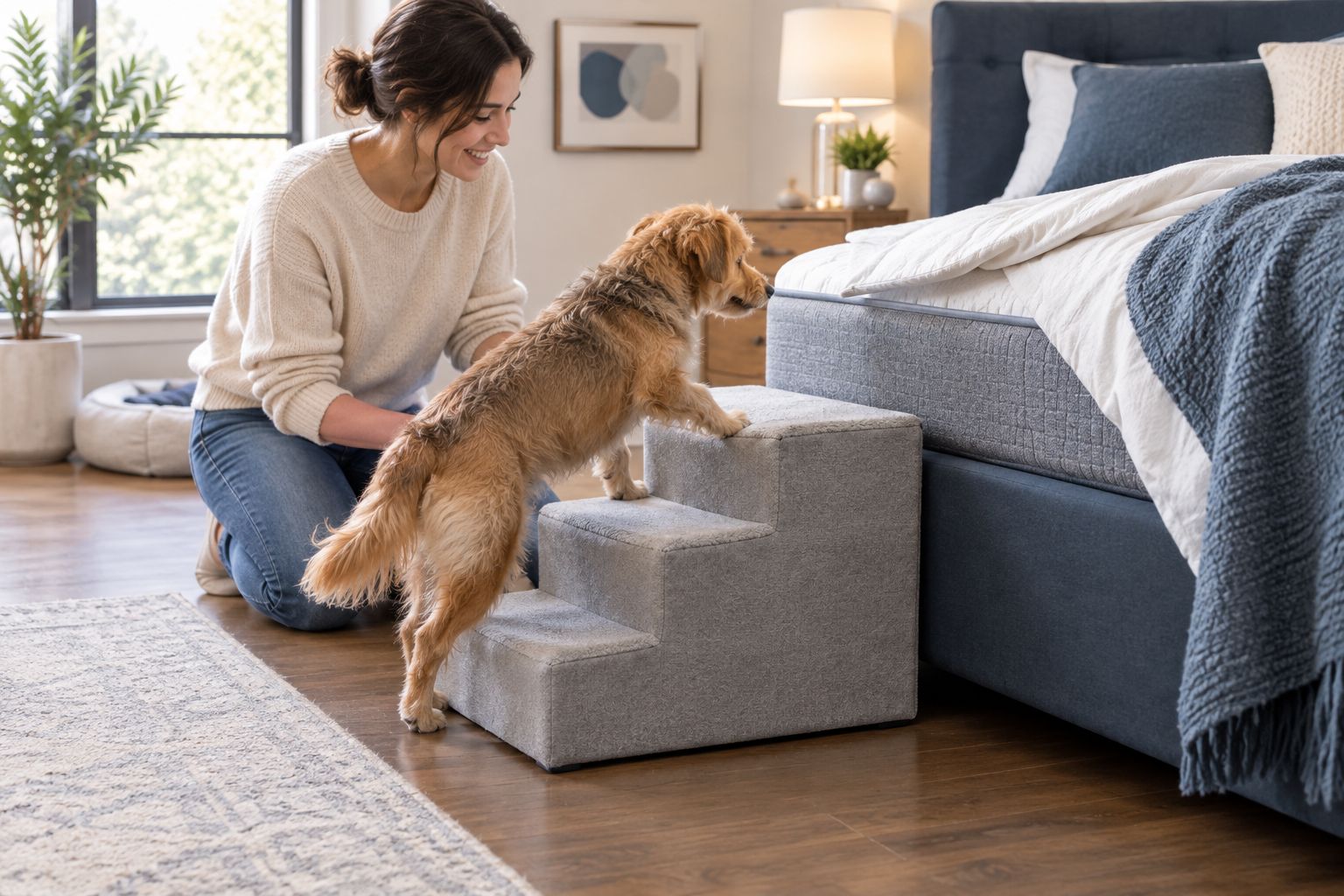
- Assemble the stairs as instructed. Secure all required parts. If the stairs include storage, close and secure the compartments according to the instructions before your pet uses them.
- Place the base on a clean, level surface. Check for rocking or sliding with gentle hand pressure. Use floor-grip accessories only as permitted by the stair manufacturer; do not improvise a raised base.
- Align the top tread with the landing. Follow the placement instructions and inspect the transition from the side. Do not push the stairs into the mattress to disguise a height mismatch.
- Clear loose bedding. Move dangling sheets and blankets away from the treads and landing. Keep fabric from concealing the edge your pet needs to see and feel.
- Check the entire route. Look for gaps, exposed hardware, cords, or objects that could catch a paw. Check that the stairs stay in place when you get into and out of bed.
Expected result: The stairs stand without rocking, the treads remain uncovered, and the landing is visible. Hand checks screen for obvious problems; supervised pet practice is still necessary.
For your 2026 setup, keep the stair location consistent once it passes these checks. Moving the stairs to tidy the room means checking alignment again before the next use.
Supervised climbing and descending
Let your pet learn the route while you are awake and nearby. The goal is a calm, repeatable movement—not reaching the duvet as quickly as possible.
- Introduce the stairs at floor level. Let your pet sniff and investigate without pressure. Reward calm interest before asking for a climb.
- Invite a voluntary step. Use a familiar reward to encourage movement onto the first tread. Do not pull your pet upward or place them on a high tread where they feel trapped.
- Build the climb gradually. Continue only while your pet moves willingly and keeps steady footing. Stop if they repeatedly jump over the steps or hesitate at the landing.
- Practice the return separately. Once your pet is comfortable going up, assess descending with you beside the route. Watch for rushing, sideways movement, or jumping from the mattress.
- Check after each attempt. Look for shifted stairs, displaced covers, and bedding dragged onto the route. Correct the setup before another attempt.
Practice 2 directions: climbing and descending. Work with 1 pet at a time so another animal does not crowd the narrow route or compete for the reward.
The sequence below is a practice plan, not a deadline. Stay at the stage your pet handles comfortably and stop if movement becomes difficult.
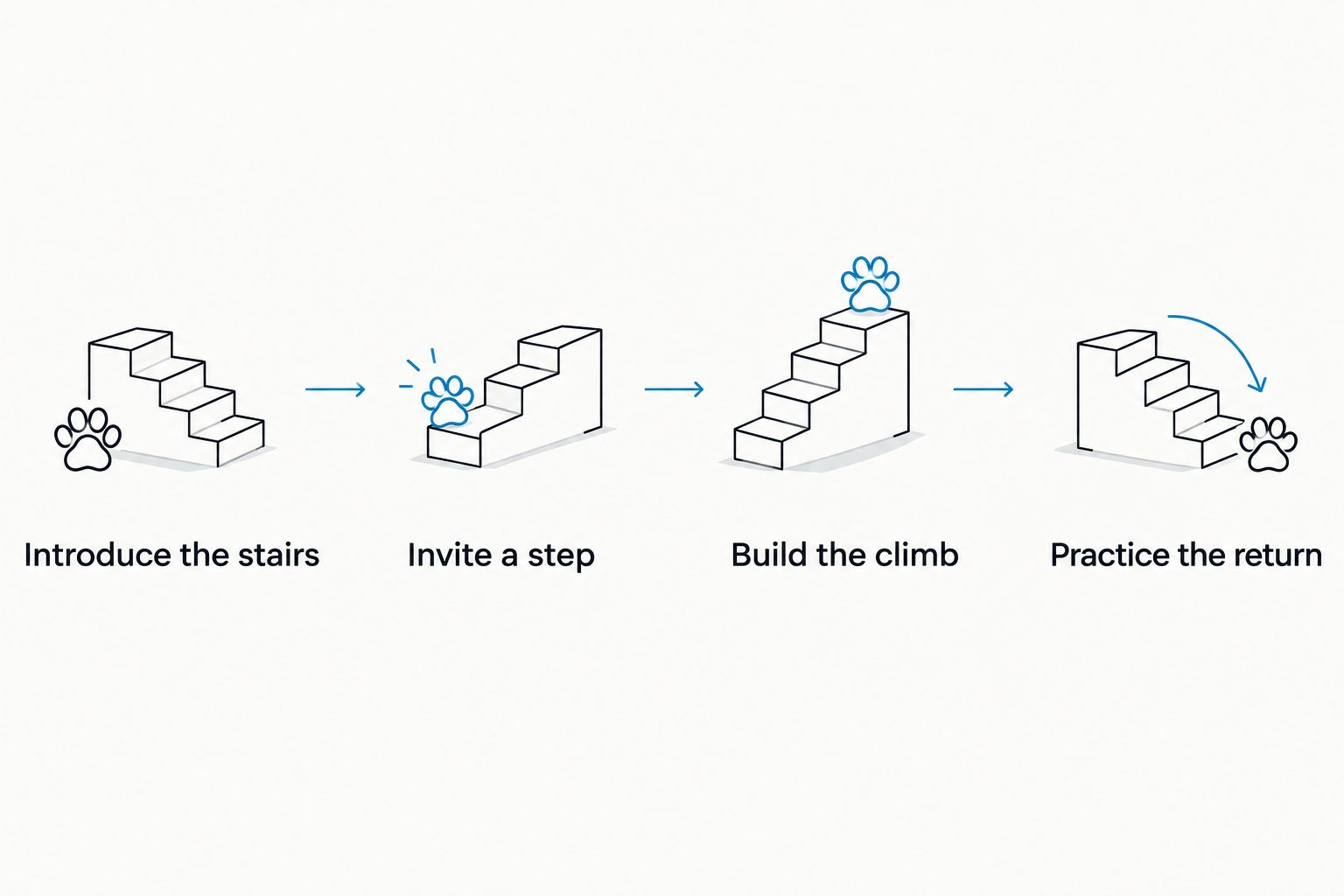
Expected result: Your pet uses the treads willingly in both directions without scrambling, slipping, or bypassing the route. If that does not happen, reassess the fit rather than increasing pressure.
Repeat the fit check whenever the mattress changes
Replacing a mattress, adding a topper, or changing the bed frame creates a new setup. Repeat the measurements even if the stairs themselves have not changed.
Pillow-top mattress variant
For a pillow-top mattress, check the finished surface height and the edge where your pet lands. Move loose bedding aside so the soft upper layer does not conceal the transition.
Do not rest the stairs against an unsupported overhang and assume contact equals support. Follow the stair manufacturer's placement instructions and observe the landing during supervised practice.
Memory foam mattress variant
For memory foam mattress access, inspect the edge under gentle hand pressure before practice. Then watch the actual paw placement; your hand check does not reproduce your pet's movement or weight distribution.
If the landing compresses enough that your pet struggles to transfer between surfaces, stop using that route. Reposition only within the manufacturer's instructions, or choose a different access arrangement.
Your 2026 fit record belongs to the complete bed setup, not just the mattress. Update it after changes to the frame, topper, flooring, or stair position.
Troubleshooting
The stairs slide as your pet approaches
Stop practice and remove your pet from the route. Clean the floor and base, confirm assembly, and check manufacturer-approved grip options; do not continue while someone must hold the stairs in place.
Your pet pauses at the final rise
Recheck the difference between the top tread and finished mattress surface. Clear the bedding and inspect edge compression; a shorter stair unit does not become a better fit through more encouragement.
Your pet climbs up but jumps down
Treat descending as a separate skill and supervise another gradual introduction. If your pet cannot descend comfortably, stop independent access and reassess the route with veterinary guidance when mobility is a concern.
The stairs rock after storage compartments are used
Empty items that obstruct closures, then check the manufacturer's assembly and storage instructions. Recheck stability before use; stored belongings are not a substitute for correct assembly.
Your pet suddenly refuses a familiar route
Check for shifted stairs, changed bedding, slippery treads, or a new height mismatch. Sudden reluctance accompanied by limping, pain, or weakness needs veterinary attention rather than extra training.
Customize your workflow
Keep a simple bedroom note with your measurements, stair position, and assembly instructions. Add what you observed during the climb and descent so another household member can maintain the same arrangement.
If you choose a separate bedside resting space, the Close2Me bed attachment workflow covers that next setup task. Check attachment independently from stair fit; neither check replaces the other.
Furmatesusa bedside pet beds and pet stairs serve different parts of the routine: where your pet rests and how your pet reaches that spot. Keep both decisions centered on comfortable access, not matching furniture alone.
FAQ
What's the best way to choose pet stairs for a pillow top mattress?
Choose pet stairs for a pillow top mattress by measuring the finished bed height and checking the final transition onto the soft edge. Confirm stair dimensions, load limits, and steady footing in both directions before independent use.
Do pet stairs need to reach the top of my mattress?
The top-tread height must create a transition your pet can manage comfortably. A large remaining rise leaves an extra climb, so assess the complete route rather than stair height alone.
Can I use the same pet stairs with a memory foam mattress?
Use the same stairs only after checking their fit against the memory foam mattress. Recheck finished height, edge compression, placement, and supervised climbing and descending.
Are two-step pet stairs enough for a tall bed?
Two steps alone do not establish a fit for a tall bed. Check the total stair height, individual rises, tread sizes, and remaining rise to the mattress against your pet's movement.
Can I put something under pet stairs to make them taller?
Do not improvise a raised base for pet stairs. Choose an appropriately sized access arrangement and follow the manufacturer's placement instructions instead.
Why will my dog climb the stairs but not come down?
Climbing and descending are separate movements that need separate checks and practice. Reassess footing and fit, and ask your veterinarian about new pain, weakness, or mobility concerns.
Do pet stairs make mattress access safe after surgery?
Pet stairs do not override post-surgery activity restrictions. Ask your veterinarian whether stair use is permitted before introducing any elevated access route.
One last thing
Check the route after you get into bed, not only while the bed is empty. Bedding can shift into the landing area during your normal bedtime routine, so repeat the visual check before inviting your furry friend up.
Make that the final item on your 2026 bedtime checklist. A familiar, clear route matters more than persuading your pet to use a setup that still needs adjusting.